
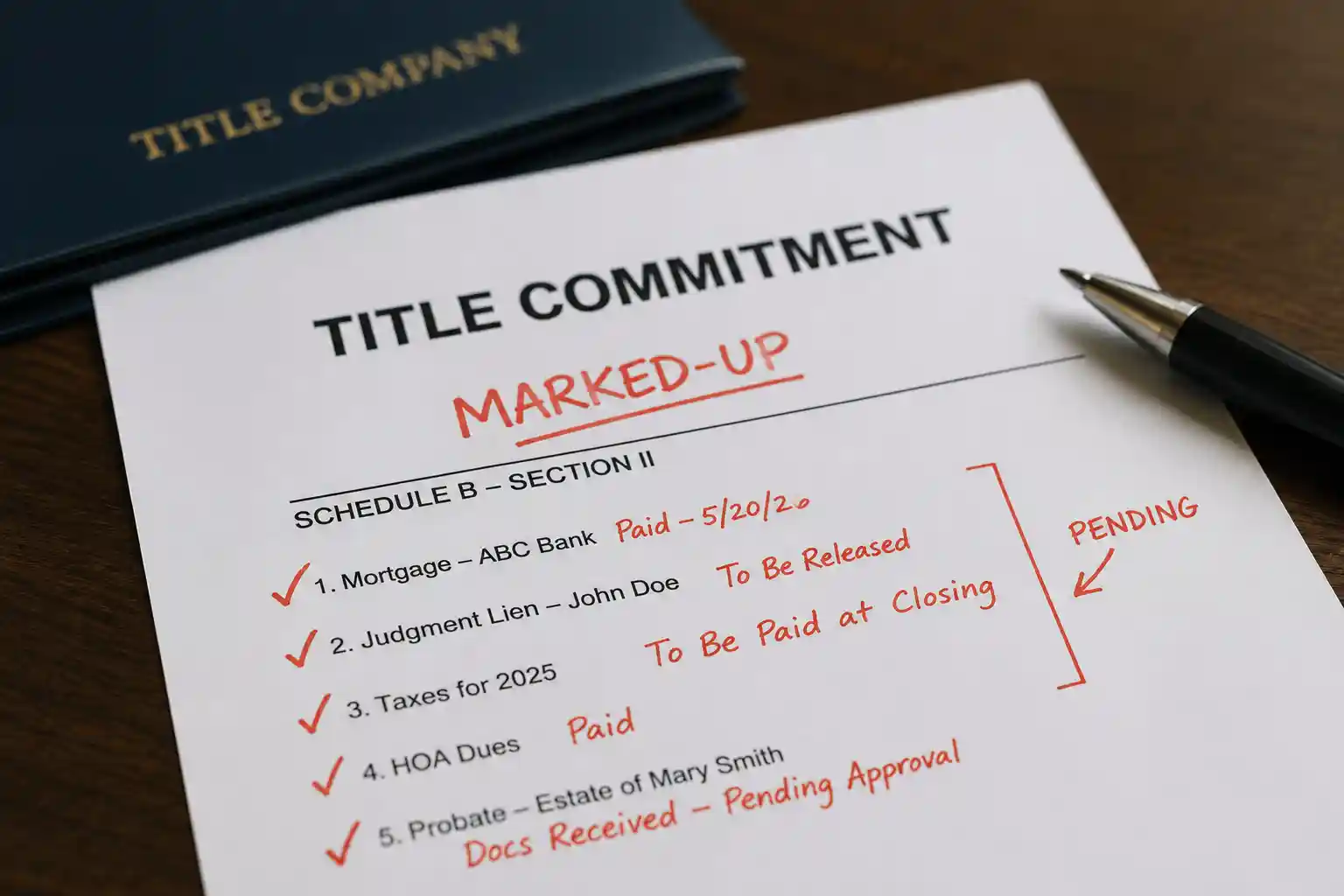
What Is a Marked-Up Commitment?
Quick Answer (for Google + AI)
A marked-up title commitment is a version of a title commitment where the title company manually highlights, checks off, updates, or adds notes showing what title issues, liens, probate matters, mortgage payoffs, or legal requirements have already been resolved — and what still needs to be completed before closing.
In real estate investing, especially in Florida, a marked-up commitment becomes a powerful “deal tracking” tool between the title company, attorneys, lenders, buyers, and sellers.
For investors buying distressed properties, probate properties, foreclosure situations, or wholesale deals, this document can help prevent last-minute closing surprises.
What Is a Title Commitment?
Before understanding a marked-up commitment, you first need to understand a title commitment.
A title commitment is essentially the title company saying:
“If these conditions are cleared, we are willing to issue title insurance.”
The title commitment outlines:
- Existing liens
- Mortgages
- Judgments
- Probate issues
- Foreclosure actions
- HOA balances
- Taxes owed
- Legal ownership issues
- Requirements needed before closing
In Florida, where closings are commonly handled through title companies instead of attorneys, this document becomes one of the most important pieces of the transaction.
If you are newer to investing, understanding how title issues affect financing is critical. We see this often with complex refinance situations like unpermitted additions or ADUs. Our article on refinancing with ADUs explains how title and underwriting issues can impact deals throughout the process:
Graystone Investment Group
So What Makes It “Marked-Up”?
A marked-up commitment is simply the same title commitment — but updated with notes, highlights, comments, or edits showing progress toward clearing title.
Think of it like a “working version” of the title commitment.
The title processor or closer may:
- Highlight items already resolved
- Mark liens as paid
- Add attorney updates
- Note probate progress
- Confirm foreclosure dismissal status
- Indicate payoff letters received
- Add missing documentation requirements
- Show what is still pending before closing
In many ways, it becomes a live roadmap to getting the deal closed.
Real Example: Why Investors Ask for Marked-Up Commitments
In one recent transaction involving a foreclosure-related property, the foreclosure sale did not go through, and the attorneys planned to dismiss the case after funds posted.
During the process, the title company sent:
- Attorney updates
- A marked-up title commitment
- Notes showing what issues had been addressed
- Remaining items needed before closing
This is extremely common in:
- Probate deals
- Foreclosures
- Wholesale transactions
- Estate sales
- Distressed properties
- Off-market deals
Without a marked-up commitment, investors can feel like they are “flying blind.”
Why Marked-Up Commitments Matter So Much
1. Prevents Closing Delays
One unresolved lien or missing document can delay a closing for days or weeks.
The marked-up commitment helps everyone see:
- What is completed
- What is pending
- Who is responsible
At Graystone Investment Group, we constantly stress this in operations training:
“The deal dies slowly and quietly when nobody follows up.”
A marked-up commitment helps stop that from happening.
2. Helps Investors Understand Risk
Many investors look only at:
- Purchase price
- Rehab budget
- ARV
But title issues can completely kill a deal.
For example:
- Unknown heirs
- Probate complications
- HOA liens
- IRS liens
- Contractor liens
- Open permits
- Foreclosure actions
A marked-up commitment helps you understand the real status of the transaction.
3. Creates Accountability
One of the biggest benefits is accountability.
You can quickly see:
- Did the payoff come in?
- Did probate send documents?
- Did the foreclosure attorney respond?
- Was the lien released?
- Is the title actually clear yet?
This is especially important when managing multiple transactions at once.
Common Items You May See on a Marked-Up Commitment
Here are some examples:
| Item | What It Means |
|---|---|
| “Payoff Ordered” | Mortgage payoff requested |
| “Pending Release” | Waiting for lien release |
| “Probate Docs Needed” | Estate paperwork still required |
| “Foreclosure to Be Dismissed” | Attorneys coordinating dismissal |
| “Taxes to Be Paid at Closing” | Taxes unresolved but handled on HUD |
| “Open Permit” | Permit issue still outstanding |
| “Satisfied” | Item already cleared |
Is a Marked-Up Commitment Official?
Usually, no.
It is more of an internal working document used by:
- Closers
- Title processors
- Investors
- Attorneys
- Lenders
The final clean title policy is what ultimately matters after closing.
But operationally, the marked-up version is incredibly valuable.
Why Experienced Investors Watch Title Closely
In our experience handling Tampa-area investment properties, title issues are one of the most underestimated risks in real estate investing.
Sometimes the numbers look amazing:
- Great purchase price
- Strong ARV
- Good cash flow
…but the title issues become the real problem.
This is why experienced investors build relationships with:
- Strong title companies
- Probate attorneys
- Foreclosure attorneys
- Property managers
- Contractors
- Lenders
A good team can often solve problems newer investors never even knew existed.
That is also why operational coordination matters so much after a contract is executed. Once a deal goes under contract, the real work begins.
Final Thoughts
A marked-up commitment is not just paperwork.
It is a live snapshot of:
- Title progress
- Legal issues
- Risk exposure
- Remaining closing conditions
For investors working complex deals — especially probate, foreclosure, or distressed properties — it can be one of the most important documents in the transaction.
Understanding how to read it can help you:
- Avoid surprises
- Close faster
- Coordinate better
- Protect your investment
And in real estate investing, avoiding one bad title issue can save tens of thousands of dollars.