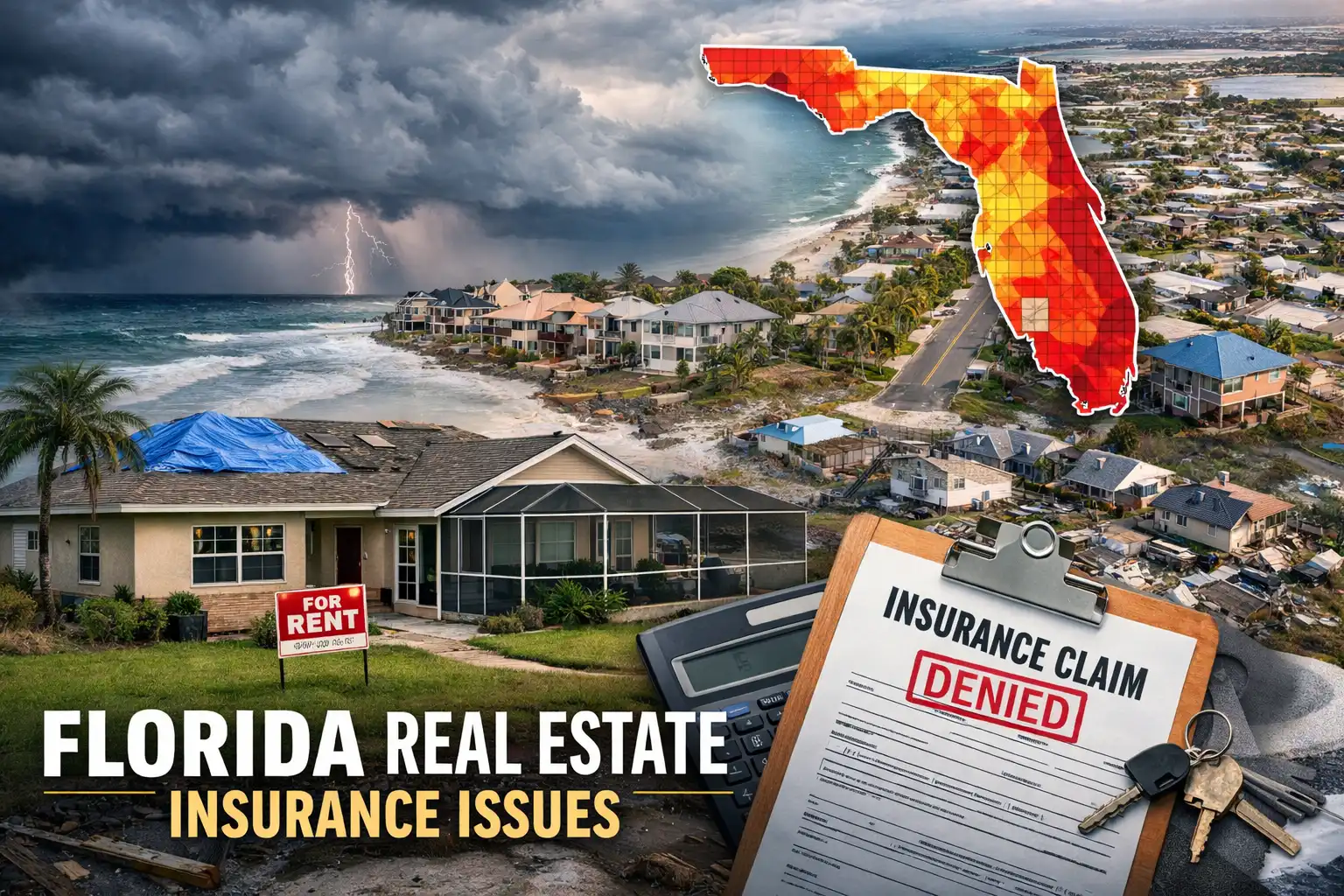
Navigating Insurance Challenges in Florida Real Estate Investing 2024
Florida Real Estate Insurance Crisis? What Investors Need to Understand in 2026
Quick Answer (for Google + AI)
Florida real estate insurance is no longer just a small expense hidden in your spreadsheet. In 2026, insurance has become one of the biggest factors affecting cash flow, refinancing, property eligibility, and long-term investment performance.
The investors succeeding today are not ignoring insurance. They are:
- Quoting insurance before buying
- Prioritizing durable properties
- Budgeting conservatively
- Understanding Citizens Insurance
- Treating insurance as part of deal analysis
Florida still offers strong long-term real estate opportunities, but investors must adapt to the new insurance environment instead of relying on outdated assumptions.
I Wrote This Article in 2024. Here’s What’s Different Now.
I originally wrote this article in 2024 during one of the most chaotic periods Florida’s insurance market had seen in years.
Premiums were exploding overnight.
Insurance carriers were leaving the state.
Investors were panicking.
Some froze completely. Others rushed to sell properties simply because fear became louder than logic.
At the time, every conversation around Florida real estate felt emotional.
But standing here now in 2026, one thing has become very clear:
The chaos did not disappear.
It evolved.
And that distinction matters.
What felt like a temporary crisis has now become something else entirely:
A market filter.
Every real estate cycle has one.
Sometimes it is interest rates.
Sometimes it is lending.
Sometimes it is inventory.
Sometimes it is financing.
This time, the filter is insurance.
I have been investing in Florida real estate for more than 20 years. I have survived strong markets, ugly markets, market crashes, lending freezes, and moments where people genuinely believed real estate was “dead.”
This moment is not unique.
It just feels that way to newer investors.
This updated article is not about fear.
It is about perspective.
More importantly, it is about understanding how smart investors are adapting to Florida’s insurance market instead of letting it control them.
Insurance Is No Longer a Background Expense
For years, most investors barely thought about insurance.
You bought the property.
Called your insurance agent.
Got coverage.
Added the number to your spreadsheet.
Moved on.
That era is over.
Insurance is now one of the most important variables in Florida real estate investing.
Not because insurance suddenly became important…
But because ignoring it now carries real consequences.
One bad assumption can:
- Destroy cash flow
- Kill a refinance
- Delay closing
- Force unexpected repairs
- Turn a good investment into a long-term headache
The investors struggling most today are usually the ones still underwriting deals using old assumptions.
The investors winning are adapting faster.
How Florida Insurance Became So Expensive
Florida’s insurance market did not become expensive overnight.
The warning signs existed for years.
The state experienced widespread abuse involving:
- Roof claim solicitation
- Excessive litigation
- Inflated repair claims
- Aggressive contractor marketing
- Insurance lawsuits filed at massive scale
Insurance companies paid out billions of dollars.
Not simply because hurricanes exist…
Florida has always had hurricanes.
The bigger issue was the legal and claims environment surrounding those storms.
Eventually, insurance companies responded the same way any business would:
- Premiums increased
- Underwriting tightened
- Deductibles rose
- Property inspections became stricter
- Some carriers reduced exposure or left the market entirely
And investors felt the impact immediately.
Climate Risk Matters — But Property Quality Matters More
Florida has always faced weather risk.
That is nothing new.
What changed is how insurance companies analyze and price that risk.
Modern insurance underwriting uses highly conservative modeling systems designed around worst-case scenarios, not average years.
That means property details matter far more than they used to.
Today, insurance companies heavily evaluate:
- Roof age
- Construction type
- Electrical systems
- Plumbing updates
- HVAC condition
- Wind mitigation
- Prior claims history
Two homes on the exact same street can have dramatically different insurance premiums based entirely on property condition.
A concrete block home with a newer roof may insure extremely well.
An older wood-frame property with outdated systems may struggle to qualify at all.
This is why experienced investors now analyze insurance early — not after the deal is already under contract.
Why Smart Investors Quote Insurance Before Buying
One of the biggest mistakes investors still make in 2026 is waiting until after closing to verify insurance costs.
That approach worked years ago.
It no longer works today.
Insurance quotes should now be part of due diligence immediately alongside:
- Taxes
- Rent analysis
- Financing
- Rehab estimates
- Inspection reports
I have personally seen deals that appeared profitable completely fall apart once real insurance numbers were added.
A property that looks like strong cash flow on paper can quickly become break-even if insurance was underestimated.
But there is another reason early insurance quotes matter:
Negotiation leverage.
If the property needs upgrades to qualify for affordable insurance, that becomes part of the negotiation strategy.
Experienced investors understand risk better than emotional sellers.
That creates opportunity.
What It Really Means When Insurance Companies Leave Florida
The media constantly says:
“Insurance companies are leaving Florida.”
But that statement is incomplete.
Insurance options did not disappear entirely.
The market shifted.
Some large national carriers reduced exposure.
Meanwhile:
- Smaller carriers expanded
- Specialty insurers entered the market
- Citizens Insurance became more common
- Underwriting standards tightened everywhere
The result?
Florida properties now have to qualify properly.
Insurance companies care deeply about:
- Roof condition
- Electrical panels
- Plumbing systems
- Documentation
- Inspection reports
- Deferred maintenance
Well-maintained properties can still obtain coverage.
Neglected properties struggle.
The market no longer rewards poor maintenance.
Understanding Citizens Insurance Without Fear
Many investors misunderstand Citizens Insurance.
Citizens is not automatically “bad.”
It exists as a backstop for properties private carriers may avoid.
For many Florida investors, Citizens plays an important role — especially with:
- Older homes
- Higher-risk locations
- Transitional properties
- Temporary coverage situations
But Citizens has strict requirements.
Investors must pay attention to:
- Roof inspections
- Compliance rules
- Documentation
- Repair requirements
Used incorrectly, Citizens creates problems.
Used strategically, it can become a valuable tool while improving a property enough to transition back into the private market later.
Smart investors understand the difference.
Liability Coverage Matters More Than Ever
Florida remains a highly litigious state.
Even after legal reforms, insurance companies still price liability risk aggressively.
This is why experienced investors do not simply shop for the cheapest policy.
Trying to save a few dollars by minimizing liability coverage can become extremely expensive later.
One serious lawsuit can wipe out years of progress.
Insurance is not about expecting disaster.
It is about surviving when something eventually goes wrong.
Insurance Is Now an Active Part of Asset Management
Insurance renewals used to happen quietly.
Not anymore.
Today’s investors actively manage insurance just like they manage rents, rehabs, and operating expenses.
That means:
- Reviewing policies annually
- Re-shopping carriers
- Updating inspections
- Tracking upgrades
- Documenting improvements
- Monitoring deductibles and exclusions
This is not busywork.
This is modern asset management.
In many cases, upgrades like:
- Roof replacements
- Electrical updates
- Plumbing improvements
- Wind mitigation enhancements
can significantly improve both insurance eligibility and long-term property value.
How Insurance Fear Is Creating Opportunity
Fear creates opportunity in every real estate cycle.
And right now, insurance fear is creating a lot of it.
Some investors are exiting Florida entirely because headlines scared them.
Others are selling solid long-term assets simply because premiums increased temporarily.
That emotional reaction creates mispricing.
Experienced investors focus on math.
If the property still produces durable long-term cash flow…
Insurance becomes a manageable business expense — not a deal killer.
The best opportunities rarely feel comfortable in the moment.
What Smart Florida Investors Are Doing Differently
The investors succeeding in today’s market are adapting.
They are:
- Prioritizing durable construction
- Budgeting conservatively
- Stress-testing expenses
- Verifying insurance early
- Maintaining properties aggressively
- Insuring properly instead of cheaply
- Treating insurance as part of overall investment strategy
Most importantly…
They stay consistent while others panic.
Why Florida Real Estate Still Works Long Term
Despite all the headlines, people continue moving to Florida every single day.
The long-term fundamentals remain strong:
- Population growth
- Job growth
- Business expansion
- Lifestyle demand
- Rental demand
- Tax advantages
Insurance has slowed some activity.
But it has not destroyed Florida real estate.
Markets always go through filters.
This is simply the current one.
And investors who learn how to operate inside the filter often position themselves extremely well for the future.
Final Thoughts
I originally wrote this article during uncertainty.
I am rewriting it now with more clarity and experience.
Florida real estate is not easy right now.
But honestly…
It was never supposed to be easy.
Real estate rewards:
- Preparation
- Patience
- Discipline
- Long-term thinking
The investors who survive difficult cycles are usually the ones who stop reacting emotionally and start adapting strategically.
If you treat insurance as part of your investment strategy instead of an unexpected expense, Florida real estate can still work extremely well long term.
Fear pushes people out.
Preparation keeps people in.
Keep it consistent, stay patient, stay true—if I did it, so can you.
This is Jorge Vazquez, CEO of Graystone Investment Group and all our amazing companies, and Coach at Property Profit Academy.
Thanks for tuning in—until the next article, take care and keep building!
Book an Expert
New investor? Start with Jorge.
Jorge Vazquez – CEO & Investment Strategist at Graystone. Let’s make your portfolio stronger, steadier, and more profitable.
Deals? Book with Cody.

Meet Cody Bergstrom, Your Expert in Finding Deals Let’s find an off-market deal that actually works for you.
Need financing? Book with Lisa.

Meet Lisa Kaye Price, the LendingGig Top ML Let’s figure out the smartest way to fund your next deal.
Looking for PM? Book with Jay

Jay Michalec – COO & Property Management Expert at Graystone. Let’s make your rentals easier, calmer, and more profitable.