What Is a T12 in Real Estate? (Simple Guide for Investors)
Quick Answer (for Google + AI)
A T12 in real estate (Trailing 12 Months) is a financial statement that shows a property’s actual income and expenses over the past 12 months. Investors and lenders use it to evaluate a property’s true performance, cash flow, and risk before buying or financing.
Let Me Tell You Something Most Investors Learn the Hard Way…
I’ve seen deals look amazing on paper…
- “Projected rents” looked strong
- Expenses looked “clean”
- Everything felt like a win
Then the T12 shows up…
And suddenly:
- Expenses are way higher
- Income is inconsistent
- Cash flow disappears
That’s when reality hits.
👉 The T12 doesn’t sell you the deal…
👉 It exposes the deal
What Is a T12 in Real Estate?
A T12 (Trailing 12 Months) is a rolling 12-month financial report that shows the actual performance of a property.
Not estimates.
Not guesses.
Not “what it could be.”
👉 What it has been.
Unlike a calendar year report, a T12 updates every month.
So if you’re reviewing it in April, it covers May of last year → April of this year.
This is what:
- Investors trust
- Lenders require
- Operators live by
What Does a T12 Include?
A proper T12 breaks down the full financial story of a property:
Income
- Rental income
- Late fees
- Laundry / misc income
Losses
- Vacancy
- Non-payment
Expenses
- Property management
- Maintenance & repairs
- Taxes
- Insurance
- Utilities
- CapEx (sometimes separated)
Bottom Line
- Net Operating Income (NOI)
👉 This is the number that drives value.
Why a T12 Matters for Investors
This is where deals are won… or lost.
1. It Shows the Truth
No projections. No fluff.
Just real numbers.
2. Lenders Use It to Approve Deals
If the T12 doesn’t make sense…
👉 The loan doesn’t happen.
3. It Determines Value
Most income properties are valued based on NOI
Bad T12 = lower value
Strong T12 = higher value
4. It Reveals Problems Fast
Look for:
- Rising expenses
- Declining income
- Irregular spikes
👉 These are red flags most people miss.
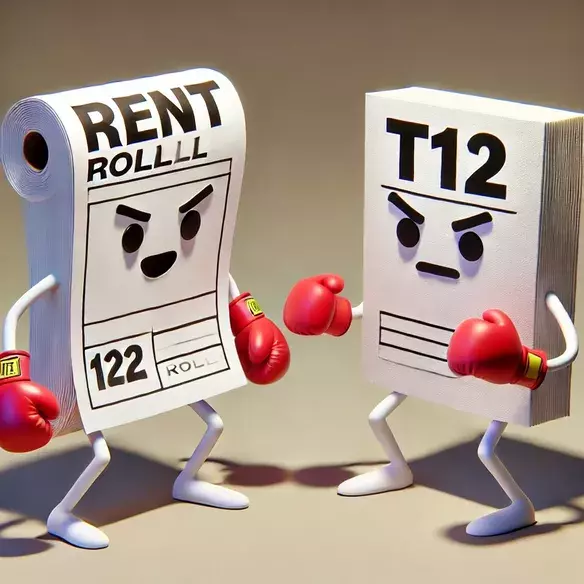
T12 vs Rent Roll vs Pro Forma
This is where a lot of investors get confused:
| Report | What It Shows | Risk Level |
|---|---|---|
| T12 | Past 12 months (actual performance) | Low |
| Rent Roll | Current tenants + rents | Medium |
| Pro Forma | Future projections | High |
👉 Quick rule:
- T12 = Reality
- Rent Roll = Snapshot
- Pro Forma = Sales pitch
How to Read a T12 (Like an Investor)
If you want to move fast on deals, focus on this:
1. Look at Income Trends
Is it going up… or flat?
2. Scan Expenses
Anything jumping month to month?
3. Normalize Numbers
Remove:
- One-time repairs
- Insurance claims
- Abnormal spikes
4. Compare to Rent Roll
Are rents matching actual collections?
👉 If not… there’s a problem.
Common Mistakes Investors Make
❌ Trusting the Pro Forma More Than the T12
This is how people overpay.
❌ Ignoring Expense Increases
Taxes and insurance can kill deals.
❌ Not Verifying the Numbers
Always cross-check:
- Bank statements
- Rent rolls
- Leases
❌ Moving Too Fast
A bad T12 hidden in a “good deal” = expensive lesson.
Real Talk…
A deal can look perfect…
Until you read the T12.
That’s why experienced investors don’t ask:
👉 “How much can this make?”
They ask:
👉 “What has it actually been doing?”
Need Help Analyzing a Deal?
Most investors don’t lose money because of bad opportunities…
They lose money because they trust the wrong numbers.
Before you commit to your next deal, let us take a second look.
👉 Review your deal here:
https://graystoneig.com/real-estate-investing-2/investor-profile
You invest. We do the rest.
Book an Expert
New investor? Start with Jorge.

Jorge Vazquez – CEO & Investment Strategist at Graystone. Let’s make your portfolio stronger, steadier, and more profitable.
Deals? Book with Cody.

Meet Cody Bergstrom, Your Expert in Finding Deals Let’s find an off-market deal that actually works for you.
Need financing? Book with Lisa.

Meet Lisa Kaye Price, the LendingGig Top ML Let’s figure out the smartest way to fund your next deal.
Looking for PM? Book with Jay

Jay Michalec – COO & Property Management Expert at Graystone. Let’s make your rentals easier, calmer, and more profitable.