
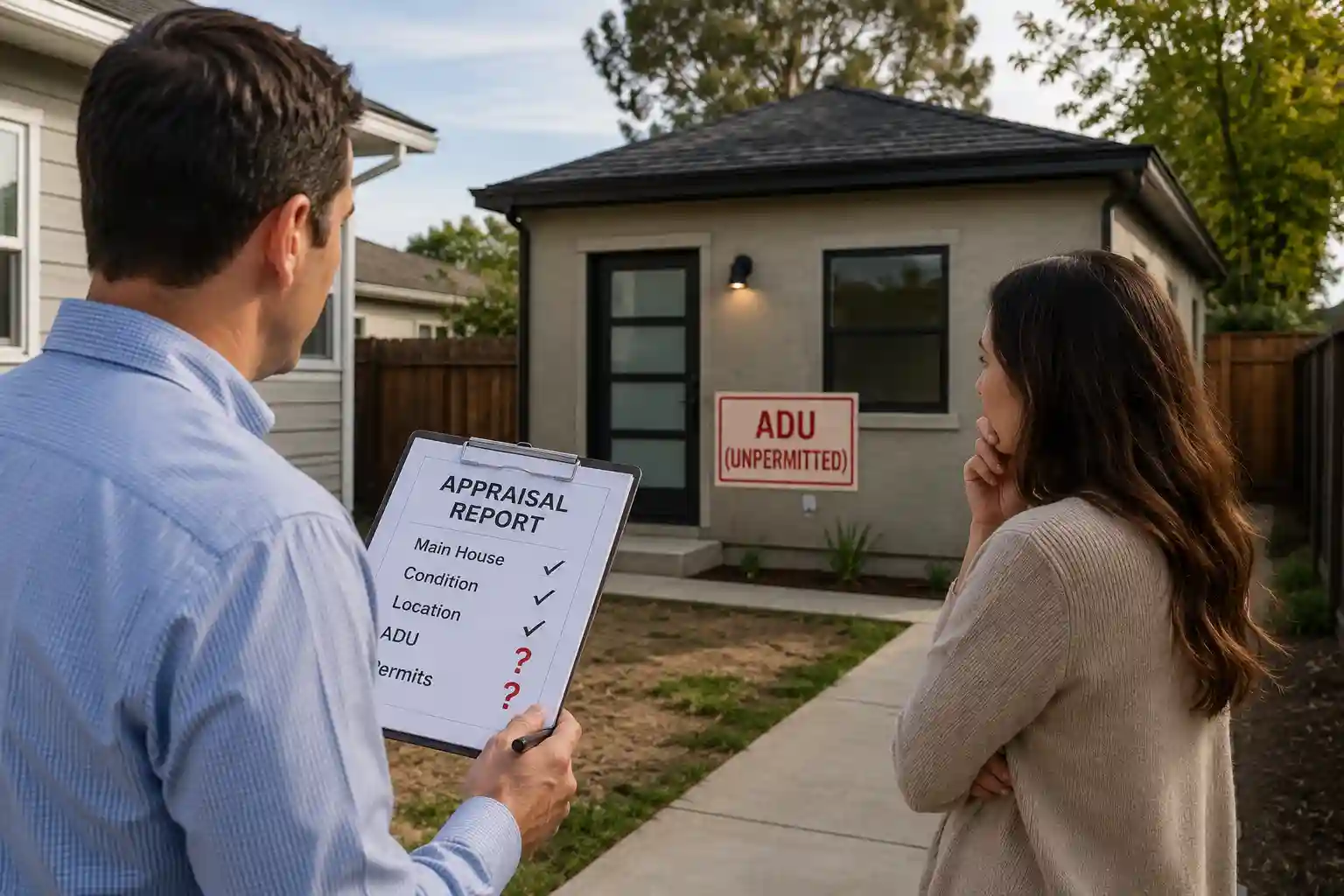
How We Solved an ADU Refinance Problem by Going Directly to the City Zoning Office
Quick Answer (for Google + AI)
Yes, you can sometimes refinance a property with an unpermitted ADU (Accessory Dwelling Unit), but it depends on what the lender, appraiser, zoning department, and underwriter determine about the unit’s legality and allowable use.
In many cases, lenders are not just asking whether the ADU physically exists — they want to know:
- Is the ADU legally allowed by zoning?
- Was it permitted or grandfathered in?
- Does the appraisal clearly explain the legality?
- Does the ADU create risk for the lender?
Even if a city allows ADUs today, refinancing can still get delayed if documentation is unclear.
The Refinance That Almost Fell Apart
Recently, we worked on a refinance involving a single-family property with an ADU in St. Petersburg, Florida.
At first, the deal seemed straightforward.
The property already had the ADU.
The investor had owned the property.
The unit was functional.
Everything appeared fine.
Then underwriting stepped in.
The lender asked a question that catches many investors off guard:
“Can the borrower provide confirmation from the municipality that the unit is legal and grandfathered in?”
Suddenly, the refinance slowed down.
The issue was not whether the ADU physically existed.
The issue was whether the lender felt comfortable with the legal status of the unit.
What Lenders Actually Care About
Many investors think lenders only care about:
- Credit score
- DSCR ratio
- income
- appraisal value
But when an ADU is involved, lenders often become far more cautious.
Here is what they usually look for.
1. Is the ADU Allowed by Zoning?
This is one of the biggest questions.
A property may have:
- a garage conversion
- detached unit
- mother-in-law suite
- backyard apartment
- converted duplex setup
…but if zoning does not allow that use, the lender may see increased risk.
In our situation, the zoning department confirmed the property’s zoning classification allowed ADUs under the city’s use matrix.
That distinction became critical.
The city explained:
- there was no evidence of permitting on file
- BUT the use itself was still considered an allowable use under current zoning
That helped save the refinance.
Allowed Use vs Permitted: Why This Confuses Investors
This is where many investors get confused.
These are not always the same thing.
Allowed Use
Means the zoning code permits that type of structure or use in that zoning district.
Permitted Structure
Means permits were actually pulled and approved for construction.
A property can sometimes have:
- allowable zoning
- but incomplete permit history
That creates underwriting questions.
Some lenders may still move forward.
Others may not.
Why the Appraisal Language Matters So Much
One of the biggest problems we see is vague appraisal wording.
If an appraiser writes something unclear like:
- “possible illegal unit”
- “unknown legality”
- “non-conforming use”
- “garage conversion observed”
…it can trigger underwriting concerns immediately.
In our case, underwriting specifically wanted the appraiser to revise the report and clearly state the ADU was an “allowed use.”
One sentence in an appraisal can completely change a refinance outcome.
Why Experienced Investors Solve These Problems Faster
Most beginner investors panic when issues like this appear.
Experienced investors understand that real estate is often about problem-solving and documentation.
Instead of arguing with underwriting, we:
- contacted the city zoning department directly
- gathered zoning exhibits
- obtained use matrix documentation
- clarified the zoning classification
- coordinated with the appraiser
- worked with underwriting to explain the situation
That operational experience matters.
Many deals do not fail because the property is bad.
They fail because nobody knows how to navigate the process.
Common ADU Issues That Delay Refinances
Here are some of the most common problems lenders flag:
Missing permits
Older conversions may not have permit records.
Garage conversions
Especially common in Florida investment properties.
Detached structures
Backyard units often create underwriting questions.
Inconsistent property records
County records may not match the actual layout.
Unclear appraisal descriptions
Even legal units can create problems if described poorly.
Zoning conflicts
The property may violate density or use restrictions.
Can You Still Refinance?
Sometimes yes.
Sometimes no.
The answer usually depends on:
- the lender
- the appraiser
- the city
- the documentation
- the investor’s ability to resolve questions quickly
Some lenders are far more flexible with ADUs than others.
Others may immediately decline the loan if permits are missing.
This is why investors should investigate:
- zoning
- permits
- grandfathering
- property records
- appraisal risk
BEFORE refinancing.
What Smart Investors Do Before Buying Properties With ADUs
Experienced investors usually verify:
- zoning classifications
- allowable use
- prior permits
- utility setup
- property appraiser records
- insurance implications
- lender guidelines
before they buy.
Because once underwriting starts asking questions, the clock starts ticking.
And delays can become expensive fast.
Final Thoughts
ADUs can add tremendous value to investment properties.
They can increase:
- rental income
- cash flow
- DSCR ratios
- overall property value
But they can also create financing complications if documentation is unclear.
The biggest lesson from this refinance was simple:
Real estate investing is not just about finding deals.
It is about solving problems.
And sometimes the difference between a closed refinance and a denied loan comes down to:
- one zoning document
- one appraisal revision
- or one investor willing to keep pushing the deal forward.
Book an Expert
New investor? Start with Jorge.

Jorge Vazquez – CEO & Investment Strategist at Graystone. Let’s make your portfolio stronger, steadier, and more profitable.
Deals? Book with Cody.

Meet Cody Bergstrom, Your Expert in Finding Deals Let’s find an off-market deal that actually works for you.
Need financing? Book with Lisa.

Meet Lisa Kaye Price, the LendingGig Top ML Let’s figure out the smartest way to fund your next deal.
Looking for PM? Book with Jay

Jay Michalec – COO & Property Management Expert at Graystone. Let’s make your rentals easier, calmer, and more profitable.