Is a 1 Percent Mortgage Rate Really Possible?
When someone first asked me if mortgage rates could drop all the way to one percent, I almost laughed. One percent sounds like a typo on a lender’s rate sheet, not a real number. But the more I thought about it, the more I realized that it is not completely off the table. We have seen strange things in the financial world before. Remember when oil prices went negative for a hot minute in 2020? That felt impossible too. So let’s dig into how mortgage rates actually work, what the Federal Reserve can and cannot control, and why a one percent mortgage rate, while a long shot, is not as crazy as it sounds.
How Mortgage Rates Really Move
First, we need to clear up one of the biggest myths out there. The Fed does not directly set mortgage rates. The Fed sets the federal funds rate, which is the overnight rate banks charge each other for very short term loans. Mortgage rates are tied to the 10 year Treasury yield plus a spread. Lenders look at the yield on that bond because a 30 year mortgage is most sensitive to the long term outlook for inflation and economic growth, not the short term overnight rate.
When investors expect the economy to slow or inflation to cool, they buy Treasuries. That demand pushes Treasury prices up and yields down. Lower yields mean lower mortgage rates because lenders can fund those loans more cheaply. So while the Fed’s policy rate influences the big picture, mortgage rates really dance to the tune of investor expectations about the economy.
Here is where it gets interesting. Even when markets think they know what the Fed is about to do, the actual announcement still moves markets. Traders might price in a cut, but once the Fed confirms it and releases new guidance, people adjust positions. That is why we sometimes see mortgage rates dip again right after a widely expected cut. The psychology matters as much as the math.
The Pressure Cooker of Politics
Now let’s talk politics. There is a lot of political pressure to keep borrowing cheap. If it were up to former President Trump, we would probably already be flirting with negative rates. You can agree or disagree with the idea, but the pressure is real. Politicians know that low borrowing costs keep the housing market humming and stock prices happy. As we head into an election cycle, that pressure only increases.
Fed Chair Jerome Powell’s term ends in March. A new chair could be more aggressive about cutting rates if they believe the economy needs more juice. A change at the top of the Fed always creates uncertainty, and markets tend to respond quickly to even small hints of a different philosophy. If the next chair believes in pushing rates toward zero or below to stimulate growth, that alone could drive the 10 year yield down and pull mortgage rates with it.
What I Expect in the Short Term
Looking at the next few months, I think we will get at least one more 25 basis point cut, maybe a total of 50 before the year ends. These are not just guesses. We already see signs of economic slowing. Inflation is coming down, job growth is softening, and the Fed has room to act without stoking a new surge in prices. If those cuts happen, I expect mortgage rates to slide into the mid 4 percent range by December. That alone would feel like a relief to buyers who have been staring at six or seven percent rates for the last year.
Could We Really See One Percent?
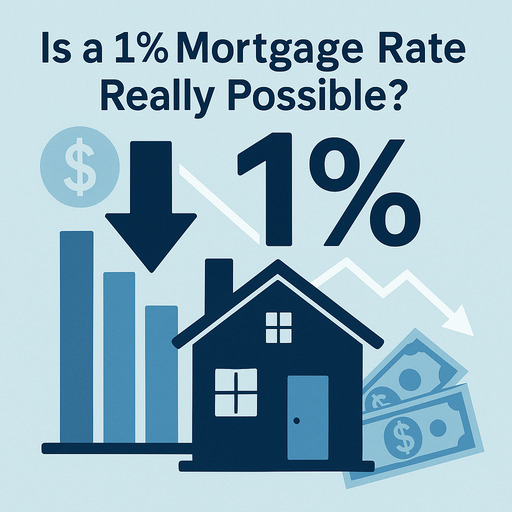
Here is the big question. Could mortgage rates actually fall all the way to one percent next year? To get there, we would need a few things to happen. First, the Fed would have to cut rates to near zero, or even below zero, like the European Central Bank and the Bank of Japan did in the past decade. Second, investors would have to believe that inflation is gone and that economic growth will stay weak for a long time. Third, the spread between the 10 year Treasury and mortgage rates would have to narrow to historic lows.
Is that likely? Probably not. But is it impossible? No. We have seen central banks push rates negative before. In countries like Germany, Switzerland, and Japan, government bonds have traded at negative yields. Investors literally paid the government to keep their money safe. If the United States faced a deep recession and deflationary pressures, it could happen here too.
Lessons from History
History gives us some clues. After the 2008 financial crisis, the Fed slashed rates to zero and launched quantitative easing, buying massive amounts of Treasuries and mortgage backed securities. That helped drive mortgage rates to record lows, eventually under three percent in 2020 and 2021. At the time, people thought that was as low as we could ever see. But other countries went even further, pushing policy rates negative for years. If global deflation took hold, or if another financial crisis forced the Fed to act aggressively, one percent mortgage rates are not unthinkable.
What a One Percent Mortgage Rate Would Mean
If we ever got that low, the impact on housing would be enormous.
-
Refinancing Boom
Homeowners would rush to refinance, lowering their monthly payments and freeing up cash for spending or investing elsewhere. -
Buying Frenzy
Cheap money would lure buyers back in, pushing demand through the roof. That could drive home prices higher, even if the broader economy was weak. -
Investor Advantage
Real estate investors could lock in ultra low financing, making cash flow easier to achieve and opening the door to more aggressive BRRRR strategies. -
Potential Bubbles
The risk is that super cheap money inflates another housing bubble, just like we saw before the 2008 crash.
The Risks of Negative Rates
Before you start dreaming of one percent mortgages, remember that negative rates are usually a sign of economic trouble. They happen when central banks are desperate to stimulate growth in the face of deflation. A world where you can borrow at one percent is probably a world where unemployment is high and businesses are struggling. Cheap mortgages would be a silver lining in an otherwise stormy economy.
How Investors Should Prepare
If you are an investor, here is how to think about this scenario.
-
Stay Liquid
Keep some cash or credit lines ready. If rates drop quickly, you want to move fast on new deals or refinancing. -
Watch the Spread
The gap between mortgage rates and the 10 year Treasury is key. A narrowing spread can bring mortgage rates down even if the Fed stands still. -
Consider Long Term Holds
Ultra low rates favor long term buy and hold strategies. Lock in cheap debt and let inflation slowly work in your favor over time. -
Be Ready for Volatility
Markets can swing wildly when policy shifts. Have a plan for both opportunities and risks.
My Personal Take
From where I sit today, I expect mortgage rates to land in the mid 4 percent range by the end of this year. That alone would be a big win for buyers and investors who have been grinding through high rates. Beyond that, if we see continued political pressure, a new Fed chair, and signs of a weaker economy, we could dip lower in 2026. One percent still feels like a long shot, but I will not say it is impossible. We have seen stranger things.
What You Should Do Now
If you are thinking about buying or refinancing, stay alert. Watch the Fed meetings, track the 10 year Treasury yield, and be ready to act if rates slide. The best deals usually go to those who move quickly when the market shifts. Talk to your lender about rate locks and refinancing options so you are not scrambling at the last minute.
Final Thoughts
A one percent mortgage rate would be historic, but it is not pure fantasy. The combination of Fed policy, political pressure, global economic trends, and investor behavior could create the conditions for it. Even if we never hit that number, the path toward lower rates is already opening up. The next few months will be critical for buyers, homeowners, and investors alike.
Keep it consistent, stay patient, stay true—if I did it, so can you. This is Jorge Vazquez, CEO of Graystone Investment Group and all our amazing companies, and Coach at Property Profit Academy. Thanks for tuning in—until the next article, take care and keep building.
If you would like to talk about your own strategy, book a time with me here: https://graystoneig.com/ceo.
Book an Expert
New investor? Start with Jorge.

Jorge Vazquez – CEO & Investment Strategist at Graystone. Let’s make your portfolio stronger, steadier, and more profitable.
Deals? Book with Cody.

Meet Cody Bergstrom, Your Expert in Finding Deals Let’s find an off-market deal that actually works for you.
Need financing? Book with Lisa.

Meet Lisa Kaye Price, the LendingGig Top ML Let’s figure out the smartest way to fund your next deal.
Looking for PM? Book with Jay
Jay Michalec – COO & Property Management Expert at Graystone. Let’s make your rentals easier, calmer, and more profitable.