
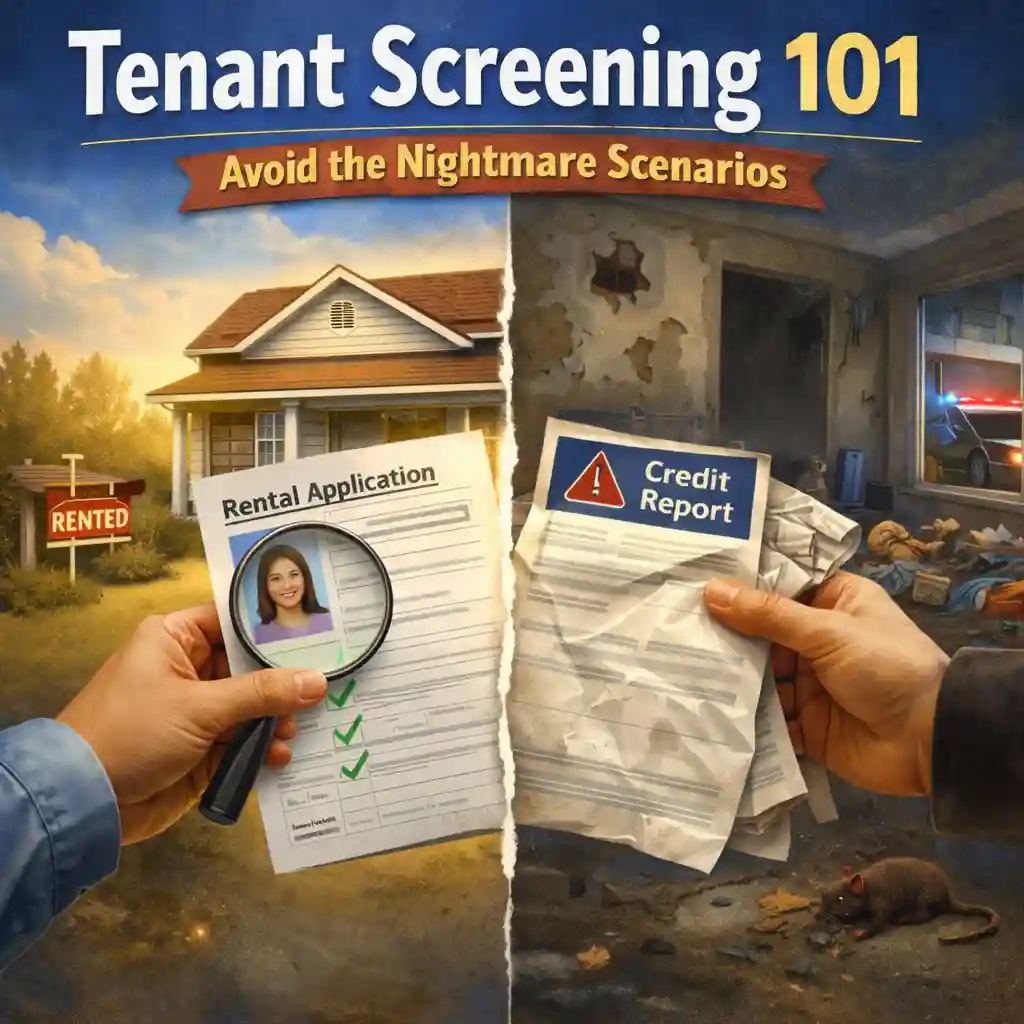
I didn’t learn tenant screening from a book.
I learned it the hard way.
Over 20 years, 3,500+ transactions, and owning 40+ rental properties, I’ve seen every tenant story you can imagine. The good, the bad, and the “how is this even real life?” situations.
I’ve had tenants who paid early every month and treated the home better than I did.
I’ve also had tenants who disappeared overnight, left pets they never told me about, and turned a clean house into a science experiment.
Here’s the truth most new landlords don’t hear early enough:
Tenant screening isn’t paperwork. It’s risk management.
This article is everything I wish someone had handed me before my first rental. If you want fewer headaches, fewer evictions, and fewer “why did I do this?” moments, keep reading.
Why Tenant Screening Is the Real Investment Decision
Most investors think the deal happens when you buy the property.
Wrong.
The real deal happens when you hand over the keys.
You can buy the perfect house at the perfect price and still lose money if the wrong person moves in. A bad tenant can wipe out a year of profit faster than a bad roof.
I learned early that a vacant property is cheaper than a bad tenant. Every time.
My First Screening Mistake (And the One I Never Repeated)
Early on, I had a property sitting vacant longer than I wanted. The mortgage was due. The pressure was real.
An applicant came in with a good story.
Nice personality.
Needed a place “right away.”
I skipped one step.
Just one.
Within 60 days, rent was late. By month three, it stopped. By the end, I was dealing with an eviction, repairs, and months of lost time.
That mistake cost me more than money. It cost me sleep.
From that day forward, screening became non-negotiable.
Rule #1: Screening Is About Patterns, Not Perfection
I don’t look for perfect tenants. I look for predictable behavior.
People repeat habits.
Late once often means late again.
A pattern of evictions doesn’t magically disappear.
You’re not judging character. You’re reading history.
Tip 1: Always Use a Written Application
No application, no keys. Period.
If someone resists filling out an application, that’s already an answer. A written application creates accountability and gives you something to verify.
Tip 2: Verify Identity First
Before you even get excited:
• Government ID
• Full legal name
• Matching information across documents
If names don’t match or details change, slow down.
Tip 3: Income Must Be Verifiable, Not Promised
I’ve heard every version of “I’m about to start a new job.”
That’s nice.
But rent is due now.
I look for steady income and proof. Pay stubs, bank statements, tax returns for self-employed tenants. No proof means no approval.
Tip 4: Use Simple Math (3x Rent Rule)
If rent is $1,500, income should reasonably support it.
I don’t get fancy here. If the numbers are tight on paper, they’ll be impossible in real life when something breaks or life happens.
Tip 5: Credit Reports Tell Stories
Credit doesn’t mean everything, but it tells a story.
I look at:
• Late payments
• Collections
• Patterns
Medical collections? I’m flexible.
Chronic unpaid obligations? That’s a red flag.
Tip 6: Eviction History Is a Loud Signal
One eviction can happen.
Multiple evictions are a pattern.
I don’t ignore that. Ever.
Tip 7: Criminal Background Checks Matter
This isn’t about being judgmental. It’s about safety and liability.
Certain histories are non-starters for rental housing. Period.
Tip 8: Rental History Is Gold
I always ask:
• Where did you live last?
• How long?
• Why did you leave?
Then I verify it.
If a tenant can’t provide landlord references or gets defensive, slow the process down.
Tip 9: Actually Call the Previous Landlord
And don’t just ask, “Were they a good tenant?”
Ask:
• Did they pay on time?
• Would you rent to them again?
• Did they leave the property in good shape?
Listen to the pauses. Silence says a lot.
Tip 10: Don’t Rush Because of Vacancy
Vacancy pressure creates bad decisions.
I’d rather lose one month of rent than lose six months fighting an eviction.
This mindset alone saved me thousands over the years.
Inherited Tenants Deserve Extra Caution
Buying a property with tenants already inside is a whole different game. You inherit not just the lease but the risk.
I’ve written about this exact situation here:
https://graystoneig.com/articles/i-got-asked-this-today-i-inherited-a-tenant-now-what
If you don’t know their history, assume nothing until verified.
Tip 11: Always Get Estoppel Letters When Possible
An estoppel letter confirms:
• Rent amount
• Lease terms
• Deposits
It protects you from surprises after closing.
Tip 12: Rescreen at Renewal Time
A renewal is not automatic approval.
Life changes. Jobs change. Behavior changes.
I rescreen or at least re-evaluate before renewing any lease.
Tip 13: Watch How They Communicate
How someone communicates during the application process is how they’ll communicate during problems.
Late replies.
Aggressive tone.
Inconsistent answers.
These are previews, not accidents.
Tip 14: Pets Are a Screening Category, Not an Afterthought
Undisclosed pets are a common issue.
I ask directly.
I put it in writing.
I verify.
Pets don’t scare me. Lying does.
Tip 15: Trust the Process More Than the Story
Everyone has a story.
I care more about documentation than explanations.
Good tenants understand this and cooperate.
Tip 16: Fair Housing Rules Always Apply
Screen consistently.
Same criteria.
Same process.
Not only is it the law, it protects you from lawsuits.
Tip 17: Clear Lease Terms Prevent Future Fights
A weak lease creates arguments later.
Clear rules prevent misunderstandings and protect both sides.
Tip 18: Documentation Is Your Shield
Photos.
Emails.
Signed forms.
If it’s not documented, it didn’t happen.
Tip 19: Property Management Isn’t a Shortcut, It’s a System
I eventually realized screening done right takes systems, not emotions.
That’s why professional screening matters, especially as portfolios grow.
If you’re deciding whether to manage yourself or bring in help, this article breaks it down well:
https://graystoneig.com/articles/investment-property-self-managing-vs-hiring-a-professional
Tip 20: Good Tenants Are an Asset—Protect Them
When you screen well, you keep good tenants longer.
Good tenants:
• Pay on time
• Respect the property
• Reduce turnover
They are worth protecting.
Final Thoughts From Experience
Tenant screening isn’t about being strict.
It’s about being smart.
Every nightmare scenario I’ve seen started with a shortcut someone thought wouldn’t matter.
It always matters.
If you treat screening like a formality, tenants will treat rent the same way.
Keep it consistent, stay patient, stay true—if I did it, so can you. This is Jorge Vazquez, CEO of Graystone Investment Group and all our amazing companies, and Coach at Property Profit Academy. Thanks for tuning in—until the next article, take care and keep building!
If you’d like to connect directly with me, feel free to book a time here:
https://graystoneig.com/ceo
Book an Expert
New investor? Start with Jorge.

Jorge Vazquez – CEO & Investment Strategist at Graystone. Let’s make your portfolio stronger, steadier, and more profitable.
Deals? Book with Cody.

Meet Cody Bergstrom, Your Expert in Finding Deals Let’s find an off-market deal that actually works for you.
Need financing? Book with Lisa.

Meet Lisa Kaye Price, the LendingGig Top ML Let’s figure out the smartest way to fund your next deal.
Looking for PM? Book with Jay

Jay Michalec – COO & Property Management Expert at Graystone. Let’s make your rentals easier, calmer, and more profitable.