
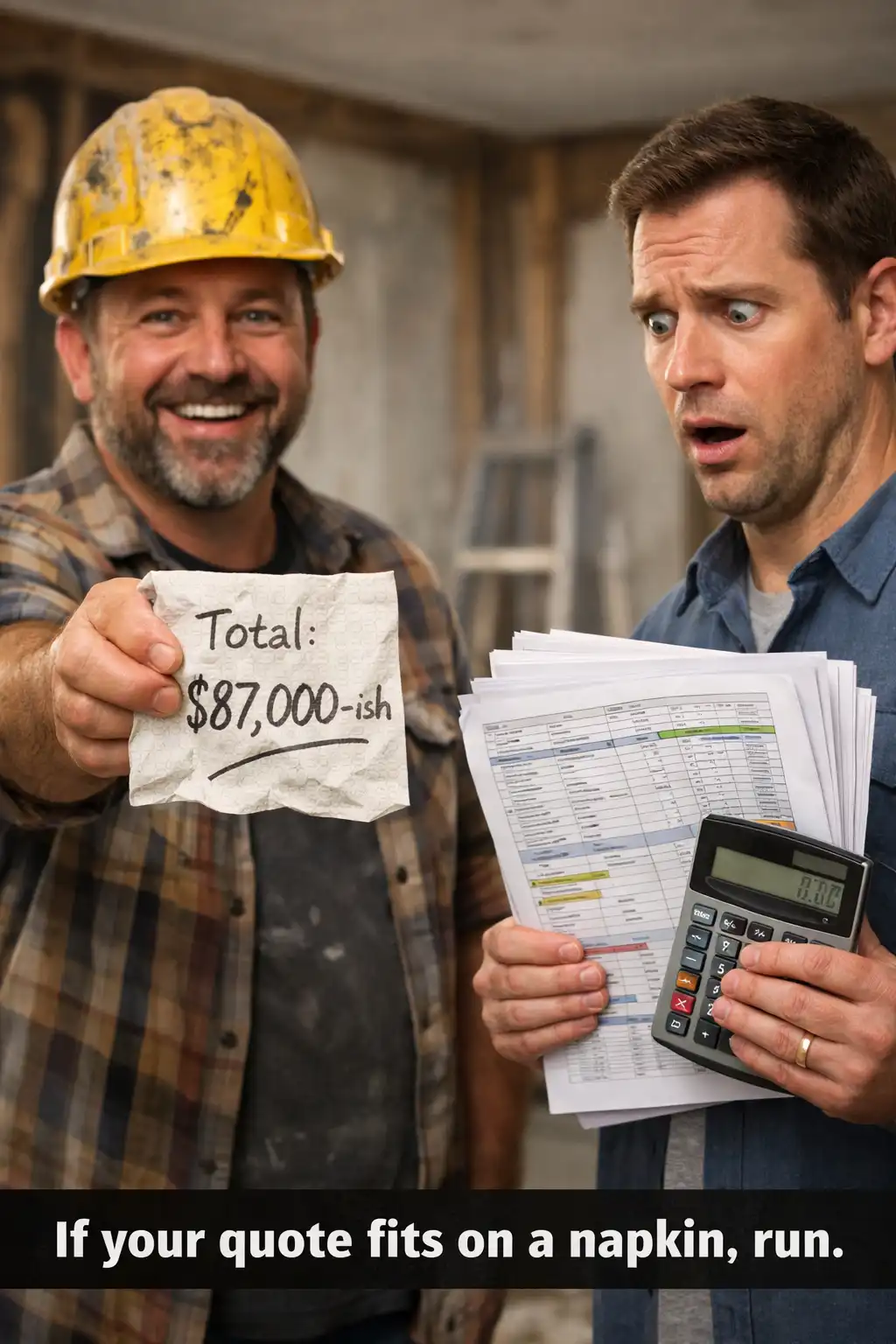
The Right Way to Get a Real Quote From a General Contractor for a Flip
Today I had a deep conversation with one of my GCs about a property we’re getting ready to flip. It wasn’t a casual “what do you think it’ll cost?” type of chat. It was about building a real process so we don’t blow the budget halfway through the project.
If you’re flipping houses, the way you get your quote can either protect your profit… or destroy it.
Most investors make one simple mistake:
They walk the house, take some photos, send them to a contractor, and ask, “How much to fix this?”
That’s not how serious flips are done.
That’s how change orders happen.
Let’s break down the right way to get a real quote from a General Contractor.
Step 1: Start With an Updated Survey
Before you touch a wall, you need a current survey of the property.
Why?
Because you must understand:
-
Property boundaries
-
Setbacks
-
Easements
-
Encroachments
-
Legal footprint of the structure
If you’re adding square footage, moving walls, relocating mechanical systems, or adjusting exterior features, you must know what’s legally allowed.
A survey isn’t glamorous. It won’t increase ARV.
But it protects you from very expensive mistakes.
Smart flipping starts with paperwork, not demolition.
Step 2: Document the Existing Floor Layout
You need a clear understanding of how the property exists today.
That includes:
-
Current wall placements
-
Plumbing locations
-
Electrical panels and runs
-
HVAC routing
-
Window and door placements
-
Load-bearing walls
Even if you plan to change everything, you need a baseline.
You cannot remodel what you don’t fully understand.
Skipping this step means guessing. And guessing costs money.
Step 3: Define the New Layout Before Asking for Pricing
This is where most new flippers go wrong.
They ask for a quote before they’ve decided what they’re building.
You must answer:
-
Are we opening the kitchen?
-
Are we adding a bathroom?
-
Are we relocating plumbing?
-
Are we building a primary suite?
-
Are we adding recessed lighting or keeping a single fixture?
-
Are we upgrading the panel?
If the contractor doesn’t know exactly what you want, the quote will be vague.
And vague quotes turn into expensive change orders.
Clarity before cost.
Always.
Step 4: Invest in Proper Plans
If you want a real quote, you need real plans.
That means hiring a professional to create:
-
Structural drawings
-
Plumbing plans
-
Electrical plans
-
HVAC plans
Yes, this costs money upfront.
Many investors hesitate here because they want to save.
But spending a few thousand dollars on plans can prevent tens of thousands in surprises.
With detailed plans:
-
The electrician knows how many switches, outlets, and lights are required.
-
The plumber knows where drains are being relocated.
-
The HVAC contractor knows duct changes and system sizing.
-
The GC can properly sequence the work.
Now the quote becomes accurate.
Not a guess.
Step 5: Understand Permit Requirements
If you’re flipping to resell, permits are not optional.
When renovating for resale:
-
Licensed trades must be involved.
-
Permits must be pulled properly.
-
Inspections must be completed.
A General Contractor typically pulls a group permit that includes:
-
Electrical
-
Plumbing
-
HVAC
Each trade operates under its own license.
If something fails inspection, it falls back on that license.
That structure protects you.
Budget for permits from day one. Pretending they don’t exist does not make them disappear.
Step 6: Licensed vs Unlicensed Labor
This conversation always comes up.
Licensed contractors cost more.
Unlicensed labor costs less.
But here’s reality:
If the scope requires permits, licensed trades are mandatory.
Licensed contractors:
-
Carry insurance
-
Are accountable to regulatory boards
-
Stand behind their work
-
Pass inspections
Unlicensed labor may work for minor cosmetic tasks.
But for structural, plumbing, electrical, or HVAC work, cutting corners can destroy your deal.
Cheap labor that fails inspection is not cheap.
Step 7: Structure the Quote the Right Way
When requesting a quote from a GC, do not ask for a lump sum with no breakdown.
Provide:
-
Updated survey
-
Existing layout
-
Proposed layout
-
Full plan set
-
Detailed scope of work
Then request:
-
Line item breakdown
-
Labor vs material separation
-
Permit costs separated
-
Timeline estimate
-
Inspection phase timing
This turns a casual estimate into a professional proposal.
And professional proposals create predictable profits.
Step 8: Build Inspection Time Into Your Budget
City inspections do not operate on your timeline.
After work is completed for a phase:
-
You request inspection.
-
The city schedules inspection.
-
You wait.
It may take three days.
It may take a week.
It may take longer.
You cannot move forward until inspection passes.
This affects:
-
Holding costs
-
Loan draw timelines
-
Resale timing
If you ignore inspection timing, your projections will be wrong.
Build in buffer time.
Be conservative.
Step 9: Separate Loan Approval From Construction Start
If you’re financing the flip, there are two distinct phases:
Phase 1: Close on the property.
Phase 2: Start construction.
Sometimes you must close quickly to secure the deal.
That does not mean you must begin demolition immediately.
Sometimes the smarter move is:
-
Close.
-
Finalize layout.
-
Refine scope.
-
Review comparable flips.
-
Confirm finishes.
-
Then start.
Speed is good.
Precision is better.
Step 10: Protect Both Sides With Clear Scope
Everything outside of the approved plans should be treated as additional.
This is not about being difficult.
It’s about clarity.
If the plan shows one light and later someone wants four recessed lights, that is an upgrade.
If the plan shows one outlet and someone wants five, that is additional work.
Clear documentation prevents arguments.
And healthy relationships are good for business.
Step 11: Be Conservative With Timelines
If you think the project will take three months, tell the client four.
If inspections move quickly, you look like a hero.
If delays happen, you look prepared.
Over-optimism kills credibility.
Conservative planning builds trust.
Why Most Flips Go Over Budget
It’s rarely because contractors are bad people.
It usually happens because:
-
Scope was unclear
-
Plans were incomplete
-
Layout changed mid-project
-
Permits were underestimated
-
Inspections were ignored
-
Finish selections were not finalized
A real quote prevents most of these problems.
Final Thoughts: Flipping Is Not Guessing
Getting a real quote is not about asking for a number.
It’s about building structure before construction.
It’s about clarity before cost.
It’s about planning before profit.
If you follow this process:
-
Updated survey
-
Existing layout
-
Defined new layout
-
Professional plan set
-
Permit clarity
-
Licensed trades
-
Line-item quote
-
Inspection timing built in
You reduce surprises dramatically.
Flipping is not gambling.
It’s calculated risk.
And the calculation starts with how you get your quote.
I will share pictures of this project in the follow-up article so you can see exactly how this process plays out in real life.
Keep it consistent, stay patient, stay true—if I did it, so can you. This is Jorge Vazquez, CEO of Graystone Investment Group and all our amazing companies, and Coach at Property Profit Academy. Thanks for tuning in—until the next article, take care and keep building!
If you’d like to connect directly with me, feel free to book a time here: https://graystoneig.com/ceo.