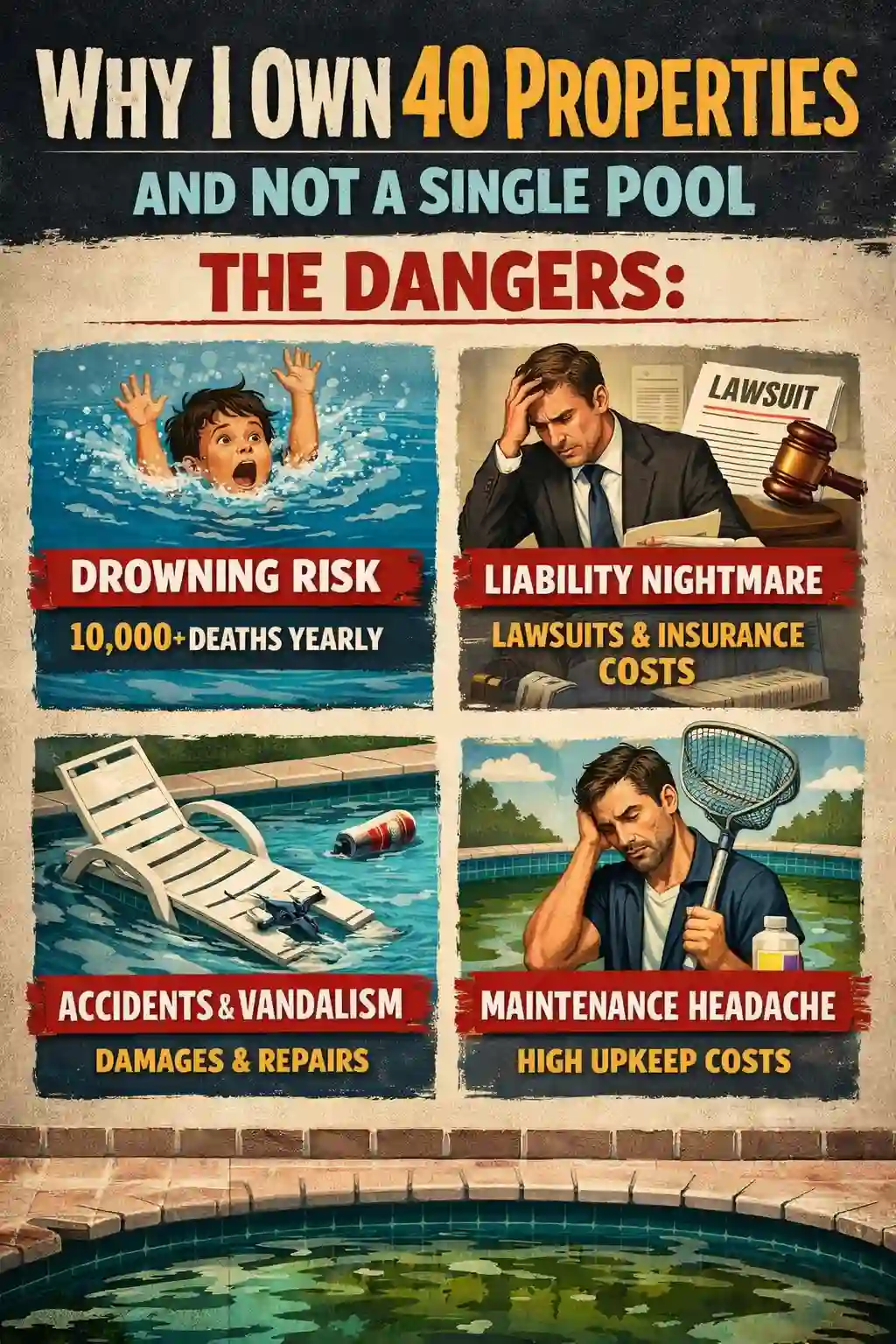
Why I Own 40 Properties and Not a Single Pool
The Conversation That Gave Me Goosebumps and Changed the Way I Think About Risk
I have over 40 properties.
Not one of them has a pool.
And that’s not by accident.
The other day I was on a call with a new VIP investor. Smart guy. Successful. Asking all the right questions about returns, appreciation, leverage, refinance timing. Normal stuff. The kind of conversation I’ve had thousands of times over the past 20 years.
Then the tone changed.
He said something almost casually.
“Yeah… we had a kid drown in one of our rentals.”
Silence.
You know when your stomach drops a little? That was me.
I’ve been in real estate a long time. I’ve seen foreclosures. I’ve seen fires. I’ve seen hurricanes tear roofs off buildings. I’ve lost properties. I’ve rebuilt from nothing. I’ve dealt with lawsuits, contractors disappearing, tenants not paying.
But that sentence hit different.
A kid drowned.
Not at a resort.
Not at a public pool.
At a rental property.
His rental property.
And he had to go to court over it.
That conversation gave me goosebumps. Not because I’ve never thought about pools before. But because it reminded me exactly why I’ve avoided them for two decades.
Let me tell you the full story.
The Call That Shifted the Energy
We were talking about Florida rentals. Tampa. Orlando. Jacksonville. He asked me why so many of my properties were simple homes without pools, even in neighborhoods where pools are common.
He said, “Don’t you think you’re leaving money on the table?”
That’s a fair question.
Pools can increase rent.
Pools can increase resale appeal.
Pools look amazing in photos.
Florida equals sunshine and swimming.
So I told him my usual answer: I prefer simple, durable, easy-to-manage properties. My focus has always been velocity and safety. Build equity first. Keep systems simple. Scale without chaos.
Then he paused and said, “Let me tell you why I’m asking.”
That’s when he told me.
They had a single family rental. Middle class neighborhood. Fully fenced yard. In-ground pool. They required renters insurance. They had a pool addendum in the lease. They had signage. They had a self-latching gate.
Everything “by the book.”
Tenant had friends over. Kids were playing. Adults were inside talking. Someone thought someone else was watching.
You can already see where this is going.
A child slipped into the pool.
By the time anyone noticed, it was too late.
He said the part that stuck with me wasn’t the legal battle.
It was the ambulance lights reflecting on the water.
He said he can still see it when he closes his eyes.
The Courtroom Is Only Part of the Cost
Yes, there was a lawsuit.
Yes, insurance got involved.
Yes, attorneys made money.
Even when you do everything right as an owner, you can still get pulled into court. The argument becomes:
Was the gate high enough?
Was the latch compliant?
Were there prior complaints?
Was supervision adequate?
Was the property “attractive nuisance”?
And here’s the thing many investors don’t understand:
When tragedy happens, everyone looks for a responsible party. And if you own the property, you are in the conversation whether you like it or not.
But what shook him wasn’t just the financial exposure.
It was the weight of knowing a child died on a property he owned.
Even if legally you are cleared, emotionally you are not.
You don’t just “move on” from that.
Pools Look Like Amenities. They Act Like Magnets.
Let’s talk about something called “attractive nuisance.” It’s a legal concept that basically says if you have something on your property that attracts children and could be dangerous, you have a heightened duty to protect against harm.
Pools are the definition of attractive nuisance.
Water pulls kids like gravity.
Doesn’t matter if it’s a lake, a fountain, or a backyard pool. Curiosity wins.
Now add rental dynamics:
• You do not control who visits
• You do not control birthday parties
• You do not control alcohol consumption
• You do not control extended family staying over
• You do not control supervision quality
As a landlord, you control structure. Not behavior.
That’s the part that many investors forget.
The Numbers Do Not Tell the Whole Story
Let’s say a pool increases rent by a few hundred dollars a month.
Sounds good, right?
Now add:
• Higher insurance premiums
• Specialized pool liability coverage
• Maintenance contracts
• Resurfacing every few years
• Equipment replacement
• Increased vacancy if safety compliance changes
Then add the non-quantifiable risk.
How do you price:
• A lawsuit
• Reputation damage
• Emotional trauma
• Court time
• Depositions
• Stress
You cannot plug that into a spreadsheet.
And I love spreadsheets.
But some risks don’t show up in pro formas.
Why My Portfolio Is “Boring on Purpose”
When I rebuilt after the 2008 crash, I made a promise to myself.
No more flashy.
No more ego properties.
No more unnecessary risk.
I focused on:
• Solid block construction
• Simple mechanical systems
• Manageable yard sizes
• No complicated features
• No luxury add-ons that become liabilities
No pools.
Some investors chase wow factor.
I chase sleep.
If a property makes slightly less rent but dramatically reduces catastrophic exposure, I’ll take it every time.
The Goosebumps Moment
Back on that call, after he finished telling the story, there was a long pause.
He said, “If I could go back, I would never have bought a rental with a pool.”
He didn’t say it angrily.
He said it quietly.
That’s different.
He had built a large portfolio. He wasn’t a rookie. He wasn’t careless. He did things right.
And still, tragedy found its way in.
That’s when I realized something.
We talk about risk in terms of:
• Interest rates
• Market cycles
• Appreciation
• Cash flow
• Vacancy
We rarely talk about human risk.
The stuff that changes your life forever.
Hurricanes Don’t Scare Me. Pools Do.
I invest in Florida.
I’ve seen hurricanes.
I’ve filed insurance claims.
I’ve replaced roofs.
That risk is calculable.
You can model storm exposure.
You can budget reserves.
You can insure against wind and flood.
But you cannot insure your conscience.
You cannot model a split-second accident.
And you cannot hedge against tragedy.
The Freedom Test
Every property I buy now goes through what I call the Freedom Test.
Does this property increase my freedom?
Or does it increase my exposure?
A pool might increase rent.
But it also increases liability.
A complicated HOA might increase curb appeal.
But it also increases political risk.
An older home with exotic systems might look charming.
But it increases maintenance chaos.
The Freedom Test is simple:
If something goes wrong here, how bad can it get?
With pools, the ceiling of “how bad” is devastatingly high.
But Aren’t Pools Standard in Florida?
Yes, they are common.
Yes, many landlords own them.
Yes, many manage them successfully for years without incident.
And if someone chooses that path with strong risk mitigation, that’s their strategy.
This is not about fear.
It’s about alignment.
My strategy has always been:
Build equity first.
Control downside.
Scale safely.
Sleep well.
A portfolio of 40 properties without pools has worked for me.
The Hidden Conversation Most Investors Avoid
After that call, I sat in my office for a while.
I thought about my own kids.
I thought about tenants’ kids.
I thought about how quickly life can change.
We talk about building generational wealth.
But what good is generational wealth if one property creates generational trauma?
That conversation reminded me that real estate is not just about assets.
It’s about responsibility.
When you own property, you own risk attached to it.
Every swing set.
Every staircase.
Every railing.
Every pool.
Ownership is not passive.
It’s accountability.
The Business Lesson Underneath the Tragedy
There’s a deeper business principle here.
Many investors chase incremental upside without fully evaluating catastrophic downside.
If something can:
• Increase revenue 5 percent
• But increase liability exposure 500 percent
That is not asymmetric in your favor.
Smart investing is not about maximizing profit at all costs.
It’s about maximizing durability.
Durability compounds.
Flash does not.
What I Told the VIP
At the end of the call, he asked me, “So you really would never buy a rental with a pool?”
I told him this:
I am not building a vacation rental empire.
I am not running short-term party properties.
I am not flipping luxury homes.
I am building durable, long-term, income-producing assets that allow me to live life on my terms.
For my model, pools introduce unnecessary tail risk.
So no.
I don’t buy them.
And after hearing his story, I’m even more certain.
The Night I Thought About It
That night, I replayed his story in my head.
The ambulance lights reflecting on the water.
That image stayed with me.
Real estate is powerful. It builds wealth. It builds freedom. It creates opportunity.
But it also carries responsibility.
The bigger your portfolio, the more you must think like a risk manager, not just an investor.
My job is not just to grow.
My job is to protect.
Protect capital.
Protect reputation.
Protect peace.
Protect the future.
Sometimes the best investment decision is the one that removes a risk before it ever has the chance to show up.
Boring Wins Long Term
There’s a reason institutional investors love boring.
They don’t buy personality.
They don’t buy flair.
They buy durability.
A simple house without a pool might rent slightly less.
But it also:
• Insures easier
• Maintains easier
• Attracts stable tenants
• Carries lower catastrophic risk
When you scale to dozens of properties, small reductions in volatility matter more than small increases in rent.
That’s how portfolios survive decades.
Final Thought
I have 40 properties.
Zero pools.
That’s not an accident.
It’s not fear.
It’s strategy.
That VIP conversation gave me goosebumps for a reason. It reminded me that in real estate, we are not just buying structures.
We are buying responsibility.
And when you choose your assets, you are choosing your risks.
For me, I choose simple.
I choose durable.
I choose sleep.
Keep it consistent, stay patient, stay true—if I did it, so can you. This is Jorge Vazquez, CEO of Graystone Investment Group and all our amazing companies, and Coach at Property Profit Academy. Thanks for tuning in—until the next article, take care and keep building.
If you’d like to connect directly with me, feel free to book a time here: https://graystoneig.com/ceo.
Book an Expert
New investor? Start with Jorge.
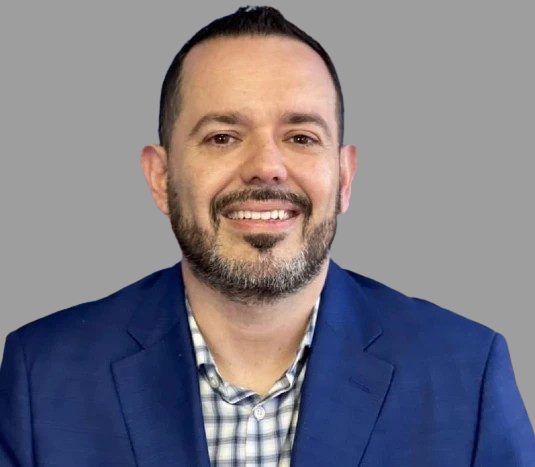
Jorge Vazquez – CEO & Investment Strategist at Graystone. Let’s make your portfolio stronger, steadier, and more profitable.
Deals? Book with Cody.
Meet Cody Bergstrom, Your Expert in Finding Deals Let’s find an off-market deal that actually works for you.
Need financing? Book with Lisa.
Meet Lisa Kaye Price, the LendingGig Top ML Let’s figure out the smartest way to fund your next deal.
Looking for PM? Book with Jay
Jay Michalec – COO & Property Management Expert at Graystone. Let’s make your rentals easier, calmer, and more profitable.