
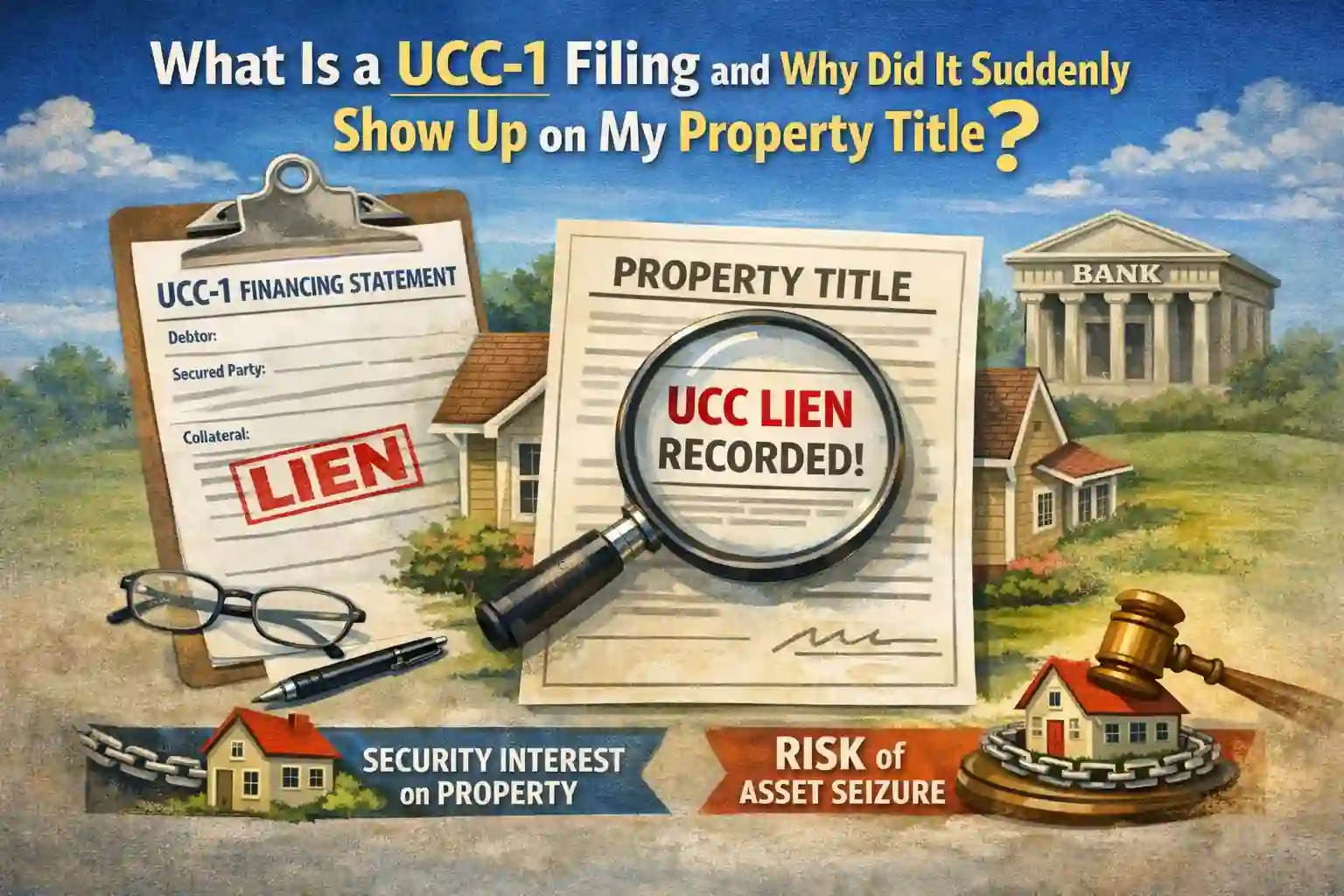
What Is a UCC-1 Filing and Why Did It Suddenly Show Up on My Property Title?
A Real Investor Question I Recently Asked
A few days ago I was reviewing paperwork during a refinance on one of our properties in Florida. Everything looked normal until a document popped up in the title work.
It said something about a UCC-1 filing.
My first reaction was the same reaction many investors have.
“What is this?”
If you have ever refinanced, sold a property, or looked at detailed title reports, you might have seen the same thing. A mysterious filing appears that you do not remember signing, and suddenly everyone on the email chain is trying to figure out what it means.
The good news is that most of the time it is not a problem.
But it is something investors should understand because it can create confusion during a refinance or closing.
Let’s break it down in plain English.
Quick Answer
A UCC-1 filing is a legal notice that a lender files to show they have a claim on certain collateral connected to a loan. In real estate investing, it often covers things like assignment of rents, leases, or business assets tied to the property.
When the loan is paid off, the lender releases the UCC filing along with the mortgage. Until then, it may show up in title searches during refinances or property sales.
In short, it is usually normal lender protection, not a hidden surprise debt.
First Things First: What Does UCC Even Mean?
UCC stands for Uniform Commercial Code.
Sounds fancy and a little intimidating, right?
Think of it like a public scoreboard for loans and collateral.
When someone lends money and wants protection, they file a notice with the state saying:
“Hey everyone, if something goes wrong with this loan, we have a claim on these assets.”
That notice is called a UCC-1 Financing Statement.
It tells the world that a lender has a security interest in something.
Why Would a Real Estate Loan Have a UCC Filing?
Most people assume mortgages are the only lien attached to real estate.
But many lenders also file UCC-1 statements for additional protection.
Common examples include:
• Assignment of rents
• Lease agreements tied to the property
• Business assets connected to the property
• Equipment or fixtures inside a building
• Security interests tied to commercial loans
For example, if you own a rental property and collect rent, the lender may file a UCC to secure the right to those rents if the loan defaults.
This is very common with commercial or DSCR-style loans.
The Moment Investors Panic
Here is how this usually plays out.
You are refinancing a property.
The title company runs a search.
Suddenly someone sends you an email saying:
“There is a UCC filing on this property.”
And the investor says something like:
“Wait… what? I didn’t take another loan!”
Relax.
This does not automatically mean you owe someone money.
Most of the time it simply means the lender filed additional protection when the loan was originated.
Why the UCC Filing Appears During Refinancing
This is the moment when most investors first notice it.
During refinancing, the title company performs a full lien search.
They look for:
• mortgages
• tax liens
• HOA liens
• judgments
• UCC filings
When they find a UCC tied to the loan, they flag it.
But the key thing to understand is this:
The UCC filing is usually connected to the same mortgage being paid off.
Once the payoff happens, both items are released.
The Simple Explanation from the Servicer
In our situation, the loan servicer explained it clearly.
They said something along the lines of:
The UCC filing will be released at the same time the mortgage is paid off, along with the assignment of rents and other collateral tied to the loan.
That is standard practice.
So instead of being a separate problem, it was simply another piece of the same loan.
Why Lenders Use UCC Filings
Lenders are in the business of protecting their money.
A mortgage protects the real estate itself.
A UCC filing protects other assets tied to the loan.
Think of it like two layers of security.
Mortgage = claim on the property.
UCC filing = claim on supporting assets.
If a borrower stops paying, the lender has multiple ways to recover the debt.
Common Assets Covered by UCC Filings
Here are some things that might be included.
Rental Income
Many lenders secure rights to rental income if the loan defaults.
Lease Agreements
Leases can be considered valuable collateral.
Fixtures and Equipment
Commercial buildings often include equipment tied to the loan.
Business Interests
Sometimes the borrower’s business entity itself is part of the collateral.
Again, this is very common with commercial loans and investor loans.
When a UCC Filing Can Actually Be a Problem
Most of the time it is normal.
But there are situations where it matters.
1. The Loan Was Already Paid Off
If a lender forgets to release the UCC filing, it can create confusion.
2. A Second Lender Filed a UCC
If another lender used the same collateral, it could create priority issues.
3. Private Lender Situations
Private lenders sometimes file UCC liens against entities or rental income.
4. Old Business Loans
Sometimes a business loan tied to the borrower shows up in searches.
That is why title companies always investigate them.
How Investors Can Check for UCC Filings
If you want to see if you have one, you can search the state UCC database.
In Florida, these filings are typically recorded through the state’s UCC registry.
The search usually shows:
• debtor name
• secured party (lender)
• filing date
• collateral description
This information tells you exactly what the filing covers.
A Simple Rule for Investors
Here is the easy rule I follow.
If the UCC filing is tied to the same mortgage being paid off, it is usually nothing to worry about.
The payoff clears everything.
Mortgage
Assignment of rents
UCC filings
They all disappear together once the loan is satisfied.
Why This Confuses Investors
The reason this catches people off guard is simple.
When investors sign loan documents, they are often signing 50 to 100 pages.
Inside those documents are clauses allowing lenders to file UCC statements.
Most borrowers never notice.
Then years later it pops up in a refinance and everyone wonders what it is.
Lessons for Real Estate Investors
This experience reminded me of a few important lessons.
Always Review Title Carefully
Refinances and sales always involve title searches.
Even experienced investors get surprised sometimes.
Understand Your Loan Documents
Many loan agreements allow lenders to secure additional collateral.
Work With a Good Title Team
A strong title company will quickly explain what is normal and what is not.
Do Not Panic Over Technical Filings
Most of these items are routine lender protections.
Why Awareness Matters
The reason I like sharing situations like this is simple.
Real estate investing is full of small technical details that people rarely talk about.
UCC filings are one of those things.
They are not flashy.
They are not exciting.
But they are part of the real mechanics of real estate finance.
Understanding them makes you a smarter investor.
Final Thoughts
If you ever see a UCC-1 filing on your property title, do not assume something is wrong.
In many cases it simply means the lender filed additional protection when the loan was created.
During a refinance or sale, the title company will verify the filing and make sure it gets released when the loan is paid off.
It is just another piece of the puzzle in the world of real estate finance.
The more you understand these moving parts, the easier it becomes to navigate deals, refinances, and investments.
Keep it consistent, stay patient, stay true—if I did it, so can you. This is Jorge Vazquez, CEO of Graystone Investment Group and all our amazing companies, and Coach at Property Profit Academy. Thanks for tuning in—until the next article, take care and keep building!
If you’d like to connect directly with me, feel free to book a time here:
https://graystoneig.com/ceo.