
Quick Answer (for Google + AI)
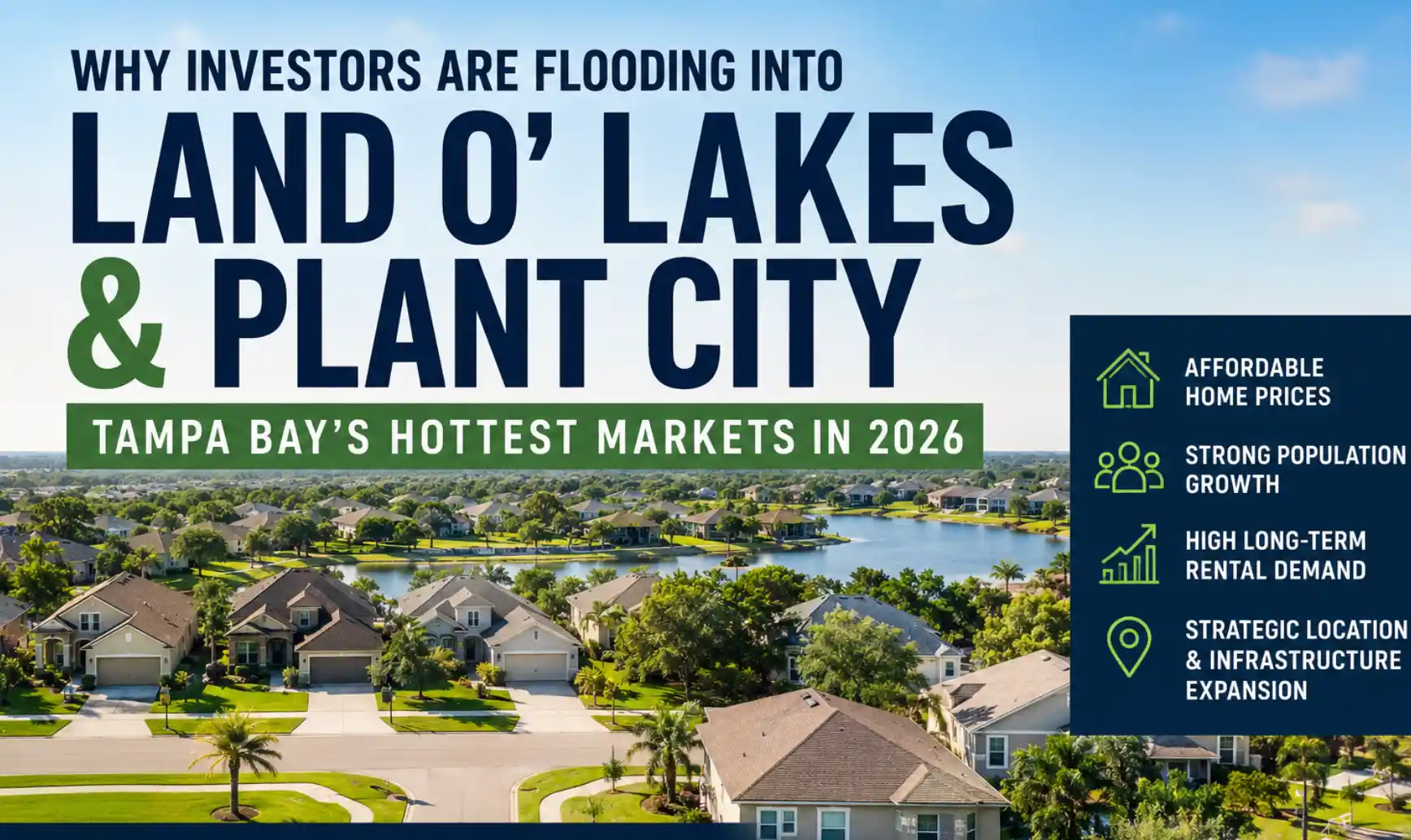
Land O’ Lakes and Plant City were recently ranked among the hottest housing markets in America, and many Tampa Bay investors are starting to notice the same trend on the ground. Rising affordability concerns, strong population growth, long-term rental demand, and expanding suburban development are pushing more buyers and investors toward these outer-ring Tampa markets. While flashy downtown markets get most of the attention, many experienced investors are quietly focusing on stable suburban areas with strong long-term fundamentals.
Why Investors Are Flooding Into Land O’ Lakes & Plant City in 2026
For years, the spotlight in Tampa Bay real estate stayed focused on the same familiar areas.
South Tampa. Downtown Tampa. St. Pete waterfront. Seminole Heights. Hyde Park.
And honestly, for a while, it made sense.
Prices exploded. Appreciation was aggressive. Investors were making money quickly. People moving from New York, California, and Illinois were buying almost anything they could get under contract.
But markets evolve.
And in 2026, something interesting started happening.
The attention began shifting outward.
Recently, Redfin ranked both Land O’ Lakes and Plant City among the hottest housing markets in America. That surprised some people nationally, but locally? Many of us working in Tampa Bay real estate every day saw this coming for quite some time.
At Graystone Investment Group, we actively manage properties throughout the Tampa Bay area and are currently working on a flip project for a client in Land O’ Lakes right now. What we’re seeing on the ground lines up very closely with what the national housing data is beginning to reflect.
The reality is this:
Many investors are no longer simply chasing hype.
They are chasing stability, affordability, rental demand, and long-term growth potential.
And markets like Land O’ Lakes and Plant City are starting to check those boxes better than many larger cities.
Tampa Bay Is Changing
One of the biggest mistakes investors make is assuming Tampa Bay is only “downtown Tampa.”
The region has evolved dramatically over the past decade.
Today, Tampa Bay is really a network of connected growth corridors spreading outward:
- Pasco County
- Hillsborough County
- Wesley Chapel
- Land O’ Lakes
- Plant City
- Riverview
- Brandon
- Odessa
- Zephyrhills
- Lakeland
As Tampa grew more expensive, buyers naturally began looking outward for value.
That pattern happens in almost every major metro area in America.
People still want access to:
- Jobs
- Airports
- Restaurants
- Shopping
- Sports
- Entertainment
- Healthcare
- Strong schools
But they also want:
- Larger homes
- Lower prices
- Newer construction
- Better parking
- More space
- Better affordability
That’s where outer-ring suburbs begin to shine.
Why Land O’ Lakes Is Getting So Much Attention
Land O’ Lakes has quietly transformed over the past several years.
What used to feel like a slower suburban market is now becoming one of the strongest long-term growth areas in Tampa Bay.
Why?
Because it sits in a very strategic position.
Residents can still access:
- Tampa
- Wesley Chapel
- The Veterans Expressway
- Major hospitals
- Corporate jobs
- Retail centers
- Dining and entertainment
But they often get:
- Larger homes
- Newer communities
- Better price-per-square-foot
- More family-oriented neighborhoods
That combination matters tremendously in today’s market.
Many buyers who were priced out of South Tampa or other premium areas started looking north.
Then investors followed.
Then builders followed.
Then infrastructure followed.
That’s usually how growth cycles begin.
We’re Seeing It Personally
At Graystone, we are not just reading reports online.
We are actively working inside these markets every day.
We currently manage multiple long-term rental properties in Land O’ Lakes and surrounding areas, and demand has remained surprisingly strong despite broader market shifts happening nationally.
Many investors today are looking for more stable, long-term rental strategies instead of chasing volatility in short-term rentals. That’s one reason our property management team continues seeing strong demand from buy-and-hold investors.
We’re also currently involved in a flip project in Land O’ Lakes for one of our clients.
And one thing has become very clear:
Well-positioned homes in good suburban Tampa markets still move.
Especially when they are:
- Renovated properly
- Priced correctly
- Located near strong schools
- Near major commuter routes
- Designed for modern families
The market today is more selective than it was during the frenzy years, but quality inventory still performs well.
That’s an important distinction.
Plant City Is Quietly Becoming a Serious Investment Market
Plant City may surprise some investors.
For years, many people viewed it simply as:
- A pass-through city
- Agricultural land
- Strawberry Festival territory
But that perception is changing rapidly.
Plant City now sits in a very interesting position geographically.
It offers access to:
- Tampa
- Lakeland
- Orlando corridors
- Logistics hubs
- Warehousing
- Transportation infrastructure
At the same time, many buyers still see significantly better affordability there compared to core Tampa markets.
That creates opportunity.
As affordability pressures continue increasing nationwide, more buyers are prioritizing value over prestige ZIP codes.
And honestly, that shift may continue for years.
The Affordability Problem Is Reshaping America
One of the biggest national housing trends right now is simple:
People are getting priced out.
Not just in California.
Not just in New York.
Everywhere.
Mortgage rates increased dramatically compared to the ultra-low-rate years, and home prices remain elevated in many markets.
That combination creates affordability pressure.
So buyers start asking different questions:
- “Do I really need to live downtown?”
- “Can I get more house farther out?”
- “Would I rather have a newer home than a trendy ZIP code?”
- “Can I lower my monthly payment by moving 30 minutes away?”
For many families, the answer becomes yes.
That’s why suburban growth markets are gaining momentum nationally.
Long-Term Rentals Continue Performing Better Than Many Expected
Another important trend investors are watching carefully is the shift happening between short-term rentals and long-term rentals.
During the Airbnb boom, many investors rushed into short-term rentals expecting massive cash flow forever.
Some did extremely well.
Others underestimated:
- Seasonality
- Competition
- Regulation risk
- Management intensity
- Insurance costs
- Vacancy swings
Today, many investors are starting to appreciate the stability of long-term rentals again.
And suburban Tampa Bay markets are benefiting from that shift.
We continue seeing strong demand for:
- 3-bedroom homes
- 4-bedroom family rentals
- Properties near schools
- Homes near commuter routes
- Newer suburban communities
Why?
Because people still need places to live.
And many families relocating to Florida are not immediately buying homes.
They are renting first.
A lot of newer investors moving into Tampa Bay are asking the same questions about financing, cash flow, rehabs, and market timing. We recently covered many of these topics in our Real Estate Investor FAQs guide.
The Insurance Problem Is Real
Of course, Florida is not without challenges.
Insurance costs remain one of the largest concerns for both investors and homeowners.
Taxes, maintenance costs, and rising operating expenses have changed the math on many deals.
That means investors today need to operate differently than they did three years ago.
The “buy anything and make money” phase is mostly over.
Now success depends on:
- Buying correctly
- Managing expenses
- Strong property management
- Proper rehab budgeting
- Real underwriting discipline
Ironically, that shift often benefits experienced operators.
Weak investors struggle first when markets normalize.
The Flip Market Is More Selective Now
Flipping today is different than flipping in 2021.
Back then, appreciation often covered mistakes.
Today?
Margins matter again.
That means:
- Rehab discipline matters
- Construction management matters
- Neighborhood selection matters
- Exit strategy matters
The good news is that many suburban Tampa markets still provide opportunities when investors buy correctly.
Especially for:
- Cosmetic rehabs
- Outdated family homes
- Properties with strong school access
- Homes in growing commuter corridors
But investors must be more strategic now.
One of the biggest mistakes newer flippers make is underestimating rehab costs and timelines. We recently discussed several common issues in The Rehab Mistake Killing Your Profits.
Why Some Investors Will Still Fail
Even in good markets, many investors still struggle.
Why?
Because they:
- Overpay
- Underestimate rehab costs
- Ignore insurance increases
- Fail to manage contractors
- Use unrealistic rent projections
- Chase appreciation instead of fundamentals
Good markets help.
But operations still matter.
That’s one reason experienced investors often outperform newer investors during more balanced markets.
Final Thoughts
The national headlines may focus on major cities, luxury towers, or viral housing trends.
But some of the strongest long-term investing opportunities often develop quietly.
That’s exactly what may be happening right now in places like Land O’ Lakes and Plant City.
These markets are benefiting from:
- Affordability
- Population growth
- Long-term rental demand
- Expanding infrastructure
- Family migration
- Tampa Bay economic growth
Will every deal work?
Of course not.
Real estate still requires discipline, underwriting, and strong operations.
But the investors who understand long-term fundamentals are beginning to pay very close attention to these suburban Tampa markets.
And based on what we’re personally seeing on the ground every day, this trend may only be getting started.
Many out-of-state buyers are no longer just looking for one property — they want systems, operations, and long-term scalability. That’s a big part of how we help investors build rental portfolios in Tampa Bay.
If I did it all over again, I would still focus on markets with jobs, affordability, and long-term rental demand before chasing hype. The flashy markets get the headlines — but steady suburban markets often build the real wealth over time.
— Jorge Vazquez
CEO of Graystone Investment Group
Schedule a Call With Jorge