
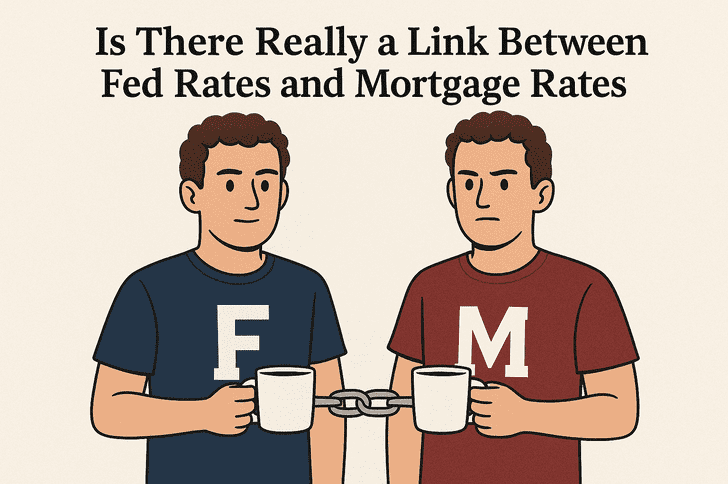
Is There Really a Link Between Fed Rates and Mortgage Rates?
Somebody asked me the other day if there’s a real connection between the Federal Reserve’s rate cuts and mortgage rates. I get this question a lot, so let’s break it down together.
What Most People Think
Most folks hear “The Fed cut rates” and immediately assume their mortgage payment is about to shrink. It sounds logical. After all, if the central bank lowers the cost of borrowing, shouldn’t home loans follow? But that’s not how it works.
Mortgage rates do not directly follow the Fed’s moves. Instead, they take their cues from the 10-year Treasury yield and the spread investors demand on those bonds. Those yields reflect how investors feel about inflation, the economy, and risk—not simply the Fed’s headline number.
A Perfect Example
Not long ago, the Fed trimmed its benchmark rate by a quarter point. Mortgage rates? They actually went up over the next two days. That always surprises people, but it shouldn’t. The bond market had already priced in the Fed’s cut weeks earlier. By the time the announcement came out, traders were already looking ahead and adjusting their positions.
Anticipation Runs the Show
Markets move on what they expect to happen next. Lenders do the same. When the Fed signals it might be aggressive with rate cuts, banks begin adjusting their pricing early so they can stay competitive over the long haul. They don’t want to be caught offering a loan today that looks too expensive tomorrow.
So you might see mortgage rates dip before a Fed cut or even rise immediately after. It’s all about anticipation, not reaction.
Twenty-Five Years of Seeing This Firsthand
I’ve worn a lot of hats—banker, financial advisor, and real estate consultant—and over 25 years I’ve watched this dance repeat itself countless times. Every time the Fed meets, headlines fly and people expect their mortgage to change the next morning. Meanwhile, the bond market has already made its move.
Back in the early 2000s, we also kept a close eye on something called LIBOR, short for the London Interbank Offered Rate. Adjustable-rate mortgages and a mountain of other loans were tied to it. Picture big global banks in London setting the rates they’d charge each other overnight. Each morning we’d check LIBOR the way some people check the weather. It was that important.
From LIBOR to Today
LIBOR eventually got a bad reputation after manipulation scandals and changes in the way banks lend to each other. Regulators decided it was time for something new. In the United States we switched to SOFR, the Secured Overnight Financing Rate. It’s a different benchmark, based on actual transactions in U.S. Treasury markets instead of self-reported guesses from banks.
That shift didn’t change the fact that mortgage rates move with the bond market, not the Fed’s overnight lending rate. Whether it was LIBOR in my early banking days or SOFR today, the real driver is still investor sentiment and the 10-year Treasury yield.
Why Banks Move Early
Here’s another piece of the puzzle. Mortgage rates don’t directly follow Fed rates, but they do react to the anticipation of them. Banks try to price their loans for the long term. If the Fed announces it’s going to be aggressive—like signaling two more cuts before year’s end—lenders immediately start thinking ahead.
They’re asking themselves, “Where will borrowing costs be six months from now? How do we stay competitive without getting stuck with rates that are too low or too high?” That’s when you’ll see them adjust even before the Fed acts.
With the Fed hinting at more cuts, I can easily see lenders positioning mortgage rates in the mid-fives to low-fives to stay in the game. They don’t want to lose customers to competitors who are quicker to price in future changes.
Breaking Down the Moving Parts
The 10-Year Treasury Yield
This is the anchor. When investors buy or sell these bonds, the yield moves. If they expect slower growth or less inflation, they buy more bonds, which pushes yields—and mortgage rates—down. If they see inflation heating up, they sell bonds, yields rise, and mortgages follow.
The Spread
Lenders don’t just match the Treasury yield. They add a spread to cover risk and profit. That spread can widen or narrow based on market conditions, investor appetite for mortgage-backed securities, and overall economic uncertainty.
Investor Psychology
News about jobs, inflation, or global events can push investors to react long before the Fed makes a move. If they expect the Fed to cut rates, they may pile into bonds early, which lowers yields and drags mortgage rates down—sometimes weeks in advance.
Why the Misunderstanding Sticks Around
It’s easy to see why people think Fed cuts equal lower mortgage rates. Media headlines often blur the details. “Fed cuts rates, good news for homeowners” is a lot catchier than “Bond market anticipates Fed cut, mortgage rates already priced in.”
But understanding this difference helps you plan better. Instead of waiting for a Fed meeting to lock a mortgage, watch the 10-year Treasury yield. If you see it dropping steadily, that’s a stronger sign that mortgage rates might move lower.
Real-World Impact
Let’s say the Fed signals two more cuts this year. Lenders aren’t going to sit on their hands until the official announcement. They’ll start offering lower rates ahead of time to keep borrowers from running to someone else.
If you’re buying a house or refinancing, you might catch a nice window where mortgage rates drift into the mid-fives or even low-fives. But that window can close fast if investor sentiment shifts or inflation data surprises the market.
Takeaways for Buyers and Investors
-
Watch the 10-Year Treasury
That yield tells you more about mortgage rates than any Fed press conference. -
Move on Expectations
If you see signs the market expects a Fed cut, lenders might lower rates early. -
Know Your Timing
Locking a rate is about strategy, not just reacting to the news of the day. -
Remember History
From LIBOR to SOFR, benchmarks change but the bond market’s influence remains the same.
Wrapping It Up
So, is there a direct correlation between the Fed rate and mortgage rates? Not really. They sometimes move in the same direction, but that’s because they’re both reacting to the same economic signals, not because one controls the other.
After 25 years in banking, financial advising, and real estate, here’s what I know: mortgage rates follow the bond market, they move on anticipation, and banks will always try to stay one step ahead.
If you’re waiting for the next Fed meeting to decide on a refinance or a home purchase, remember that the market probably already made its move.
Keep it consistent, stay patient, stay true—if I did it, so can you. This is Jorge Vazquez, CEO of Graystone Investment Group and all our amazing companies, and Coach at Property Profit Academy. Thanks for tuning in—until the next article, take care and keep building!
If you’d like to connect directly with me, feel free to book a time here: https://graystoneig.com/ceo
Book an Expert
New investor? Start with Jorge.

Jorge Vazquez – CEO & Investment Strategist at Graystone. Let’s make your portfolio stronger, steadier, and more profitable.
Deals? Book with Cody.

Meet Cody Bergstrom, Your Expert in Finding Deals Let’s find an off-market deal that actually works for you.
Need financing? Book with Lisa.

Meet Lisa Kaye Price, the LendingGig Top ML Let’s figure out the smartest way to fund your next deal.
Looking for PM? Book with Jay

Jay Michalec – COO & Property Management Expert at Graystone. Let’s make your rentals easier, calmer, and more profitable.