

By Jorge Vazquez
CEO & Founder, Graystone Investment Group
Whether you are signing a residential lease in Tampa Bay or managing a growing rental portfolio across Central Florida, understanding tenant rights in the state of Florida is non-negotiable. Most landlord-tenant disputes don’t happen because someone woke up wanting a courtroom battle—they happen because one or both sides didn’t know what Florida Statutes Chapter 83 actually says.
Over the course of guiding more than 3,500 real estate transactions and managing hundreds of rental doors across Florida, I have seen self-managing landlords lose entire security deposits over a missed certified mail deadline, and I have seen tenants accidentally forfeit their legal protections because they withheld rent without following the proper written notice steps.
Residential leasing in Florida is governed by the Florida Residential Landlord and Tenant Act (Florida Statutes, Chapter 83, Part II). Here is a clear, practical breakdown of the core statutory rights, timelines, and rules every Florida renter and property owner needs to know.
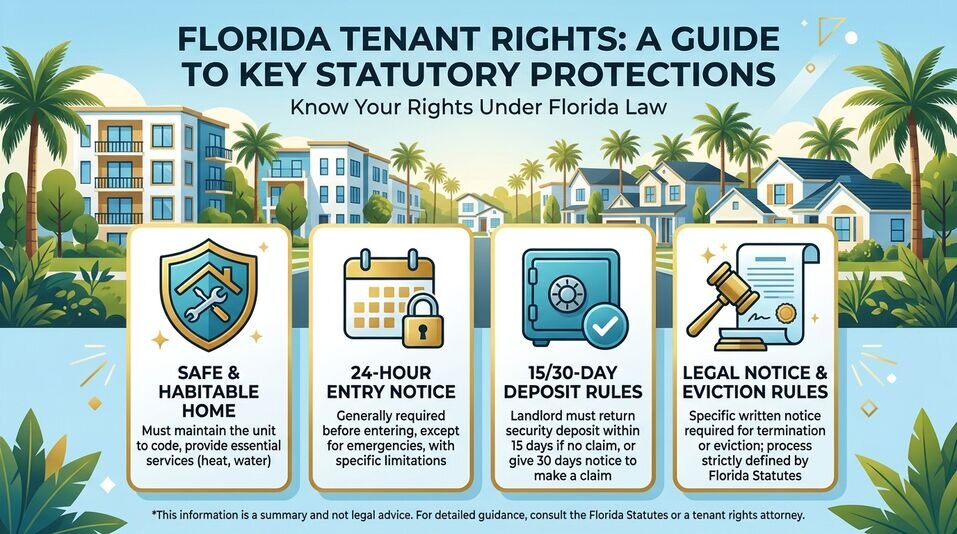
1. The Right to a Safe, Habitable Home (Florida Statute § 83.51)
Under Florida law, every landlord has a statutory duty to maintain the structural and safety integrity of a rental property—even if the lease attempts to shift that burden onto the tenant. Unless otherwise agreed in writing for a single-family home or duplex, landlords are legally responsible for maintaining:
- Structural & Weatherproofing Components: Sound roofs, windows, screens, doors, floors, steps, porches, and exterior walls.
- Essential Utilities & Plumbing: Working plumbing, hot and cold running water, and functional heating systems.
- Sanitation & Pest Control: Clean, safe common areas, garbage removal receptacles (for multifamily properties), and extermination of rats, mice, roaches, ants, wood-destroying organisms, and bedbugs.
- Working Locks & Keys: Secure locks on exterior doors and windows.
If a landlord fails to maintain these required standards, a tenant cannot simply stop paying rent on a whim. To legally exercise the right to withhold rent or terminate a lease due to material noncompliance, the tenant must deliver a formal written notice specifying the noncompliance at least 7 days before rent is due, giving the landlord an opportunity to cure the issue.
If you are an investor or landlord operating subsidized housing, compliance standards are even stricter—you can see how housing authority inspections and habitability standards operate in our Section 8 landlord rules in Florida guide.
2. Security Deposit Rules & Refund Deadlines (Florida Statute § 83.49)
Security deposits generate more friction than almost any other clause in a Florida lease. Florida Statute § 83.49 sets strict rules for how deposits must be held and returned:
- 15-Day Full Refund Rule: If the landlord does not intend to make a claim against the security deposit after you vacate, they must return the full deposit within 15 days.
- 30-Day Claim Notice Rule: If the landlord intends to deduct money for unpaid rent or damage beyond normal wear and tear, they must send written notice via certified mail to your last known mailing address within 30 days of move-out.
- 15-Day Tenant Objection Window: Once you receive the certified claim notice, you have 15 days to object in writing. If you do not object within that window, the landlord may deduct the claimed amount and return any remaining balance.
- Strict Waiver Penalty: If a landlord misses the 30-day certified mail deadline or omits the required statutory warning language, they legally waive their right to deduct anything from the deposit—even if the tenant caused physical damage (though the landlord can still pursue a separate civil claim).
Pro Tip for Both Sides: Always provide a forwarding address in writing upon move-out, and always document the unit’s condition with timestamped photos and video at move-in and move-out.
3. Privacy & Landlord Right of Entry (Florida Statute § 83.53)
Renting a home gives you the right to quiet enjoyment and privacy. While a landlord owns the asset, they cannot walk into your home whenever they please. Under Florida Statute § 83.53:
- 24-Hour Advance Notice for Repairs: For routine maintenance and non-emergency repairs, the landlord must give at least 24 hours’ notice.
- Reasonable Entry Hours: Routine repair entry may only occur between 7:30 a.m. and 8:00 p.m.
- Emergency Exceptions: A landlord may enter without notice only in a genuine emergency (such as a burst pipe, fire, or gas leak) or when necessary to protect and preserve the premises.
At the same time, tenants cannot unreasonably withhold consent when a landlord gives proper 24-hour notice to inspect the property, make agreed-upon repairs, or show the unit to prospective buyers or renters.
4. Eviction Notices, Lease Termination & Illegal Lockouts
Florida prohibits “self-help” evictions under Florida Statute § 83.67. A landlord can never shut off utilities, change the locks, remove exterior doors, or throw a tenant’s belongings onto the street to force them out—doing so exposes the landlord to statutory damages equal to three months’ rent or actual damages, plus attorney’s fees.
Instead, all lease terminations and evictions must follow formal written notice periods and court procedures:
| Situation | Required Written Notice | Key Statutory Rule |
|---|---|---|
| Unpaid Rent | 3 Business Days | Excludes weekends, legal holidays, and the day of delivery. Tenant can cure by paying full rent due. |
| Curable Lease Violation | 7 Calendar Days | Covers issues like unauthorized pets or minor maintenance breaches; tenant has 7 days to fix the issue. |
| Non-Curable Lease Violation | 7 Calendar Days | Covers serious property destruction or repeated violations within 12 months; tenant must vacate. |
| Ending a Month-to-Month Tenancy | 30 Calendar Days | Must be delivered at least 30 days prior to the end of the monthly rental period. |
If an eviction does go through the courts and a Writ of Possession is executed, strict statutory rules also govern how abandoned personal property must be handled afterward—learn more in our breakdown on navigating tenant property disposal after eviction in Florida. And if you are dealing with unauthorized occupants who entered a property via a fraudulent lease scam rather than a legitimate tenancy, read how we resolved a real-world case in handling unauthorized occupants and rental fraud.
5. Protection Against Retaliatory Conduct (Florida Statute § 83.64)
Florida law strictly protects tenants who exercise their legal rights in good faith. Under Florida Statute § 83.64, a landlord cannot retaliate against a tenant by raising rent, decreasing services, or threatening eviction because the tenant:
- Complained to a local code enforcement or government agency about a building, housing, or health code violation.
- Organized or participated in a tenant organization.
- Exercised lawful rights under the lease or Chapter 83.
Strong rental relationships are built on clear leases, documented communication, and strict compliance with state law. Whether you are a tenant protecting your home or a landlord protecting your investment, knowing tenant rights in the state of Florida keeps both sides out of unnecessary legal trouble.
— Jorge Vazquez
CEO, Graystone Investment Group
Internal Resources & References
- Understand how housing authority inspections, habitability standards, and lease compliance work in Section 8 Landlord Rules in Florida (2026 Guide).
- Review statutory rules and notice requirements for belongings left behind in Navigating Tenant Property Disposal After Eviction: A Landlord’s Guide in Florida.
- See how verified ownership and proper legal channels stop lease scams in The Day We Found Strangers Living in Our Rental Property.
External Resource
- For the complete statutory text covering residential tenancies, security deposits, maintenance duties, and eviction procedures, read Florida Statutes Chapter 83 — Landlord and Tenant (Official Florida Legislature).
Book an Expert
New investor? Start with Jorge.

Jorge Vazquez – CEO & Investment Strategist at Graystone. Let’s make your portfolio stronger, steadier, and more profitable.
Deals? Book with Cody.

Meet Cody Bergstrom, Your Expert in Finding Deals Let’s find an off-market deal that actually works for you.
Need financing? Book with Lisa.

Meet Lisa Kaye Price, the LendingGig Top ML Let’s figure out the smartest way to fund your next deal.
Looking for PM? Book with Jay

Jay Michalec – COO & Property Management Expert at Graystone. Let’s make your rentals easier, calmer, and more profitable.