
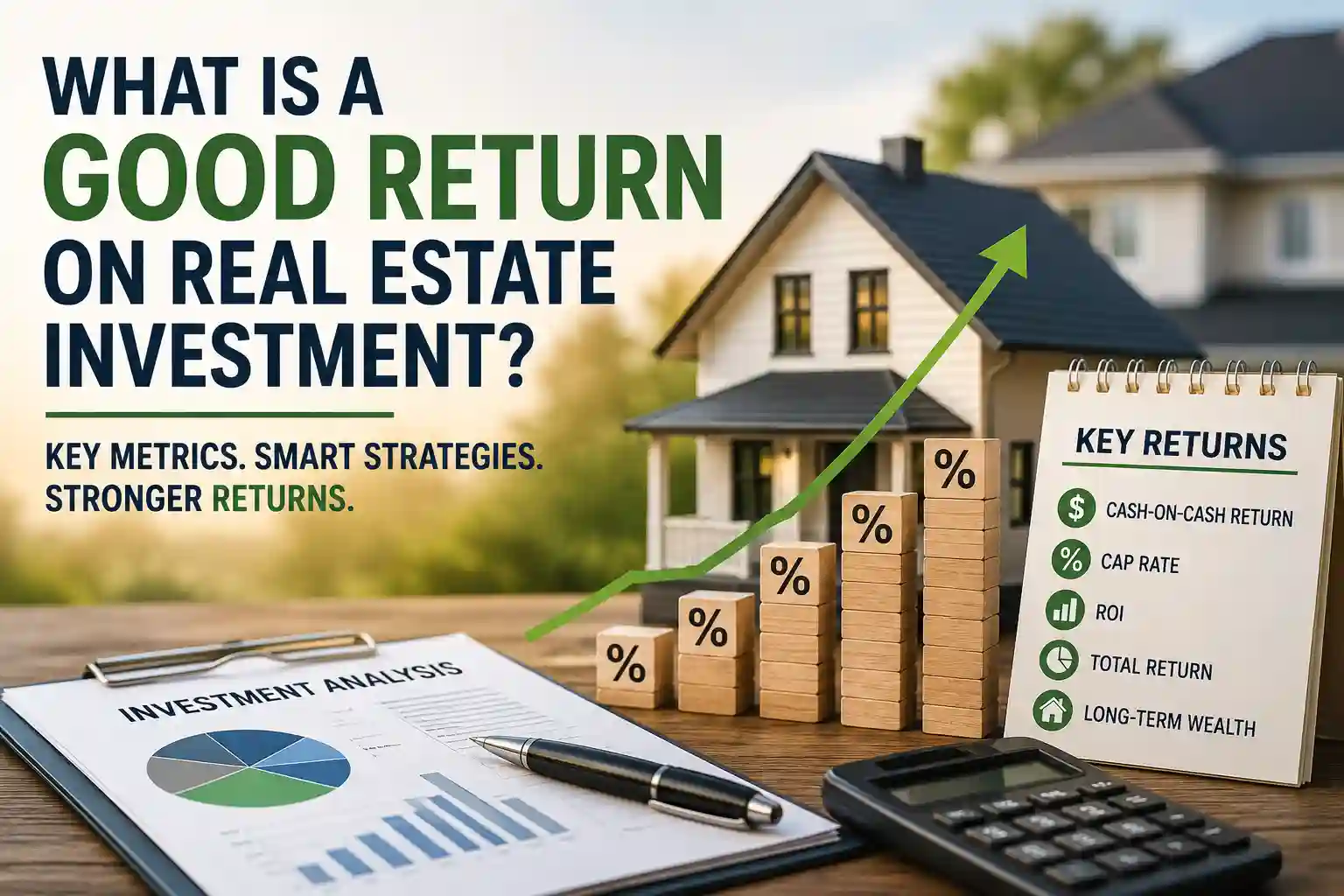
What Is a Good Return on Real Estate Investment?
When people first get into real estate investing, one of the first questions they ask is:
“What is a good return on a real estate investment?”
The answer is simple:
A good return depends on your goals, your risk level, and the type of investment you’re buying.
Many new investors focus only on appreciation or monthly cash flow. Experienced investors know there’s much more to the picture.
After helping investors buy, sell, and manage properties for over 25 years and participating in more than 3,500 real estate transactions, I’ve learned that the best investments aren’t always the ones with the highest advertised returns. They’re the ones that continue producing strong returns year after year while minimizing risk.
Let’s break down what really matters.
Why This Matters
A property can look like an incredible deal on paper and still become a terrible investment.
I’ve seen investors buy rentals because someone promised a 12% return, only to discover later that they forgot about:
- Vacancies
- Roof replacements
- Insurance increases
- Property taxes
- Maintenance
- Property management
Suddenly that “12% return” became closer to 3%.
On the other hand, I’ve seen investors buy properties producing a steady 7% return that doubled in value over the next decade while generating consistent cash flow.
The best return isn’t always the biggest number.
It’s the most reliable one.
There Isn’t Just One Return
Real estate investors use several measurements.
Each tells a different story.
1. Cash-on-Cash Return
This is one of the most popular measurements for rental property investors.
It answers one question:
How much money did I earn compared to the cash I invested?
Example:
Purchase Price: $300,000
Down Payment: $75,000
Closing Costs: $8,000
Repairs: $17,000
Total Cash Invested:
$100,000
Annual Cash Flow:
$10,000
Cash-on-Cash Return:
$10,000 ÷ $100,000 = 10%
Many experienced investors target between:
- 8%
- 10%
- 12%
depending on the market.
2. Cap Rate
Cap Rate ignores financing.
It compares the property’s income to its value.
Formula:
Net Operating Income ÷ Property Value
Example:
Property Value:
$400,000
NOI:
$28,000
Cap Rate:
7%
Typical cap rates:
| Property Type | Typical Cap Rate |
|---|---|
| Luxury rentals | 4%–6% |
| Stable suburban rentals | 5%–7% |
| Value-add investments | 7%–10%+ |
Higher isn’t always better.
Often a higher cap rate means higher risk.
3. Return on Investment (ROI)
ROI measures the overall profitability.
It includes:
- Appreciation
- Cash flow
- Principal paydown
- Tax benefits
Formula:
Profit ÷ Total Investment
ROI is excellent for looking at the entire investment instead of just monthly income.
4. Internal Rate of Return (IRR)
Professional investors often use IRR.
It measures:
- Cash flow
- Appreciation
- Timing of returns
- Sale proceeds
IRR is especially useful for:
- Apartment buildings
- Commercial real estate
- Flips
- Development projects
For most new investors, cash-on-cash return and cap rate are easier to understand and use.
So What Is Considered a Good Return?
There isn’t a universal answer.
However, these are reasonable benchmarks.
| Investment | Generally Considered Good |
|---|---|
| Cash-on-Cash Return | 8%–12% |
| Cap Rate | 5%–8% |
| Annual Appreciation | 3%–6% long-term average (market-dependent) |
| Total Annual Return | 10%–20%+ can be achievable depending on leverage, appreciation, and cash flow |
Remember:
A property producing an 8% return with very little risk may outperform a risky property advertising a 15% return.
Cash Flow Isn’t Everything
Many investors make this mistake.
They buy solely based on monthly income.
But there are actually five ways real estate builds wealth:
1. Monthly Cash Flow
Rental income after expenses.
2. Appreciation
Properties often increase in value over time.
While appreciation should never be guaranteed, it has historically been an important wealth builder in many markets.
3. Loan Paydown
Every mortgage payment reduces your loan balance.
Your tenant is helping build your equity.
4. Tax Benefits
Many investors benefit from:
- Depreciation
- Expense deductions
- Interest deductions
Always consult a qualified tax professional for advice specific to your situation.
5. Forced Appreciation
One of my favorite strategies.
Improve the property.
Increase rents.
Increase value.
Unlike the stock market, real estate gives you the opportunity to create equity through improvements and better management.
A Real Example
Several years ago, we analyzed two rental properties for a client.
Property A
- 12% projected return
- Older roof
- Deferred maintenance
- High-crime area
- High tenant turnover
Property B
- 8.5% projected return
- Better neighborhood
- New roof
- Strong schools
- Stable tenants
Many investors would have chosen Property A.
Our client chose Property B.
Five years later:
- Fewer repairs
- Better appreciation
- Higher rent increases
- Lower vacancy
- Less stress
The total return ended up being significantly better.
Sometimes the safest investment wins.
Don’t Chase the Highest Percentage
If a property advertises:
- 18% return
- Guaranteed income
- No maintenance
- Zero vacancy
You should slow down.
Ask questions.
Review the numbers carefully.
If something sounds too good to be true, it often is.
Factors That Affect Your Return
Several factors influence how well a property performs.
Location
Strong job growth usually supports better rental demand.
Financing
A lower interest rate can significantly improve cash flow.
Property Management
Good management reduces vacancies, controls expenses, and improves tenant retention.
Repairs
Unexpected repairs reduce returns.
That’s why inspections are essential.
Taxes and Insurance
These expenses have increased substantially in many Florida markets.
Ignoring them leads to unrealistic projections.
Common Mistakes Investors Make
Many investors hurt their returns by making avoidable mistakes.
Some of the biggest include:
- Buying based only on appreciation
- Ignoring maintenance costs
- Forgetting vacancy expenses
- Underestimating insurance premiums
- Not budgeting for capital expenditures
- Skipping professional inspections
- Overpaying because of emotions
- Believing overly optimistic seller projections
A conservative analysis usually produces better long-term results.
How We Analyze Investment Properties
When our team evaluates a property, we don’t stop at one number.
We analyze:
- Cash flow
- Cash-on-cash return
- Cap rate
- Expected appreciation
- Neighborhood trends
- Repair costs
- Insurance estimates
- Property taxes
- Rent projections
- Exit strategy
The goal isn’t to find the highest projected return.
The goal is to find the best balance between profitability and risk.
Frequently Asked Questions
Is a 10% return good in real estate?
Yes. A 10% cash-on-cash return is generally considered strong for many residential rental investments, especially when paired with stable cash flow and manageable risk.
What is a good cap rate?
Many residential rental properties fall between 5% and 8%, although acceptable cap rates vary by market, property condition, and risk.
Should I buy a property with a low cap rate?
Possibly. A lower cap rate may reflect a property in a desirable area with stronger appreciation potential and lower risk.
Is appreciation included in ROI?
Yes. Overall ROI can include appreciation, cash flow, loan paydown, and other gains, depending on how it’s calculated.
Is rental cash flow more important than appreciation?
Both matter. Cash flow provides current income, while appreciation can significantly increase long-term wealth. Many successful investors look for properties that offer a balance of both.
Final Thoughts
A good return on real estate investment isn’t just about chasing the biggest percentage.
It’s about finding a property that delivers consistent income, builds equity over time, and aligns with your financial goals while keeping risk at a level you’re comfortable with.
Successful investors evaluate more than one metric. They consider cash flow, cash-on-cash return, cap rate, appreciation potential, financing, and ongoing expenses before making a decision.
If you focus on the complete picture instead of a single number, you’ll be much more likely to build lasting wealth through real estate.
Related Articles from Graystone Investment Group
If you’re trying to improve your investment returns, these guides are a great next step:
- How Professional Real Estate Investors Actually Analyze Deals
Learn the same process experienced investors use to evaluate cash flow, risk, repair costs, and expected returns before making an offer.
https://graystoneig.com/articles/how-professional-real-estate-investors-actually-analyze-deals - Real Estate Investment Property Analysis: Is the Deal Worth It?
A beginner-friendly guide to understanding cash flow, cap rates, ROI, and avoiding common investing mistakes.
https://graystoneig.com/articles/real-estate-investment-analysis-how-to-know-if-a-deal-is-actually-worth-it - Rental Property Buy Box for Tampa Real Estate Investors
Discover how creating a clear “buy box” helps you find properties that match your return goals and avoid analysis paralysis.
https://graystoneig.com/articles/rental-property-buy-box-for-tampa-real-estate-investors - How to Increase a Property Appraisal Value
Learn practical strategies to maximize a property’s value, build equity faster, and improve your overall return on investment.
https://graystoneig.com/articles/how-to-increase-a-property-appraisal-value - Spreadsheet Rental Property Analysis
See the spreadsheet I’ve used to analyze thousands of real estate deals and remove emotion from investment decisions.
https://graystoneig.com/articles/spreadsheet-rental-property-analysis - Tampa Real Estate Investing Guide
Understand why many investors continue to choose the Tampa Bay market and what factors drive long-term performance.
https://graystoneig.com/articles/tampa-real-estate-investing-guide