
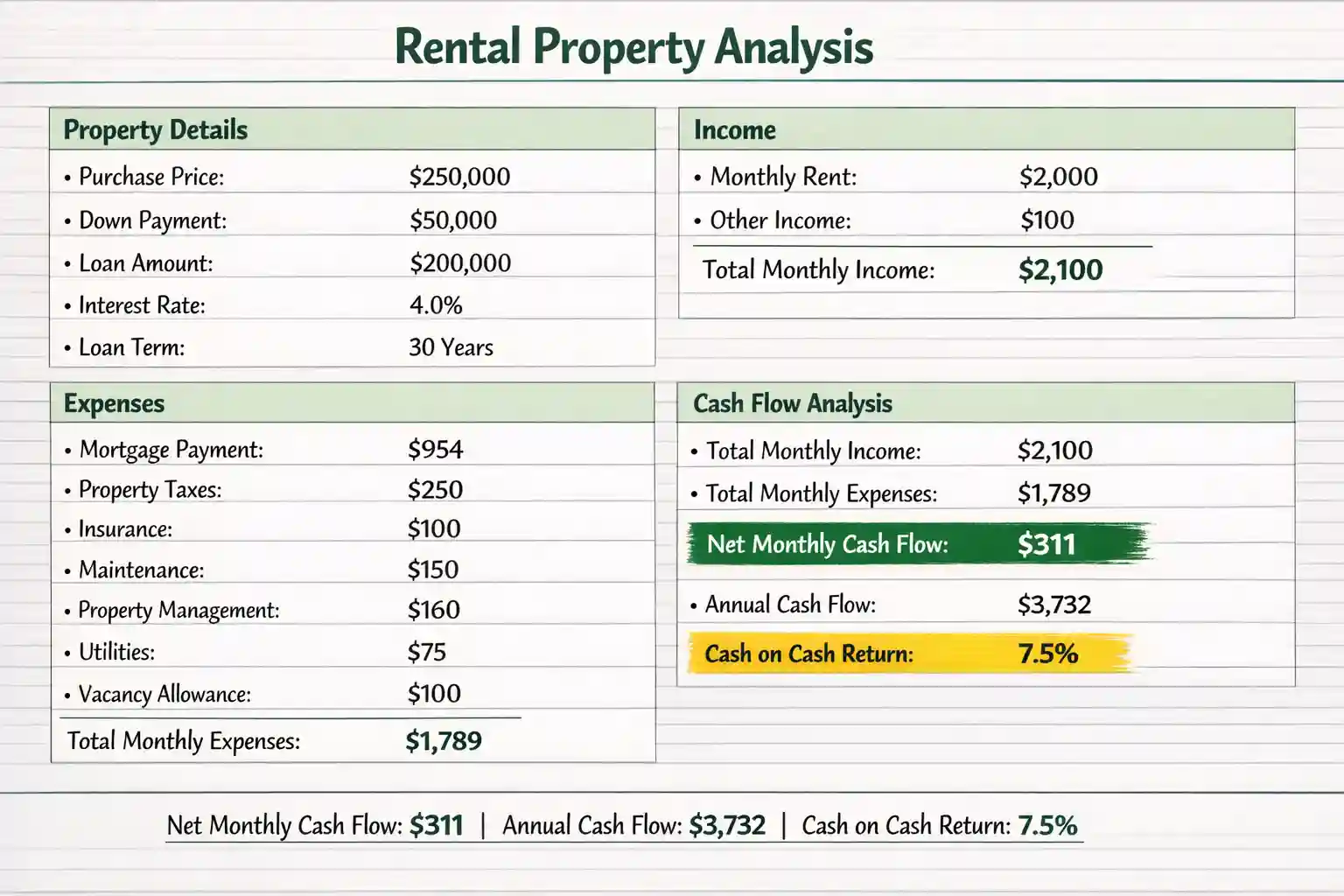
Spreadsheet Rental Property Analysis: The Calculator I’ve Used Across 3,500+ Deals
Today I want to share with you one of the calculators I’ve personally used across more than 3,500 real estate transactions. Not something I found online last week. Not a flashy tool built to sell courses. Just a simple spreadsheet I’ve leaned on for years to sanity-check deals, stress-test cash flow, and keep emotion out of the decision. It’s helped me avoid bad buys, negotiate smarter, and move fast when the numbers actually made sense.
If you’re serious about rental properties, this is the type of spreadsheet rental property analysis you want in front of you before you ever write a check.
Why Spreadsheet Rental Property Analysis Matters More Than Ever
Real estate isn’t hard.
What’s hard is being honest with yourself.
Most investors don’t fail because they didn’t know enough. They fail because they wanted the deal to work so badly that they let bad numbers slide.
A spreadsheet rental property analysis does one important thing really well.
It removes emotion.
The spreadsheet doesn’t care that the house looks cute.
It doesn’t care that your friend says rents are going up.
It doesn’t care that you’re excited.
It only cares if the deal survives real numbers.
Why I Still Use a Spreadsheet After Thousands of Deals
You’d think after a few thousand transactions, I’d just “know” if a deal works.
Truth is, that’s when spreadsheets matter even more.
Experience gives you instincts.
Spreadsheets keep those instincts from lying to you.
Every bad deal I’ve ever seen usually started with:
“I didn’t think it would be that much.”
A spreadsheet rental property analysis forces you to think through everything before it becomes a problem.
The Goal of a Rental Property Spreadsheet
Let’s clear this up.
The goal is not to impress yourself with high returns.
The goal is not to win an argument on social media.
The goal is simple:
Can this property survive real life?
If the spreadsheet says yes under conservative assumptions, that’s a deal worth looking at closer.
If it only works with perfect conditions, it’s not a deal. It’s a gamble.
Step 1: Monthly Operating Income
This is where people already start lying to themselves.
Rent
Use real rent, not hopeful rent.
If similar properties are renting for $1,200, that’s the number. Not what you “think” it should rent for after upgrades you haven’t done yet.
Hope doesn’t pay mortgages.
Vacancy and Credit Loss
Vacancy is guaranteed. It’s not optional.
Tenants move.
Tenants lose jobs.
Tenants disappear.
A good spreadsheet rental property analysis always includes vacancy.
If a deal can’t survive 5% to 10% vacancy, it’s too tight.
Other Income
Laundry, parking, storage, pet fees.
If it’s already there and consistent, include it.
If it’s theoretical, skip it.
Spreadsheets should reward realism, not creativity.
Step 2: Operating Expenses (Where Most Deals Actually Die)
Expenses are sneaky. They don’t show up all at once. They show up slowly and then all at the same time.
Property Management
Even if you self-manage, include it.
Why?
Because your time has value.
And because one day, you might not want to manage anymore.
A deal that only works if you do everything yourself forever is fragile.
Repairs and Maintenance
Everything breaks. New or old.
Ignore this line item and the spreadsheet is lying to you.
Taxes and Insurance
These rarely go down. Ever.
If you underestimate these, your cash flow disappears quietly.
Replacement Reserves
This is the money future-you will be very grateful for.
Roofs don’t ask permission.
AC units don’t care about your budget.
Reserves are what separate calm landlords from stressed ones.
Step 3: Net Operating Income (NOI)
NOI is income minus operating expenses, before the mortgage.
This is one of the most important numbers in any spreadsheet rental property analysis.
Why?
Because NOI shows how the property performs on its own.
Good financing can help a good property.
Bad financing can hide a bad one.
NOI tells the truth either way.
Step 4: Capitalization Rate and Valuation
Cap rate helps answer a simple question:
What am I really paying for this income?
Using a spreadsheet lets you:
See what price actually makes sense
Compare deals objectively
Avoid emotional overpaying
Cap rate isn’t good or bad by itself. It’s context.
What matters is whether you understand what you’re buying.
Step 5: Loan Information and Debt
Debt can make a good deal better.
Debt can also destroy a weak deal.
A proper spreadsheet rental property analysis includes:
Down payment
Loan amount
Interest rate
Term
Monthly payment
This lets you see:
How sensitive the deal is to rate changes
What happens if payments increase
Whether cash flow is real or forced
The goal isn’t to maximize leverage.
The goal is to survive ownership.
Step 6: Cash Flow
Cash flow is what’s left after everything is paid.
Not before repairs.
Not before reserves.
Not before reality.
If the spreadsheet shows consistent positive cash flow under conservative assumptions, that’s a strong sign.
If it barely works on paper, it won’t work in real life.
Step 7: Cash-on-Cash Return
Cash-on-cash return answers one question:
How hard is my actual cash working?
High returns are great.
Stable returns are better.
A spreadsheet helps you understand the tradeoff between risk and reward.
Why I Run Multiple Scenarios on Every Deal
One thing I’ve learned after thousands of deals is this:
Real life never follows the best-case scenario.
That’s why I always run at least two scenarios.
Scenario A: Conservative
Scenario B: Slightly better
Same property. Same rent. Different assumptions.
If the deal survives both, it’s strong.
If it only works in Scenario B, it’s fragile.
This is where spreadsheets really shine.
Common Spreadsheet Rental Property Analysis Mistakes
I see these all the time:
No vacancy included
No maintenance included
Ignoring management costs
Underestimating taxes and insurance
Assuming appreciation will fix bad cash flow
A spreadsheet should protect you from these mistakes, not help you justify them.
Simple Spreadsheets Beat Fancy Calculators
Online calculators are fast.
Spreadsheets are honest.
When you manually enter numbers, you understand the deal better.
You see what actually drives returns.
You see what kills cash flow.
You learn which numbers matter most.
That knowledge compounds faster than any appreciation ever will.
The Spreadsheet I Actually Use
If you want a real spreadsheet rental property analysis tool that walks through:
Monthly income
Vacancy
Expenses
NOI
Cap rate
Financing
Cash flow
Cash-on-cash return
You can use the same calculator I use here:
Plug in your numbers. Don’t rush it. Let the spreadsheet do its job.
Final Thoughts
Good investors don’t guess.
They analyze.
A solid spreadsheet rental property analysis won’t make every deal perfect, but it will keep bad deals from sneaking into your portfolio quietly.
And that alone can save you years of stress.
If you want help walking through a deal or understanding what your spreadsheet is telling you, you can always book time here:
https://graystoneig.com/ceo
Keep it consistent, stay patient, stay true—if I did it, so can you. This is Jorge Vazquez, CEO of Graystone Investment Group and all our amazing companies, and Coach at Property Profit Academy. Thanks for tuning in—until the next article, take care and keep building!
Book an Expert
New investor? Start with Jorge.

Jorge Vazquez – CEO & Investment Strategist at Graystone. Let’s make your portfolio stronger, steadier, and more profitable.
Deals? Book with Cody.

Meet Cody Bergstrom, Your Expert in Finding Deals Let’s find an off-market deal that actually works for you.
Need financing? Book with Lisa.

Meet Lisa Kaye Price, the LendingGig Top ML Let’s figure out the smartest way to fund your next deal.
Looking for PM? Book with Jay

Jay Michalec – COO & Property Management Expert at Graystone. Let’s make your rentals easier, calmer, and more profitable.