
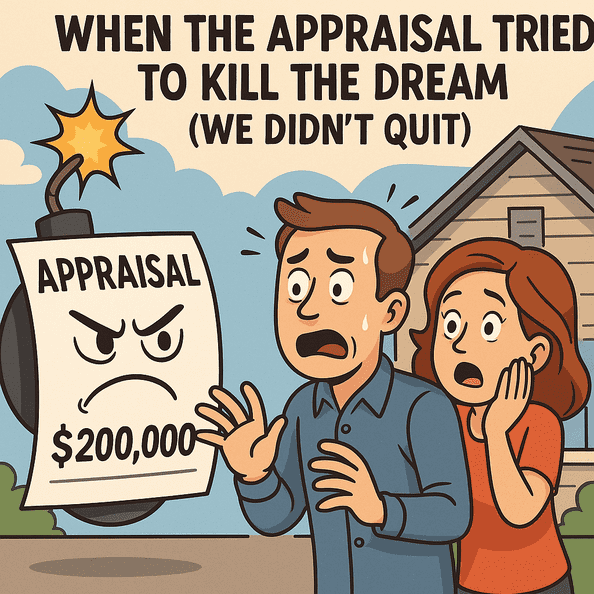
The Hidden Power of Home Appraisals: How One Report Nearly Cost Me $100K
I’ve seen a lot in 20+ years of real estate. Bad roofs. Angry tenants. Deals falling apart at the last minute. But nothing drives me crazier than a sloppy appraisal.
I once got back an appraisal report with dozens of mistakes. Wrong square footage. Missed upgrades. Inaccurate comps from neighborhoods miles away. The number came in $100,000 short of what it should have been.
That’s the kind of number that kills deals. Buyers walk away. Sellers feel cheated. Lenders slam the brakes.
But instead of rolling over, I fought back. I challenged the report, sent in better comps, and convinced the bank to allow a second appraisal. The new report came in where it should have been—$100K higher. That’s the difference between losing a deal and saving one.
Appraisals can be the silent deal-breaker in real estate. But if you understand how they work—and how to push back when they’re wrong—you can turn them from an obstacle into an advantage.
What a Home Appraisal Really Is
A home appraisal is basically a professional opinion of value. An appraiser looks at:
-
The home’s condition (roof, HVAC, windows, etc.)
-
Location (neighborhood, school zones, amenities)
-
Features (bedrooms, bathrooms, lot size, upgrades)
-
Recent comparable sales in the area
The lender requires this step to protect themselves. They don’t want to lend $300,000 on a house that would only sell for $200,000. If a borrower defaults, the house is their collateral.
That’s why whether you’re buying or refinancing, you almost always face an appraisal.
When Appraisers Get It Wrong
Here’s the reality: appraisers are human. And humans make mistakes.
I’ve seen them:
-
Count the square footage wrong by hundreds of feet
-
Ignore upgrades like a new roof or AC system
-
Use comps that are outdated or too far away
-
Compare a block home to a wood-frame house that isn’t equivalent
These aren’t small errors. They can swing values by tens of thousands—or in my case, by six figures.
A Real-Life $100K Appraisal Dispute
Here’s what happened to me with one of my Tampa properties:
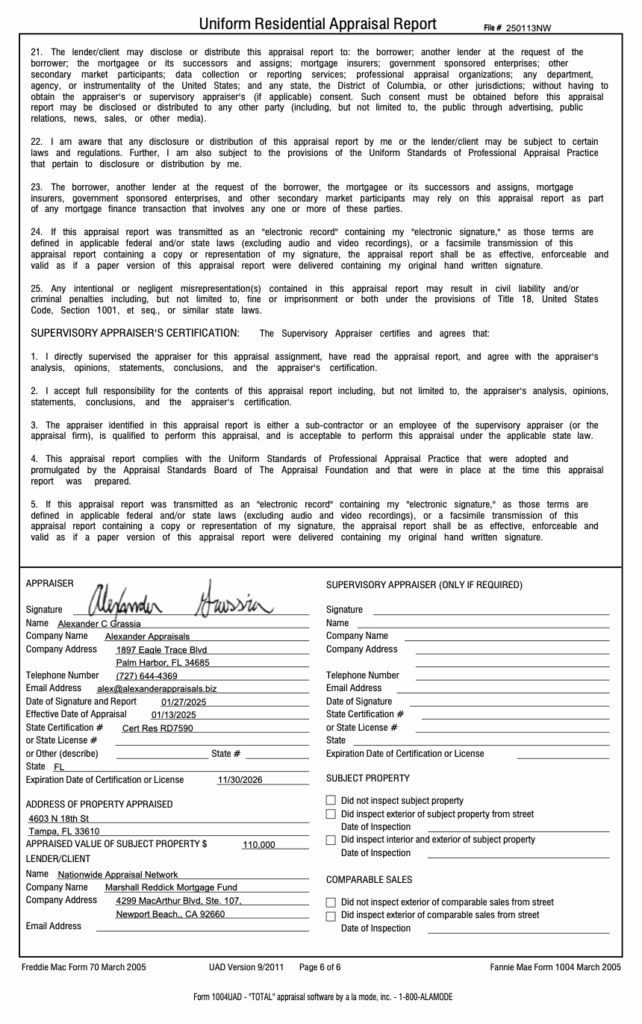
The first appraisal came back way under value. Not just a little off—$100,000 short.
When I read the report, I spotted mistakes immediately:
-
Two of the comps were more than six months old
-
One comp was over a mile away, outside the guideline
-
Another was a wood-frame home compared against my block property
-
Multiple recent nearby sales were completely ignored
So I challenged it. I wrote directly to the appraisal management company and asked:
“Why were older comps and out-of-area properties used, when there are more recent, closer sales that better match condition and size? Why were key upgrades not factored in?”
I submitted stronger comps and pointed out errors in construction type and condition. For example:
-
One comp they used had been completely remodeled, which made it incomparable.
-
Another was an off-market, non-MLS sale, which made it unverifiable.
-
Another included three detached efficiency units, which inflated the price unfairly.
I also highlighted a major mistake: they listed my property as having stucco and wood siding when it was block-only construction.
The Email Response
Here’s part of the response I received back from the appraisal management company:
“An ROV (Reconsideration of Value) was submitted with 4 alternative comps. The appraiser explained why they could not be considered. For compliance reasons, we limit the submission to ONE opportunity for reconsideration.”
In plain English: “We heard you, but we’re not changing it.”
That’s where most people give up. But I didn’t. I pushed for a second appraisal, and when it came back, the value jumped by $100,000.
That fight saved the deal.
Side-by-Side: Low vs. High
Sometimes words don’t do justice. Numbers tell the story better.
Here’s what the two appraisal reports looked like:
First Appraisal (Low Value)
Second Appraisal (Corrected Value)
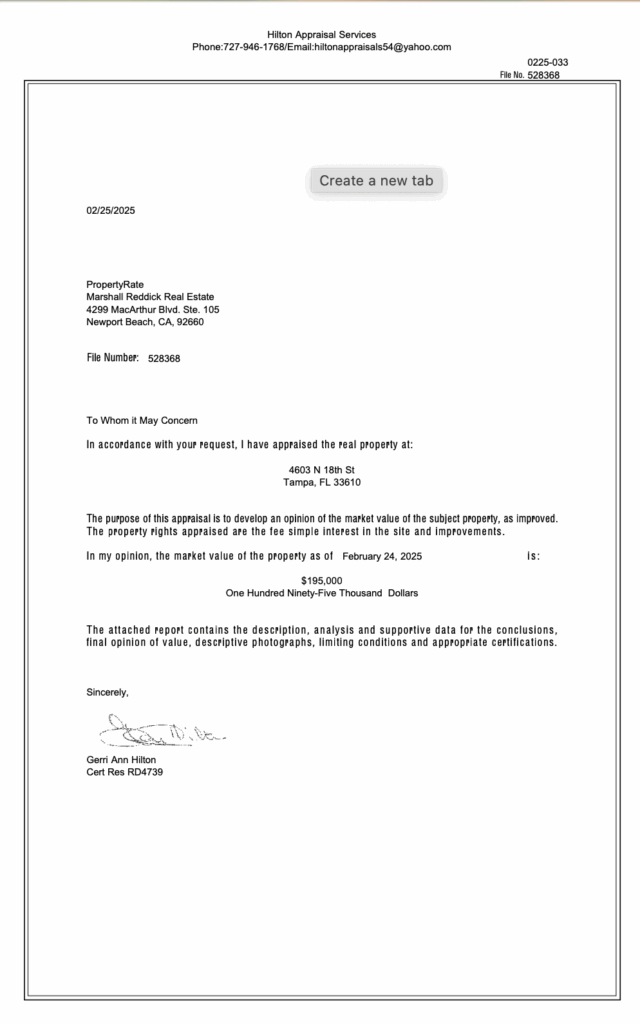
The difference? $100,000.
And here’s part of the actual dispute report I filed to challenge the first appraisal:
Appraisal Dispute Submission: Picture of the dispute report here
The first appraisal undervalued the property so badly it almost killed the transaction. The second, after correction, reflected reality. And the dispute in between shows the exact process I used to fight back.
Why This Matters for Buyers
For buyers, the appraisal can feel like a blessing or a curse.
-
If it comes in at or above your offer, you’re good.
-
If it comes in low, your lender won’t cover the full amount.
At that point, you have three options:
-
Renegotiate with the seller.
-
Cover the difference in cash.
-
Walk away (if you had an appraisal contingency).
Without that contingency, you risk losing your deposit if the deal falls through. That’s why I always tell buyers: protect yourself.
Why This Matters for Sellers
For sellers, the appraisal is often the last major hurdle before closing.
If the home appraises at value, you’re fine. If it comes in low, you risk losing the buyer or being forced to lower your price.
That’s why you should:
-
Price your home realistically
-
Prep it like it’s going on stage—clean, fix, paint
-
Hand the appraiser a list of upgrades
Don’t assume they’ll notice the new roof or remodeled kitchen. Spell it out.
My In-House Appraiser Strategy
After living through too many of these battles, I brought in my own in-house appraiser.
Not to cheat the process, but to make sure everything is fairly counted for before the official lender appraisal.
My appraiser helps me:
-
Double-check values ahead of time
-
Spot potential red flags
-
Advise sellers on what to improve before the appraisal
-
Build strong cases when challenging bad reports
I’ve seen appraisals off by $20K, $50K, even $100K. Having the right preparation team makes all the difference.
Why Experienced Agents Matter
Most buyers and sellers don’t know how to push back against a bad appraisal. That’s where a strong agent comes in.
An experienced agent can:
-
Spot errors in the report
-
Pull better comps
-
Guide the dispute process
-
Keep deals alive when appraisals threaten to kill them
You don’t win deals at the appraisal stage, but you can absolutely lose them there.
Key Takeaways
-
Appraisals aren’t perfect—they’re opinions, and they can be wrong.
-
Buyers should always include an appraisal contingency.
-
Sellers should prepare their homes and provide upgrade lists.
-
Bad appraisals can be disputed—don’t just accept them.
-
A good agent or in-house appraiser can save deals.
Closing
Appraisals may not be glamorous, but they’re powerful. They can save you from overpaying, force sellers to face reality, or—if wrong—nearly destroy a deal.
I’ve seen them miss by $100,000. I’ve seen them stop deals in their tracks. And I’ve also seen them corrected—with persistence, preparation, and the right strategy.
Keep it consistent, stay patient, stay true—if I did it, so can you. This is Jorge Vazquez, CEO of Graystone Investment Group and all our amazing companies, and Coach at Property Profit Academy. Thanks for tuning in—until the next article, take care and keep building!
If you’d like to connect directly with me, book a time here: https://graystoneig.com/ceo.
Book an Expert
New investor? Start with Jorge.

Jorge Vazquez – CEO & Investment Strategist at Graystone. Let’s make your portfolio stronger, steadier, and more profitable.
Deals? Book with Cody.

Meet Cody Bergstrom, Your Expert in Finding Deals Let’s find an off-market deal that actually works for you.
Need financing? Book with Lisa.

Meet Lisa Kaye Price, the LendingGig Top ML Let’s figure out the smartest way to fund your next deal.
Looking for PM? Book with Jay

Jay Michalec – COO & Property Management Expert at Graystone. Let’s make your rentals easier, calmer, and more profitable.