Florida Landlords Are Feeling It: What 4,000 Investors Told Me About Rents and Vacancies in 2025
Let’s be honest — 2025 feels weird.
If you’re a landlord in Florida right now, you’ve probably noticed something’s off. The rent checks are still coming in, sure, but the phone’s not ringing the same way. Showings are slower. Tenants are taking their sweet time to commit. And even the best units — the ones that used to rent in 48 hours — are suddenly sitting.
I’ve been managing and owning properties here for over twenty years. Between my 40+ rentals and the roughly 300 I oversee through my property management team, I’ve seen just about every type of market Florida can throw at us — hurricanes, booms, recessions, even the 2008 meltdown. But lately, the trend is clear: vacancies are up, renter confidence is down, and everyone’s trying to figure out why.
So, I went out and asked the people who’d know best — over 4,000 landlords, property managers, and investors from all over Florida. I posted in BiggerPockets, Facebook’s top BRRRR and landlord groups, and Reddit, and asked one simple question:
“Anyone else seeing higher vacancies lately?”
The response? Flooded. Thousands of comments, DMs, and stories — from Pensacola to Miami. Everyone’s feeling the same thing: the Florida rental market has cooled off.
What Landlords Across Florida Are Saying
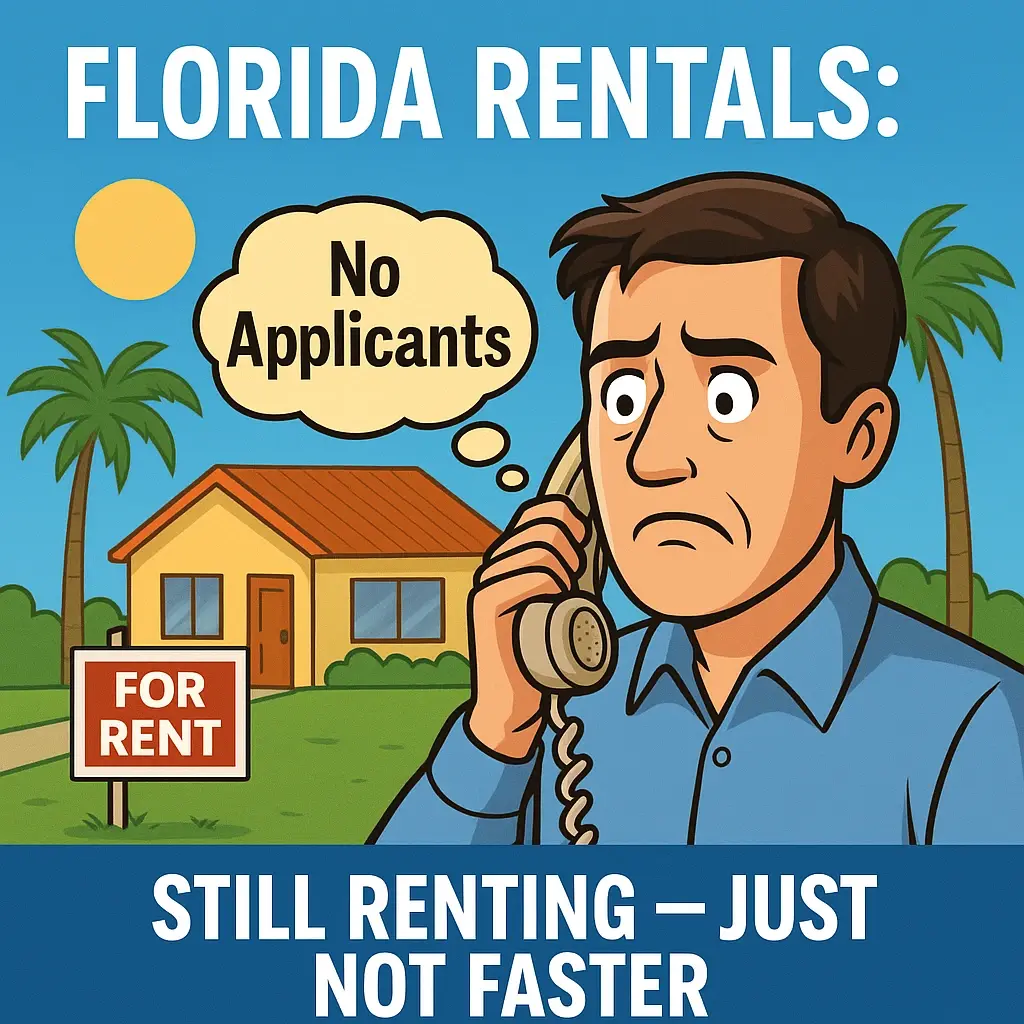
Almost every investor who responded said the same thing in different words: “It’s taking longer to fill units.”
-
One landlord in Northwest Florida said he has six units sitting empty for over two months — something that never happened before.
-
A Tampa investor reported 30 vacant units out of 300, roughly 10%, which is high for the area.
-
Another from Jacksonville mentioned that while rents haven’t dropped dramatically, qualified applications have slowed to a trickle.
-
And in Orlando, property managers said showings are up, but conversions are down — “everyone’s looking, few are signing.”
The consensus? Demand is softer. Not gone — just… cautious. People still want to rent, but they’re hesitating.
Rents Are Holding (For Now)
Interestingly, most Florida landlords said rents haven’t crashed — they’ve just flattened out.
After years of 10–20% annual rent jumps, prices have finally hit resistance.
For example:
-
That $1,800 Tampa townhouse that rented in a day last year might now take a month.
-
A $2,000 Orlando single-family gets interest, but most applicants either don’t qualify or need time to gather deposits.
-
And in Jacksonville, many reported tenants asking for small concessions — like flexible move-ins or help with deposits.
So while prices aren’t falling across the board, the velocity is gone.
Think of it like this:
Last year, Florida rentals were selling like cafecitos on Calle Ocho — fast, hot, and overpriced.
Now it’s more like a long line at Dunkin’ — slower, less excitement, but still moving.
Why It’s Happening: The Top 5 Reasons from the Field
After sifting through hundreds of real stories, five main reasons kept coming up:
-
Too Much Supply, Too Fast
Florida’s been building like crazy — new apartments, build-to-rent communities, and Airbnbs flooding back into long-term rentals. All that inventory means more options for tenants and longer days on market. -
Affordability Ceiling
Wages haven’t caught up with rent hikes. Tenants are maxed out. Some are doubling up, moving in with family, or skipping rentals altogether to save for a down payment. -
Seasonal Slowdown
The holiday window (October to February) is traditionally slow, and this year it’s worse. People don’t want to move around Thanksgiving or Christmas, especially with inflation still squeezing budgets. -
Screening Standards
Landlords tightened screening during the boom. Now, with softer demand, they’re loosening requirements — but cautiously. The balance between “get it filled” and “don’t regret it later” is tricky. -
Economic Anxiety
Job cuts, AI reshuffling, high insurance, and higher living costs are making people nervous. Even tenants who can afford rent are scared to commit to new leases.
What’s Actually Working Right Now
Among all the chaos, some landlords are still doing well. The difference? They’re adapting — fast.
Here’s what’s working for the pros (and what I’m doing myself):
-
Old School Marketing Still Wins
Don’t laugh — “For Rent” signs still work. In neighborhoods without heavy HOA restrictions, I’m putting them everywhere again. It grabs local renters who don’t browse Zillow daily. -
Teaming Up with Property Managers
Instead of relying on one platform, we’re double-listing. My team and I are pushing each property on MLS, Facebook, Apartments.com, Zillow, Craigslist, and local community pages. -
Incentives That Don’t Hurt
Small move-in specials — like $100 off first month or flexible deposits — get attention without hurting long-term ROI. -
Bilingual Advertising
Florida’s multilingual. We’re posting ads in Spanish and English, and I can’t tell you how many more calls come in from Spanish-only listings. It’s a small thing with big returns. -
Follow-Up Campaigns
Every inquiry gets added to a text and email list. Just because they didn’t rent today doesn’t mean they won’t next week. -
Show While It’s Occupied
If a tenant’s leaving and the place still looks good, we’re showing it early — cutting down vacancy time before turnover even happens.
Alternative Strategies Landlords Are Trying
Florida investors are creative — we always have been. Here are a few alternatives that kept coming up:
-
Section 8 Housing:
Landlords who switched to Section 8 said they filled units almost instantly. One mentioned renting in a week after sitting vacant for a month on the open market. -
Co-Living Models:
Some are using platforms like PadSplit, renting rooms individually. Occupancy near 100%, lower turnover, and steady cash flow. -
Veteran Housing Programs:
VA-backed Section 8 (HUD-VASH) is becoming popular. Tenants are stable, social workers do check-ins, and payments are guaranteed. -
Shorter Leases for Flexibility:
A few landlords are offering 6–9 month leases to attract more transient renters — students, traveling nurses, or people relocating between homes.
The Hidden Dangers Right Now
A few veteran landlords also raised red flags. With vacancies up, some owners are getting desperate — dropping screening standards, ignoring background checks, or falling for fake pay stubs.
One Florida property manager said:
“AI-generated rental applications are the new scam — people are forging entire employment histories with chatbots.”
Translation? Stay sharp.
This is not the time to fill units blindly. A bad tenant is way more expensive than a short vacancy.
Check ID, confirm employment, and call past landlords. Always.
The Good News: This Isn’t 2008
Here’s the silver lining.
While the slowdown feels familiar, it’s not a crash. In 2008, we had foreclosures, credit freezes, and panic. In 2025, we just have too many options and not enough qualified renters.
Florida’s population is still growing. People are still moving here. Jobs are still expanding in tech, logistics, and construction. Insurance is starting to come down.
We’re just in a cooling period — the same kind that happened in 2010 and again in 2018.
If you manage smart, stay flexible, and price right, this is survivable — and even profitable.
My Personal Approach at Graystone
Here’s what I’m doing with my own portfolio right now:
-
I’m keeping rents steady, not chasing the top of the market.
-
I’m focused on tenant retention — renewals before listings.
-
I’m marketing harder — my leasing team and I are everywhere online and offline.
-
I’m reusing old leads, following up constantly, and keeping communication warm.
-
I’m reminding my investors: slow doesn’t mean bad. It means opportunity.
When things slow down, I always go back to fundamentals. This is the time to fix small issues, upgrade photos, refresh listings, and double down on systems.
I built my business during the last slowdown — and I plan to grow during this one, too.
What Florida Landlords Can Learn From This
Here are the biggest takeaways from talking with thousands of investors and landlords:
-
Price smart, not stubborn. Don’t hold out for yesterday’s rent. Get it filled, then adjust upward later.
-
Market everywhere. Signs, social media, bilingual ads — use it all.
-
Offer something small. Move-in special, flexible terms, anything that catches attention.
-
Retain who you can. Renewal beats turnover.
-
Stay ethical and calm. Desperation leads to bad tenants and bad decisions.
Final Thoughts
The Florida rental market isn’t broken — it’s balancing.
After years of nonstop growth, the pendulum is swinging back toward normal.
This is where the good operators shine. If you stay proactive, creative, and ethical, you’ll come out stronger when the next upswing hits — and it will hit.
So hang in there, Florida landlords. We’ve been through worse.
Keep it consistent, stay patient, stay true — if I did it, so can you.
This is Jorge Vazquez, CEO of Graystone Investment Group and all our amazing companies, and Coach at Property Profit Academy.
Thanks for tuning in — until the next article, take care and keep building!
If you’d like to connect directly with me, feel free to book a time here:
👉 https://graystoneig.com/ceo
Book an Expert
New investor? Start with Jorge.

Jorge Vazquez – CEO & Investment Strategist at Graystone. Let’s make your portfolio stronger, steadier, and more profitable.
Deals? Book with Cody.

Meet Cody Bergstrom, Your Expert in Finding Deals Let’s find an off-market deal that actually works for you.
Need financing? Book with Lisa.

Meet Lisa Kaye Price, the LendingGig Top ML Let’s figure out the smartest way to fund your next deal.
Looking for PM? Book with Jay

Jay Michalec – COO & Property Management Expert at Graystone. Let’s make your rentals easier, calmer, and more profitable.