
The Check Marks That Matter: What Investors Should Actually Pay Attention to in Florida’s As-Is Contract
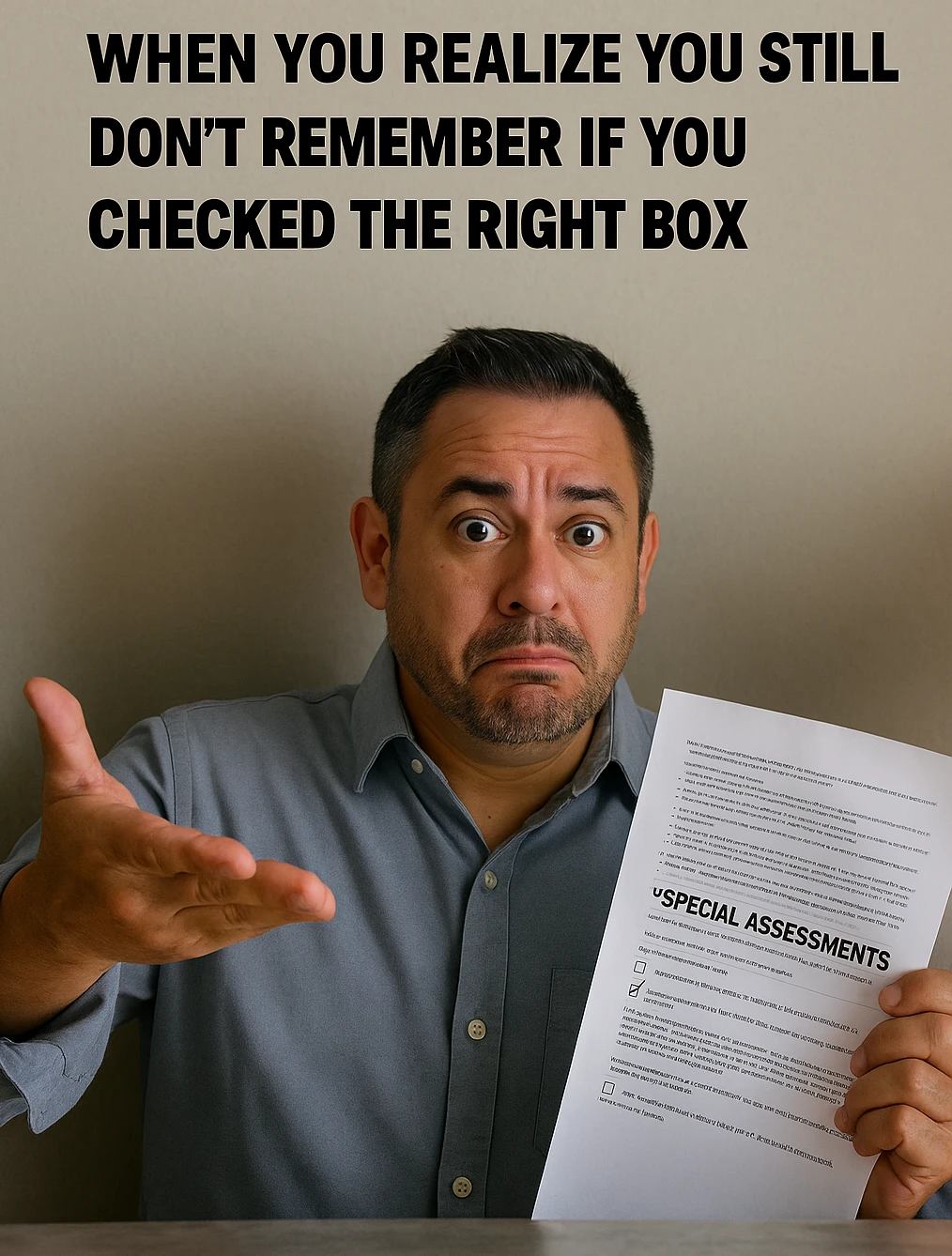
I’ll be honest—one of my agents asked me about a section in the Florida “As-Is” contract the other day, and I froze for a second. It’s been a while since I’ve done a full retail-style transaction. My world has been mostly off-market, wholesale, or creative financing. So when they asked about lines 194 to 196—the part about “special assessments”—I had to look it up again.
And that’s when it hit me. If I’ve been doing real estate for over 20 years and I had to stop and double-check, imagine how many new investors are flying blind when they sign these contracts.
So let’s talk about it in simple terms. No legal jargon. Just what you actually need to know as an investor when you’re looking at that Florida As-Is Contract.
1. That Sneaky Section on Lines 194–196
This is the part my agent asked me about. It’s under “Special Assessments.”
Here’s what it really says:
-
Option (a): Seller pays everything due before closing; buyer pays after.
-
Option (b): Seller pays it all off before closing.
Sounds small, but this one box can mean thousands of dollars.
Let’s say the city charged $10,000 to redo the sewer line, and the seller agreed to pay it off over 10 years. If you check box (a), you’ll take over those payments after closing. If you check (b), the seller has to pay the full balance before you close.
If you’re the buyer (especially an investor), you almost always want (b).
That way, you don’t inherit somebody else’s bill.
2. The Inspection Period — The Investor’s Safety Net
This is the part that can save you from buying a nightmare property.
The Florida As-Is contract gives you a default 15-day inspection period (you can shorten or extend it). During that time, you can cancel for any reason and get your deposit back.
Investors use this period as their “due diligence window.” You’re not just checking the AC and the roof—you’re:
-
Running comps
-
Getting rehab estimates
-
Confirming ARV
-
Checking for open permits or liens
-
Talking to zoning about what you can do with the property
In other words, this is your get-out-of-jail-free card.
Once that inspection period expires, you’re locked in.
Pro tip: Always have your title company or transaction coordinator mark the end date on your calendar. I’ve seen investors lose thousands because they missed the deadline by one day.
3. Financing or “Cash” — Be Real With Yourself
If you’re paying cash, it’s simple: the contract says you’re buying without a financing contingency. But if you’re using a DSCR loan, private money, or a hard money lender, you need to protect yourself.
Here’s how:
-
You can modify the As-Is contract to include a financing contingency that says, “Buyer’s obligation to close is subject to loan approval.”
-
Or, if you’re confident in your lender, you keep it cash and close fast—but have a backup plan if the loan falls apart.
Warning: I’ve seen plenty of deals die at the finish line because the buyer checked “cash” but couldn’t close when their loan didn’t fund. Be honest about how you’re buying—it’ll save you headaches later.
4. Title — Who Chooses and Who Pays
Florida is weird because the person who pays for title insurance often varies by county.
-
In Hillsborough, Pinellas, and Polk County, the seller typically pays.
-
In Miami-Dade, Broward, and Palm Beach, the buyer usually pays.
That’s not law, just custom.
But as an investor, always ask your title company to do a lien search early. Sometimes sellers don’t even know they have old code violations, open permits, or unpaid utility bills. You don’t want to find that out the day before closing.
5. Assignability — Can You Wholesale It?
If you’re doing creative deals or wholesaling, this section matters a ton.
There’s a line that says “This contract is assignable”—but you have to make sure it’s not checked “only with consent of seller.”
If you’re a wholesaler, make sure it clearly says:
“This contract is assignable without the consent of the seller.”
Otherwise, the seller could block you from assigning it, and you’re stuck either buying it yourself or losing your deposit.
6. Personal Property — Don’t Assume It Stays
You’d be surprised how many investors think the fridge, stove, or washer comes with the deal—then show up after closing to find the house empty.
The As-Is contract lists which items stay (like built-in appliances, light fixtures, etc.). If it’s not written there, it’s not guaranteed to stay.
So if you’re flipping or planning to rent immediately, list everything you want to remain in writing.
7. Closing Date — Watch the “On or Before”
This one burns people all the time.
The contract usually says “Closing shall occur on or before [date].” That means either party can close early if they’re ready.
If you’re a buyer who needs every day to line up financing or permits, add a note saying “Closing shall occur on [date], not before.” That protects you from being rushed.
8. Deposits — How Much and When
Most As-Is contracts have an initial deposit and sometimes an additional deposit after inspection.
As an investor, don’t overcommit. I usually recommend keeping your earnest money small until you’re sure you’ll close—then add more if needed.
Example:
-
$1,000 at signing
-
$4,000 after inspection period ends
That way, if the deal falls apart early, you’re only out $1,000.
9. Default — Who Keeps the Deposit
If the buyer backs out after the inspection period without a valid reason, the seller gets the deposit.
If the seller fails to close, the buyer can either get the deposit back or force specific performance (basically take them to court to make them sell).
Most investors don’t bother with lawsuits—it’s not worth it unless it’s a massive deal.
10. Addenda — The “Fine Print of the Fine Print”
Investors often forget to read the addenda that get attached at the end. These can include:
-
HOA/Condo Rider
-
Lead Paint Disclosure (if pre-1978)
-
Financing Addendum
-
Escrow Disbursement Agreement
If you’re buying a condo or a property with an HOA, pay close attention to that addendum—it tells you how long you have to review the community rules and cancel if you don’t like them.
11. Property Taxes and Prorations
Property taxes in Florida are paid in arrears—meaning you pay at the end of the year for the year that just passed.
At closing, they prorate the taxes so both buyer and seller only pay for their share of the year.
If you’re buying in October or November, those tax adjustments can get tricky, so always have your closing agent walk you through the math.
12. Special Assessments — The Box That Started This Whole Thing
Let’s go back to the section that started this conversation: lines 194–196.
If you pick (a):
-
Seller pays what’s due before closing.
-
Buyer takes over the rest.
If you pick (b):
-
Seller pays it all off before closing.
Investors usually want (b). Why? Because we hate surprises. You don’t want to find out six months later that you owe the city another $4,000 because of something the seller agreed to years ago.
Unless you’ve negotiated a huge discount, always go with (b).
13. The Most Overlooked Section — Disclosures
The seller has to disclose known defects, but that doesn’t mean they know everything.
As-Is literally means “you buy it as it is,” so if they didn’t tell you about a problem because they didn’t know, you’re still stuck with it.
That’s why investors must always inspect the property themselves, run a lien search, and check permits before closing.
14. Time Is of the Essence — And It Really Is
That phrase is in bold for a reason. It means all the dates in the contract are hard deadlines.
Miss one, and you could lose your deposit.
So use a closing checklist or CRM that sends automatic reminders for:
-
Deposit due date
-
Inspection end date
-
Loan approval date
-
Closing date
I can’t tell you how many people I’ve seen panic because they realized their inspection period ended yesterday.
15. My Advice After 3,500+ Transactions
If you’re an investor signing an As-Is contract in Florida, here’s what really matters:
The Top 5 Boxes You Should Always Double-Check:
-
Inspection Period: Know your cancellation deadline.
-
Assignability: Make sure you can assign the contract if you need to.
-
Special Assessments: Check box (b)—seller pays all before closing.
-
Title: Make sure there are no liens or open permits.
-
Closing Date: Make sure it’s realistic for your financing or rehab plan.
Everything else matters, but those five can make or break your deal.
16. Final Thoughts
It’s funny how something as small as one checkmark can cause so much confusion. My agent’s question reminded me how easy it is to forget the basics when you’ve been living in the creative-deal world too long.
But here’s the truth: whether you’re buying off-market with a seller-financing twist or using the official Florida As-Is contract, you have to know what you’re signing.
Real estate isn’t about being the smartest person in the room—it’s about knowing when to double-check the details that could cost you thousands.
So next time you’re filling out that contract, slow down. Read each section. And when you see those little boxes on line 194 and 196—remember this story.
Keep it consistent, stay patient, stay true—if I did it, so can you. This is Jorge Vazquez, CEO of Graystone Investment Group and all our amazing companies, and Coach at Property Profit Academy. Thanks for tuning in—until the next article, take care and keep building!
If you’d like to connect directly with me, feel free to book a time here: https://graystoneig.com/ceo.
Book an Expert
New investor? Start with Jorge.

Jorge Vazquez – CEO & Investment Strategist at Graystone. Let’s make your portfolio stronger, steadier, and more profitable.
Deals? Book with Cody.

Meet Cody Bergstrom, Your Expert in Finding Deals Let’s find an off-market deal that actually works for you.
Need financing? Book with Lisa.

Meet Lisa Kaye Price, the LendingGig Top ML Let’s figure out the smartest way to fund your next deal.
Looking for PM? Book with Jay

Jay Michalec – COO & Property Management Expert at Graystone. Let’s make your rentals easier, calmer, and more profitable.