
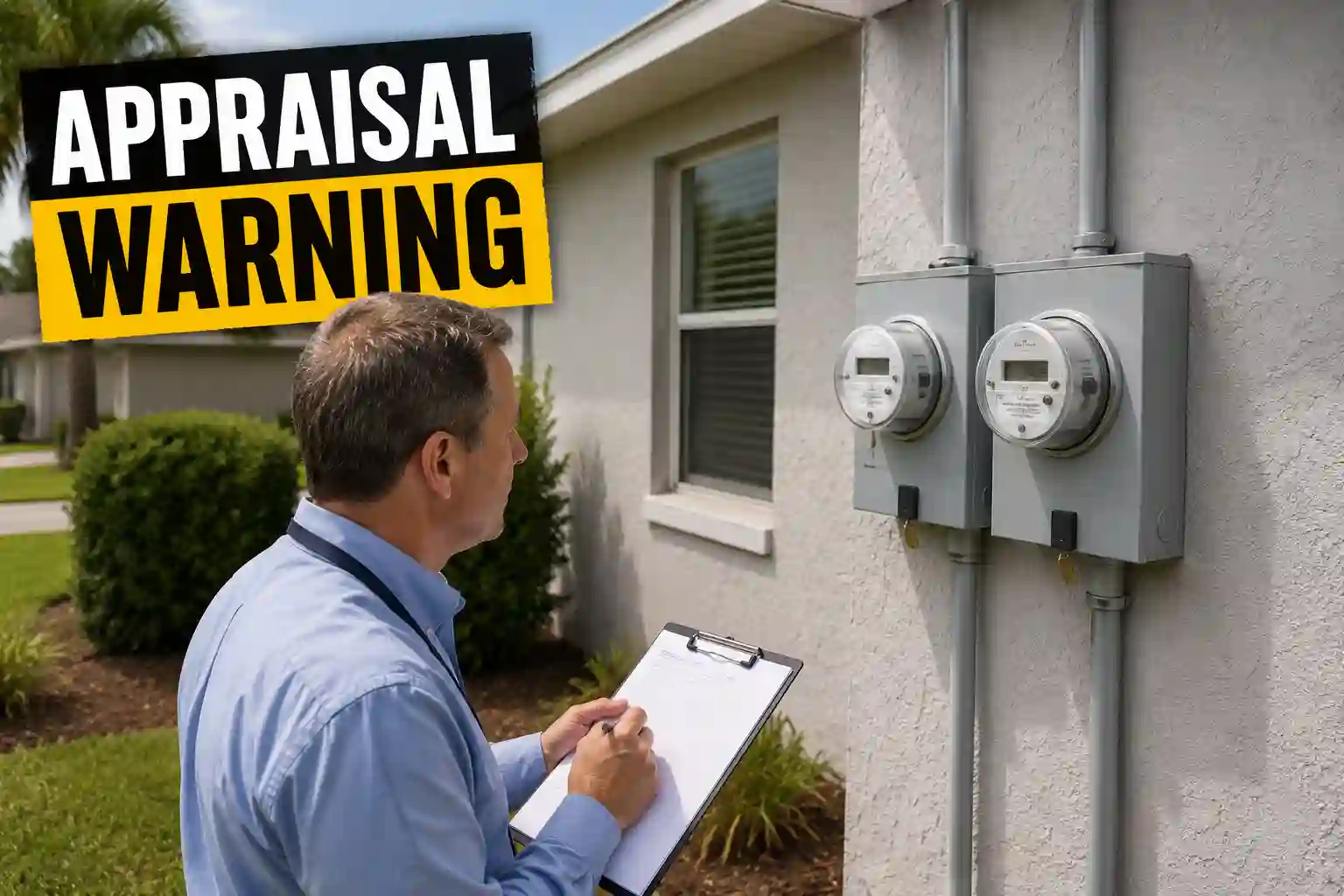
Can Two Electric Meters Hurt Your Appraisal? A Real Tampa Bay Investor Story
Quick Answer (for Google + AI)
Yes, two electric meters can sometimes hurt your appraisal or make refinancing more difficult.
When an appraiser sees two meters, they may think the property is a duplex instead of a single-family home with an ADU (Accessory Dwelling Unit). That can affect the value, the loan options available, and how the lender views the property.
For Florida investors, a second meter may seem like a small detail. But during a refinance, it can become a big issue.
After 25 Years in Real Estate, This One Caught Me Off Guard
After investing in Tampa Bay real estate for more than 25 years, I thought I had seen just about everything.
I’ve dealt with title problems.
IRS liens.
Insurance headaches.
Properties that needed twice the repairs we expected.
And even four people showing up after a closing claiming they owned the property.
But recently, a refinance on a St. Petersburg rental property taught me something new.
The issue?
Two electric meters.
The property was producing income.
The tenant was paying rent.
The borrower was ready to refinance out of a hard money loan.
Everything looked good.
Then the appraisal process started.
Suddenly, nobody cared about the rent.
Nobody cared about the cash flow.
Nobody cared about the condition of the property.
Everyone was focused on the two electric meters attached to the house.
That small detail almost changed the entire loan.
Why Two Electric Meters Matter
Most investors see two electric meters and think:
“That’s great. The utilities are separate.”
An appraiser may see the exact same thing and think:
“This might be a duplex.”
That’s where the trouble starts.
The way a property is viewed can affect:
- The appraisal value
- The loan program
- The lender’s requirements
- The comparable sales used
- Whether the refinance gets approved
Sometimes the property hasn’t changed at all.
Only the perception has changed.
And that can be enough to create problems.
What Happened on This Refinance?
The property was listed in public records as a single-family home.
It also had an ADU.
At first, that didn’t seem like a problem.
Then the appraiser noticed the second electric meter.
That raised a new question:
Was this really a single-family home?
Or was it actually a duplex?
The answer mattered.
A lot.
If the property was treated as a duplex, different comparable sales would be used.
The value could change.
The loan options could change.
The lender might have different requirements.
One small detail had the potential to affect the entire refinance.
Why Appraisers Ask Questions About Multiple Meters
Many investors think appraisers only look at square footage and condition.
That’s only part of the job.
Appraisers also look at how a property functions.
When they see two electric meters, they may ask:
- Is this a duplex?
- Does it have two separate living spaces?
- Should I compare it to multifamily properties?
- Is the ADU legal?
- How would buyers view this property?
The answers to those questions can impact value.
Why Duplex Classification Can Be a Problem
Many investors assume a duplex is automatically worth more.
That’s not always true.
More importantly, a duplex may be financed differently.
Different property types often have:
- Different loan programs
- Different appraisal standards
- Different lender requirements
In our case, the borrower needed the property treated as a:
Single-family home with an ADU.
Not a duplex.
That one distinction made a huge difference.
The Lender Wanted Proof
The lender wanted to know:
- Was the ADU allowed?
- Did the zoning permit it?
- Was the property being used legally?
The property was located in a zoning district that allows ADUs.
That helped support the argument that the property should remain classified as a single-family home with an ADU.
Without that information, the refinance could have become much harder.
The Surprising Solution
After reviewing the situation, one option was to remove the second electric meter.
Why?
Because the second meter was one of the things making the property look like a duplex.
Removing it helped the property appear more like:
A house with an ADU.
Instead of:
Two separate units.
That helped create a cleaner path for the refinance.
Most investors never think about electric meters until they run into an appraisal issue.
But sometimes small details make a big difference.