
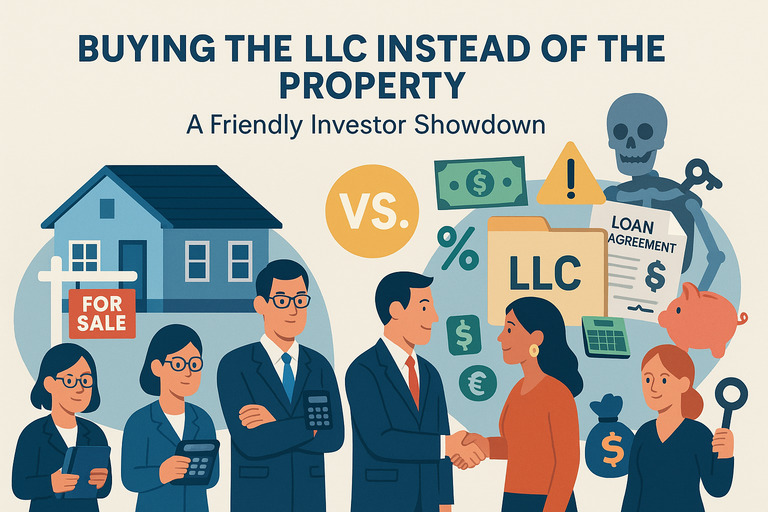
Buying the LLC Instead of the Property: A Friendly Investor Showdown
Pull up a chair, friends—this one’s a ride. Over the past few years I’ve been testing a strategy that makes some investors grin and others shake their heads: buying the company (the LLC) that owns the property instead of buying the property itself.
I’ve now closed multiple deals this way, and every time I share the idea online, the comment section lights up like the Fourth of July. So let me take you through how it works, why it’s been a game-changer for me, and the lively debate that followed when I posted about it.
How the Idea Took Root
A year ago I dropped a short post on a popular investor forum:
“I’ve had great success purchasing the company that holds a property rather than buying the property directly. This move saves me closing costs, lets me keep the existing financing, and helps me refinance almost immediately with a smaller down payment. Anyone else tried it?”
I figured a few people would nod and maybe share a tip or two.
Instead, I got a friendly storm of questions, warnings, and full-on legal analysis.
Meet the Cast of Characters (Names Changed for Privacy)
-
Sam “The Cautious Counselor” – a seasoned investor–attorney type from Philadelphia who knows every legal pitfall in the book.
-
Lisa “Numbers First” – a sharp investor who’s seen every creative financing scheme and isn’t afraid to poke holes.
-
Tara “Hands-On Host” – a short-term rental owner trying to figure out if she can buy an LLC and keep a DSCR loan.
-
Yours Truly – a Florida-based investor who’s been around the block for more than twenty years and isn’t shy about trying something new.
Round One: The Caution Flag
Sam jumped in first.
“Careful,” he wrote. “Buy the LLC and you inherit every skeleton in the closet—unpaid taxes, lawsuits, liens, you name it. Someone slips and falls on the property three years ago and decides to sue? Guess whose problem that is now.”
Lisa chimed in, backing him up. “And don’t forget transfer taxes. In a lot of places, you’ll still owe them even if you buy the company instead of the property. Plus, lenders often insist on a new title policy anyway. Limited savings, added risk.”
They weren’t being dramatic. These are real concerns, and anyone who dives into creative deals without due diligence is asking for trouble.
My Turn: Florida Flavor
I’ve been through a lot of closings in my career, so I wasn’t rattled. I shared my side.
“Totally get the concerns,” I wrote back, “but here’s how we handle it in Florida.”
-
Full Title Work Still Happens
We run a complete title and lien search. We’ll even get a new title policy if needed. Buying the LLC doesn’t mean we skip the boring (but vital) checks. -
The Loan Is the Real Prize
The magic is in keeping the existing financing. If the seller locked in a killer rate in 2020, I don’t want to replace it with today’s higher rates. Buying the LLC means the bank sees no change in property ownership—so the loan stays put. -
Cost Savings Are Real
No new loan origination points. No new LLC formation fees. Sometimes the property taxes even stay at their lower baseline. Those savings can easily hit five figures. -
Legal Armor
My attorney partner drafts strong reps, warranties, and hold-harmless agreements. We’ve done more than thirty deals without a single issue.
Then I dropped a real example: I once bought an LLC for $10,000, stepped right into a fantastic loan, and avoided a mountain of paperwork. No reapplication. No points. Just a smooth close.
Round Two: The Pushback Gets Specific
Sam came back swinging—but still polite.
“You’ll still need to amend the operating agreement. And why would you inherit someone else’s bank accounts or insurance history? Also, acquiring an LLC doesn’t automatically give you the right to assume a loan if there’s a personal guarantor involved.”
All fair questions.
I explained that yes, we amend operating agreements. We don’t literally keep the old bank accounts if they don’t suit us—we open our own when needed. The key is we don’t have to start from zero if we don’t want to. And on loans, we verify terms first and only proceed if the structure allows it.
Tara’s Real-Life Hiccup
Then Tara jumped in. She was mid-deal on a short-term rental and trying to buy the LLC but couldn’t find a lender who’d treat it like a real estate purchase. “My lawyer is stumped, the seller’s losing patience,” she admitted.
I suggested she start by getting an appraisal so she knew the numbers, and to talk with lenders experienced in entity transfers. It’s not always a fit for every bank, but private or portfolio lenders can be flexible.
What I’ve Learned After 3,500 Transactions
This isn’t a one-size-fits-all strategy, but when it fits, it’s golden. Here’s my long list of takeaways:
-
Local Rules Rule
Every state—and sometimes every county—has its own quirks about transfer taxes, reporting requirements, and lender preferences. In many Florida counties, a transfer of LLC membership interests doesn’t trigger deed transfer taxes. That alone can be huge. -
Due Diligence Is King
-
Order a full title search and a lien search.
-
Get tax certificates.
-
Demand estoppel letters and detailed financials.
-
Run UCC and judgment searches.
-
-
Use a Lawyer Who Gets It
My attorney partner and I have done more than thirty of these. We draft hold-harmless agreements, reps and warranties, and escrow holdbacks when needed. -
Know the Loan Inside and Out
The biggest benefit is keeping an existing mortgage with better terms than today’s market offers. But you need to know if there’s a personal guarantee, a “change of control” clause, or anything that would trip you up. -
Negotiate Creatively
Because you’re buying a company, not just a house, you and the seller can agree on flexible terms—like smaller down payments or equity-sharing arrangements. -
Insurance & Banking
Yes, you’ll review or even replace insurance policies. And you’ll probably open a fresh bank account for clarity. The point is you can choose, not that you’re stuck.
Real Numbers, Real Impact
Let’s talk dollars. Say you buy a $500,000 rental the traditional way:
-
Loan origination points: 1% = $5,000
-
Title insurance & doc stamps: around $4,000
-
New LLC formation & bank setup: another $1,000+
-
Possible higher rate on a new loan vs. a sweet 3% existing note: priceless.
When you buy the LLC, you may dodge or reduce many of those costs and keep that golden old loan.
Why It’s Hard to Feel the Benefits Until You Try
It’s tough to grasp the upside until you’ve walked it. On one deal, I bought the LLC for just $10,000, stepped right into a 3.25% loan, and refinanced a year later after improving the property. My cash flow stayed strong from day one because I didn’t burn cash on new loan points or higher rates.
And there’s a hidden perk: if the LLC has been profitable for years, it already has a credit history. That can help you build business credit faster.
The Counterarguments Still Matter
I’m not blind to the risks:
-
Hidden Liabilities – Old lawsuits or unpaid bills can surface.
-
Lender Approval – Some loans have strict change-of-control clauses.
-
Insurance Surprises – Past claims could affect premiums.
That’s why I never skip legal or title work. A sloppy deal is a dangerous deal.
When to Walk Away
Sometimes I pass. If a lender flat-out forbids an LLC transfer, or if the company’s books are a mess, I’d rather buy the property the normal way. The strategy is powerful, but it’s not magic.
Why Sellers Like It Too
This isn’t just about me saving money. Sellers love a quick, stress-free close. They don’t have to pay off the old loan immediately or wait on a long appraisal process. Sometimes that means I get a better price or friendlier terms.
A Conversation, Not a Contest
What I loved about the forum debate was the tone. Even when Sam and Lisa disagreed, it stayed respectful and curious. We were all sharpening each other.
I ended one thread like this:
“I respect every caution raised here. After thousands of transactions, this strategy works for me, but it might not fit everyone. I’m always open to learning from different markets and experiences.”
And I meant it. Real estate is local and personal. One size never fits all.
Practical Steps If You Want to Try It
If this idea sparks your curiosity, here’s a simple roadmap:
-
Find a Willing Seller
Not every owner wants to sell the company. You need someone open to the concept. -
Get the Books
Review financial statements, tax returns, and any operating agreements. -
Hire a Sharp Attorney
One experienced in entity transfers, not just standard closings. -
Run Every Search
Title, liens, judgments, UCC filings—leave no stone unturned. -
Draft Rock-Solid Agreements
Include hold-harmless clauses, reps, warranties, and escrow for potential claims. -
Confirm Loan Terms
Make sure the existing financing truly allows for the transfer without triggering a call. -
Plan the Transition
Amend the operating agreement, update bank relationships, and notify any partners or vendors.
My Bottom Line
After 25 years and more than 3,500 transactions, I can say this: buying the LLC that holds a property can be a fantastic strategy when done right. It’s not for every market or every investor, but it has saved me time, cash, and headaches while letting me keep loans that would be impossible to replicate today.
So if you’re tempted, start small, do meticulous due diligence, and surround yourself with pros. It might just change the way you invest.
Keep it consistent, stay patient, stay true—if I did it, so can you.
This is Jorge Vazquez, CEO of Graystone Investment Group and Coach at Property Profit Academy.
Thanks for tuning in—until the next article, take care and keep building!
Disclosure
I am not an attorney, and this article is for entertainment and educational purposes only. Real estate laws vary widely by state and by lender. Always consult with a qualified real estate attorney and a title professional before attempting any strategy involving the purchase of an LLC that owns property.
Book an Expert
New investor? Start with Jorge.

Jorge Vazquez – CEO & Investment Strategist at Graystone. Let’s make your portfolio stronger, steadier, and more profitable.
Deals? Book with Cody.

Meet Cody Bergstrom, Your Expert in Finding Deals Let’s find an off-market deal that actually works for you.
Need financing? Book with Lisa.

Meet Lisa Kaye Price, the LendingGig Top ML Let’s figure out the smartest way to fund your next deal.
Looking for PM? Book with Jay

Jay Michalec – COO & Property Management Expert at Graystone. Let’s make your rentals easier, calmer, and more profitable.