
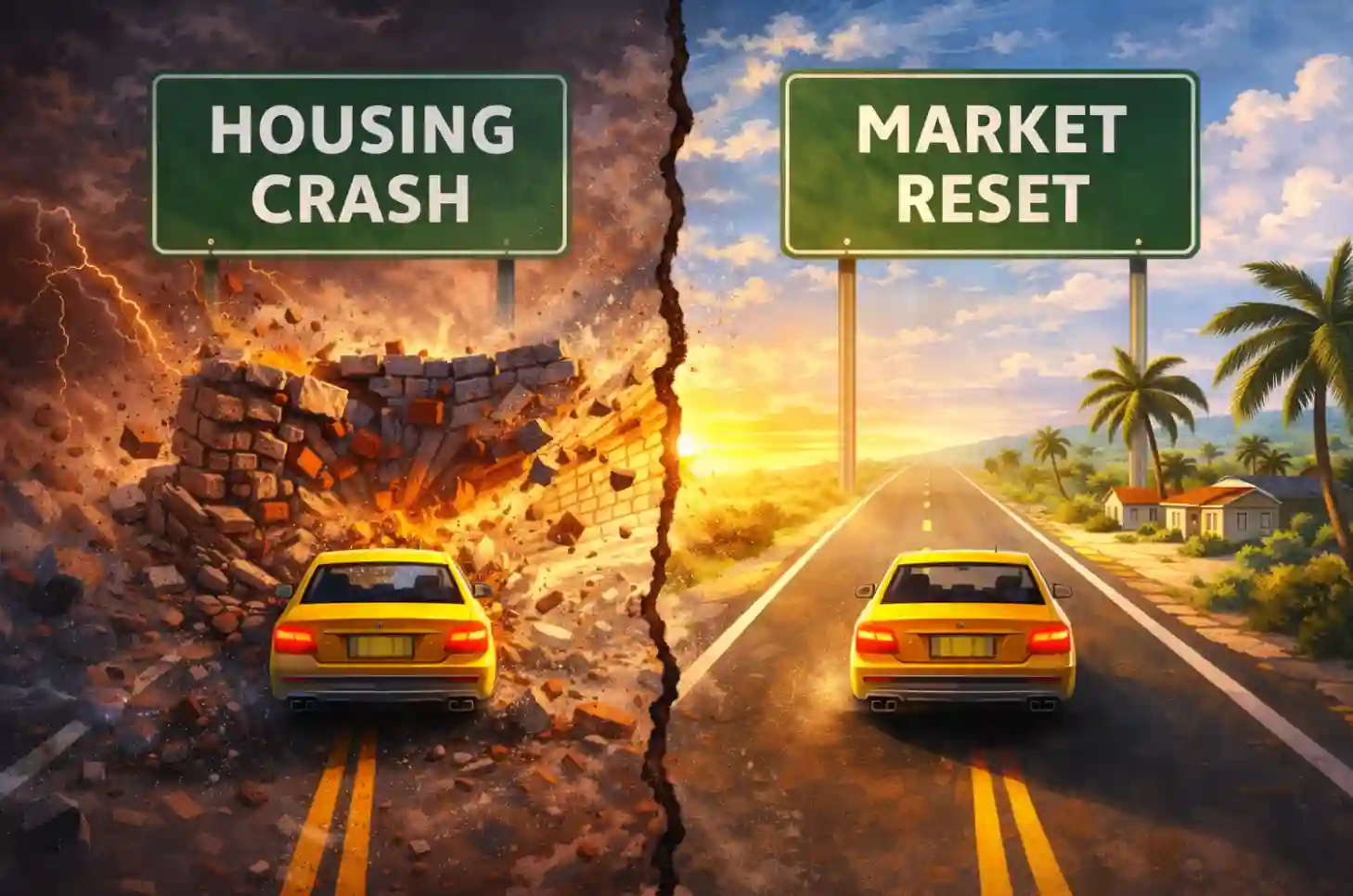
Will Florida Real Estate Crash Again Like 2008?
2008 vs 2026 Explained for Real Investors
Wondering if Florida real estate is about to crash again like it did in 2008?
You’re not alone. Every time inventory rises or headlines get dramatic, people panic. But here’s the truth most articles miss:
2008 was a collapse.
2026 is a correction.
Those are two very different animals.
Think of Florida’s housing market like a roller coaster. In 2008, the track snapped. In 2026, the ride just slowed down after going way too fast.
In this guide, we’ll compare:
-
What really happened in the 2008–2009 crash
-
What’s actually happening in Florida in 2026
-
How new investors and seasoned investors are affected
-
Which strategies worked then and which work now
No hype. No fear. Just real talk, plain English, and a little humor.
What Really Happened in 2008–2009?
Florida’s Housing Crash, No Sugarcoating
In 2008, Florida didn’t just have a bad year. It had a full-blown housing meltdown.
Prices didn’t dip. They fell off a cliff.
From the mid-2000s peak to the bottom, Florida home values dropped over 50% in many areas. A $300,000 house suddenly sold for $150,000 — sometimes less.
That wasn’t a “buying opportunity.”
That was chaos.
Home Prices Collapsed
Cities like Tampa and Miami saw values drop nearly in half. Entire neighborhoods were underwater. Owners owed more than their homes were worth, and walking away became common.
Foreclosures Exploded
Florida became the foreclosure capital of the country. In some counties, 1 out of every 8 homes was in foreclosure. “For Sale” signs were everywhere. Banks didn’t want houses — they wanted them gone.
Inventory Was Out of Control
At one point, Florida had around a 20-month supply of homes. A balanced market is 5–6 months. This was a flood, not a trickle.
Credit Completely Froze
Even though interest rates dropped, it didn’t matter. Banks stopped lending. Getting a mortgage felt like asking a brick wall for a favor.
The Economy Was Broken
Jobs disappeared. Construction stopped. Homeowners weren’t choosing to sell — they were being forced to.
That’s why comparing 2008 to today without context is dangerous. The crash wasn’t just housing. It was the entire financial system breaking at once.
Impact on New Investors in 2008–2009
For new investors, 2008 was brutal.
Many people jumped into real estate in 2005–2007 thinking prices only went up. Condos were being flipped before drywall was finished. Then reality hit.
The Cons
-
Values dropped faster than investors could react
-
Many owed more than properties were worth
-
Financing disappeared
-
Panic selling wiped people out
A lot of first-timers lost money, confidence, and sometimes everything.
The Pros
If a new investor had cash, patience, and guidance, 2009 was a once-in-a-lifetime buying window. Rents held up better than prices. People still needed places to live.
Those who bought low and held on quietly built serious wealth over the next decade.
But it took nerves of steel.
Impact on Seasoned Investors in 2008–2009
Experienced investors felt pain too — but they also saw opportunity.
The Cons
-
Existing portfolios lost value overnight
-
Refinancing became nearly impossible
-
Highly leveraged investors got wiped out
The Pros
Those who survived had the best buying opportunity of their lives.
Seasoned investors bought foreclosures, short sales, and bank-owned properties for pennies on the dollar. They bought in bulk. They rented instead of flipping.
Many of today’s largest rental portfolios were built during that period.
Strategies That Worked During the 2008 Crash
Some approaches saved investors and even made them wealthy:
-
Buying foreclosures and bank-owned homes
-
Negotiating short sales
-
Buying distressed properties off-market
-
Focusing on rentals, not quick flips
-
Prioritizing cash flow over appreciation
The key lesson: buy low, survive the storm, and wait.
What’s Actually Happening in Florida in 2026?
Now let’s talk about today.
Florida in 2026 is not crashing. It’s cooling.
Inventory is up, yes. But for very different reasons.
More Homes for Sale
Florida has more listings than it did a few years ago. Buyers finally have options again. That’s not a crisis — that’s normalization.
Why Inventory Increased
-
New construction finally delivered homes
-
Insurance and HOA costs pushed some owners to sell
-
Condo rule changes caused more listings
-
Higher interest rates slowed buyer demand
This isn’t distress selling. It’s adjustment.
Homes Are Taking Longer to Sell
Days on market are longer. Price reductions are back. Sellers are negotiating again.
That’s healthy.
Prices Are Cooling, Not Collapsing
Prices are mostly flat. Some areas are slightly down. Others are holding strong.
This is nothing like a 50% drop.
Mortgage Rates Are Higher — But Lending Works
Rates are higher than the ultra-low years, but banks are lending. Credit exists. Buyers just need to qualify properly.
Florida’s Economy Is Strong
People are still moving to Florida. Jobs exist. This isn’t a recession-driven sell-off.
Bottom line:
2026 is a market reset, not a meltdown.
Impact on New Investors in 2026
This is actually one of the best environments for new investors in years.
The Pros
-
Less competition than during the frenzy
-
Time to analyze deals properly
-
Negotiation power is back
-
Inspections and contingencies are accepted again
You can finally breathe.
The Cons
-
Higher interest rates hurt cash flow
-
Deals must be structured carefully
-
Insurance and taxes matter more now
New investors need to think long-term, not quick flips.
Impact on Seasoned Investors in 2026
Experienced investors are quietly active right now.
The Pros
-
More inventory to choose from
-
Motivated sellers without panic
-
Creative financing opportunities
-
Subject-to and seller financing deals are back
Taking over low-rate loans from sellers is one of the biggest edges in 2026.
The Cons
-
No automatic fire-sale discounts
-
Deals require skill, not luck
-
Insurance costs must be managed
Still, this is a market where experience pays.
Winning Strategies in the 2026 Market
Winning Strategies in the 2026 Market
Smart investors aren’t rushing deals in 2026. They’re structuring them.
Creative Financing
Subject-to and seller financing let investors avoid today’s high rates and creatively structure deals:
👉 Florida Real Estate: “Subject To” Challenges (subject‑to deals)
👉 What Is Seller Financing in Real Estate?
Off-Market Buying
Finding sellers before listings hit public sites gives you leverage and better terms. Investors are adjusting with creative strategies like this:
👉 How Investors Are Adjusting Strategies (creative approaches)
Long-Term Buy and Hold
Steady rent and Florida’s growth make buy-and-hold a cornerstone of wealth building:
👉 Flips or Rentals? Best Strategy for Tampa Investors
House Hacking
A low-cost way to get started and cover payments:
👉 How I House Hacked My Way From Zero to Nearly 40 Properties
Selective Short-Term Rentals
Higher income in the right areas is still possible — and the comparison between rental strategies helps clarify when it makes sense:
👉 Flips or Rentals? Best Strategy for Tampa Investors
2008 vs 2026: The Big Difference
2008:
-
Prices collapsing
-
Credit frozen
-
Forced selling everywhere
-
Fear was justified
2026:
-
Prices stabilizing
-
Credit available
-
Sellers adjusting expectations
-
Fear is mostly emotional
One was a financial crisis.
The other is a reset after excess.
Final Thoughts: Why 2026 Still Favors Investors
Real estate moves in cycles. Always has.
People who bought in 2009 looked crazy at the time — and brilliant ten years later.
2026 is not about panic buying or panic selling.
It’s about buying smart when the noise is loud and the competition is quieter.
If you invest with patience, structure deals correctly, and focus on long-term value, this cycle can work very well in your favor.
As always, don’t wait to buy real estate.
Buy real estate and wait.
If you want to talk through how this market fits your strategy, book time with me here:
https://graystoneig.com/ceo
Keep it consistent, stay patient, stay true — if I did it, so can you.
Book an Expert
New investor? Start with Jorge.

Jorge Vazquez – CEO & Investment Strategist at Graystone. Let’s make your portfolio stronger, steadier, and more profitable.
Deals? Book with Cody.

Meet Cody Bergstrom, Your Expert in Finding Deals Let’s find an off-market deal that actually works for you.
Need financing? Book with Lisa.

Meet Lisa Kaye Price, the LendingGig Top ML Let’s figure out the smartest way to fund your next deal.
Looking for PM? Book with Jay

Jay Michalec – COO & Property Management Expert at Graystone. Let’s make your rentals easier, calmer, and more profitable.