Why so many landlords feel stuck right now—and what’s really happening
Every few months, I get a question online that perfectly captures what a lot of landlords are quietly thinking but not always saying out loud.
“I did everything right. I bought years ago. I refinanced at a great rate. The property is occupied. And yet… the numbers feel tighter every year.”
This question came from an investor who owns two self-managed rental properties in Florida. Both were purchased around 2017 and refinanced in 2020 into 15-year mortgages at roughly 3 percent. On paper, that sounds like a home run.
In real life, the cash flow looks like this:
One property produces about $150 per month
The other produces about $75 per month
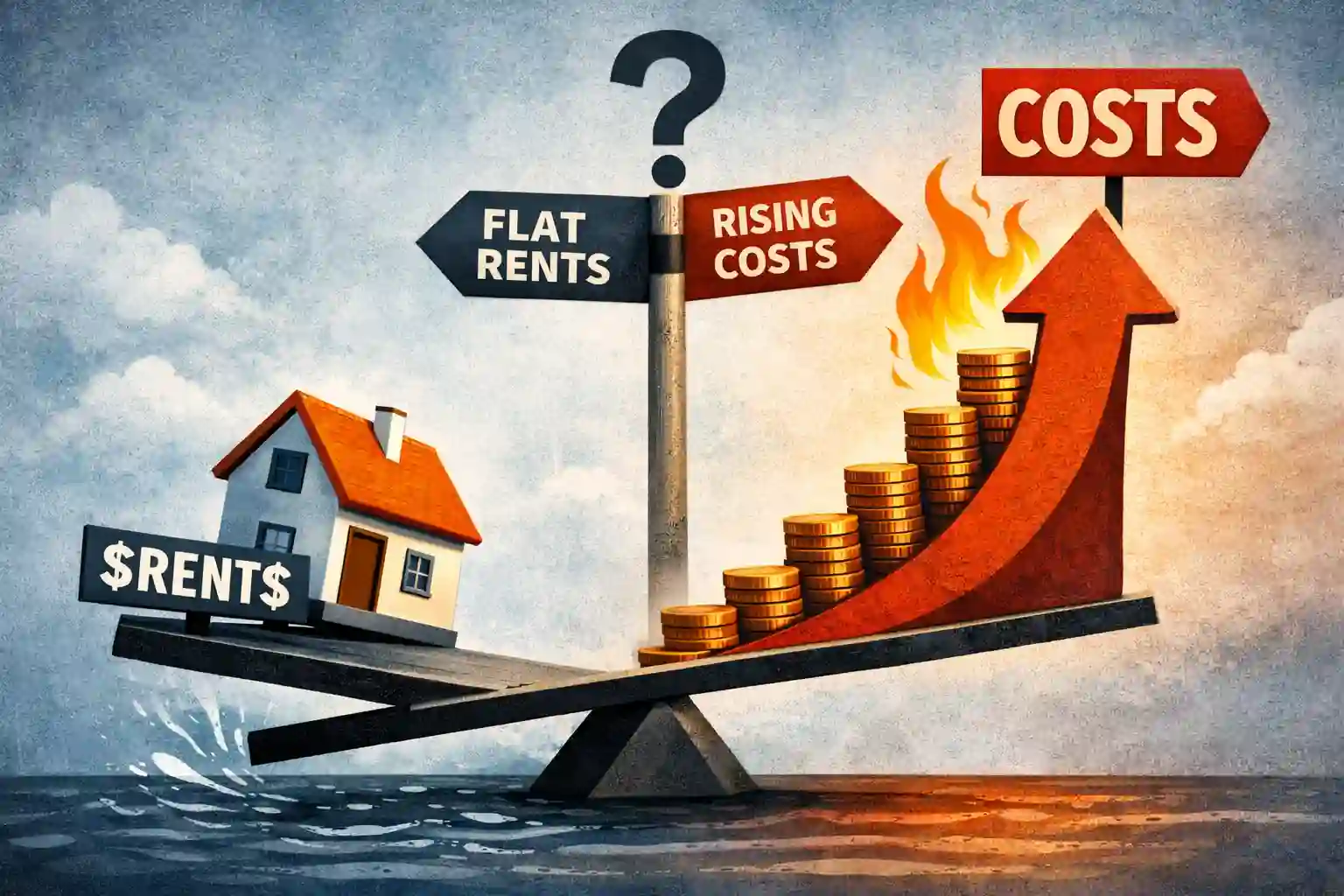
Rents jumped during the COVID migration boom. Then they flattened. Insurance went up. Property taxes followed. Maintenance costs increased. And now the same question shows up that I hear constantly.
Am I doing something wrong?
Do I hold?
Do I sell?
I’ve been investing in Florida for over 20 years. I personally own more than 40 properties and help manage roughly 300 across the state. I’ve lived through multiple cycles, and I want to break this down clearly—because most investors aren’t actually doing anything wrong. They’re just misunderstanding what phase they’re in.
Flat Rents Don’t Mean You Failed
They mean the market changed
The first mistake investors make is assuming every year should feel like 2021.
That year was not normal.
COVID created a perfect storm: massive migration, cheap money, panic buying, limited inventory, and emotional decision-making. Rents didn’t rise gradually. They jumped.
What we’re in now is not a collapse. It’s a normalization phase.
Real estate moves in cycles. Big run-ups. Long plateaus. Occasional pullbacks. Then another run. Flat rents after a surge aren’t a sign of failure. They’re the market catching its breath.
If your property is occupied, covering its debt, and functioning—even with thin margins—you’re not failing. You’re in the middle part of the cycle, which is usually the most uncomfortable and the least talked about.
Insurance and Property Taxes Are the Real Pressure Point
And they creep up quietly
Let’s be honest. Rent didn’t hurt these deals. Insurance and property taxes did.
In Florida especially, these two line items have been brutal. What makes them dangerous is how quietly they increase. Most landlords don’t notice until escrow recalculates or a renewal notice shows up and suddenly the payment jumps.
This is where many self-managing owners get caught off guard.
They treat insurance and taxes like background noise instead of active expenses that require constant attention.
If you don’t shop insurance, review deductibles, question coverage, and challenge property tax assessments, those two costs will slowly eat your deal alive. Same tenant. Same rent. Same mortgage. Just higher expenses.
That’s not bad luck. That’s passive management.
The 15-Year Mortgage Is Quietly Squeezing You
Equity today, pressure now
A 15-year mortgage sounds smart—and it is, in the right context.
You pay less interest.
You build equity faster.
You own the property sooner.
But here’s the tradeoff most investors don’t fully feel until years later.
A 15-year loan trades cash flow today for equity tomorrow.
That’s it. That’s the deal.
So when someone tells me their cash flow feels thin, one of my first questions is always about the loan term. A 30-year mortgage gives you flexibility. Lower payments. More breathing room. Better write-offs. Margin for rising costs.
A 15-year mortgage puts pressure on the deal. Especially when expenses rise and rents stall.
That doesn’t mean it was a bad decision. It just means you chose equity speed over cash flow—and now you’re feeling the squeeze.
Cheap Debt Can Become an Emotional Trap
A low rate doesn’t automatically mean a great hold
“I can’t sell. I have 3 percent debt.”
I hear that sentence constantly.
Low-rate debt feels like a golden handcuff. You know it’s valuable, so you stop evaluating the asset clearly. The rate starts making the decision for you.
Here’s the truth.
A great interest rate does not automatically make a property a great investment. It just means you borrowed money cheaply.
The real question is whether the property still fits your strategy and risk tolerance.
Sometimes the right move is keeping the loan and improving operations. Sometimes it’s repositioning equity elsewhere. But holding something only because of the rate—without looking at the asset itself—is how people get stuck.
Thin Cash Flow Is Dangerous—but Not Fatal
If you stay proactive
Let’s call it what it is.
$75 per month.
$150 per month.
That’s thin.
There’s no room for vacancy, surprises, or another insurance increase. That discomfort is real—and useful. It forces attention.
But thin cash flow alone does not mean sell.
It means manage better.
This is where landlords freeze. They don’t want to upset a good tenant, so they do nothing. Or they panic and sell a property that could have been stabilized with better oversight.
Tenant Retention Beats Big Rent Increases
Consistency wins
Across my own portfolio, I raise rents slightly almost every renewal. Not massive jumps. Sometimes $10. Sometimes $25. Rarely more unless the market truly demands it.
Why?
Because gradual increases keep you aligned with the market without shocking good tenants.
Tenants expect some increase. What they hate is flat rent for years followed by a sudden, painful jump. That’s how you lose good people and end up with vacancy costs that wipe out months of gains.
Retention plus consistency almost always beats vacancy plus resets.
Self-Managing Means You Are the Asset Manager
There’s no autopilot
Self-managing does not mean hands-off. It means you are the asset manager.
That includes:
Reviewing insurance regularly
Challenging property taxes
Monitoring market rents
Planning repairs before emergencies
Watching expenses closely
If you don’t want to do those things, that’s fine—but then you either hire someone who will, or you accept lower returns.
Most frustration comes from expecting passive results from active assets.
Why Pulling Out of Real Estate Right Now Usually Backfires
Selling feels safe—but history says otherwise
I also don’t think it makes sense to pull out of real estate right now. If you ask me which market is more due for a correction, it’s probably the stock market, not housing.
No one has a crystal ball, but after more than 20 years doing this, one of the biggest mistakes I’ve seen—made by billionaires, millionaires, and regular people like me—is selling good assets too early.
I’ve always believed that selling is usually the mistake, not holding.
People sell when things feel tight, uncomfortable, or boring—not when the asset is actually broken. That’s almost always the wrong moment.
Unless you can clearly move that money into something that gives you a better return with the same or less risk, it doesn’t make sense to exit what you already have.
Most wealth isn’t built by jumping in and out. It’s built by holding through the dull, frustrating middle—while everyone else convinces themselves it’s time to quit.
This Phase Ends—Even When It Doesn’t Feel Like It
Cycles always turn
Right now, it feels like expensive insurance and flat rents are permanent. They’re not.
Just like exploding rents and cheap insurance weren’t permanent either.
Markets overcorrect. Then they stabilize. Then they swing back.
From what I’m seeing on the ground, it feels like we’re nearing the end of the cheap-rent plus expensive-insurance phase. Not overnight—but soon.
That doesn’t mean relax. It means don’t panic.
The Real Takeaway
You’re not doing anything wrong.
Your biggest squeeze is the loan structure.
Insurance and taxes demand active management.
Small rent increases matter.
Tenant retention is critical.
Low rates are a tool, not a prison.
Real estate isn’t about perfection. It’s about staying in the game long enough for the math to work again.
Keep it consistent, stay patient, stay true—if I did it, so can you. This is Jorge Vazquez, CEO of Graystone Investment Group and all our amazing companies, and Coach at Property Profit Academy. Thanks for tuning in—until the next article, take care and keep building!
If you’d like to connect directly with me, feel free to book a time here: https://graystoneig.com/ceo