
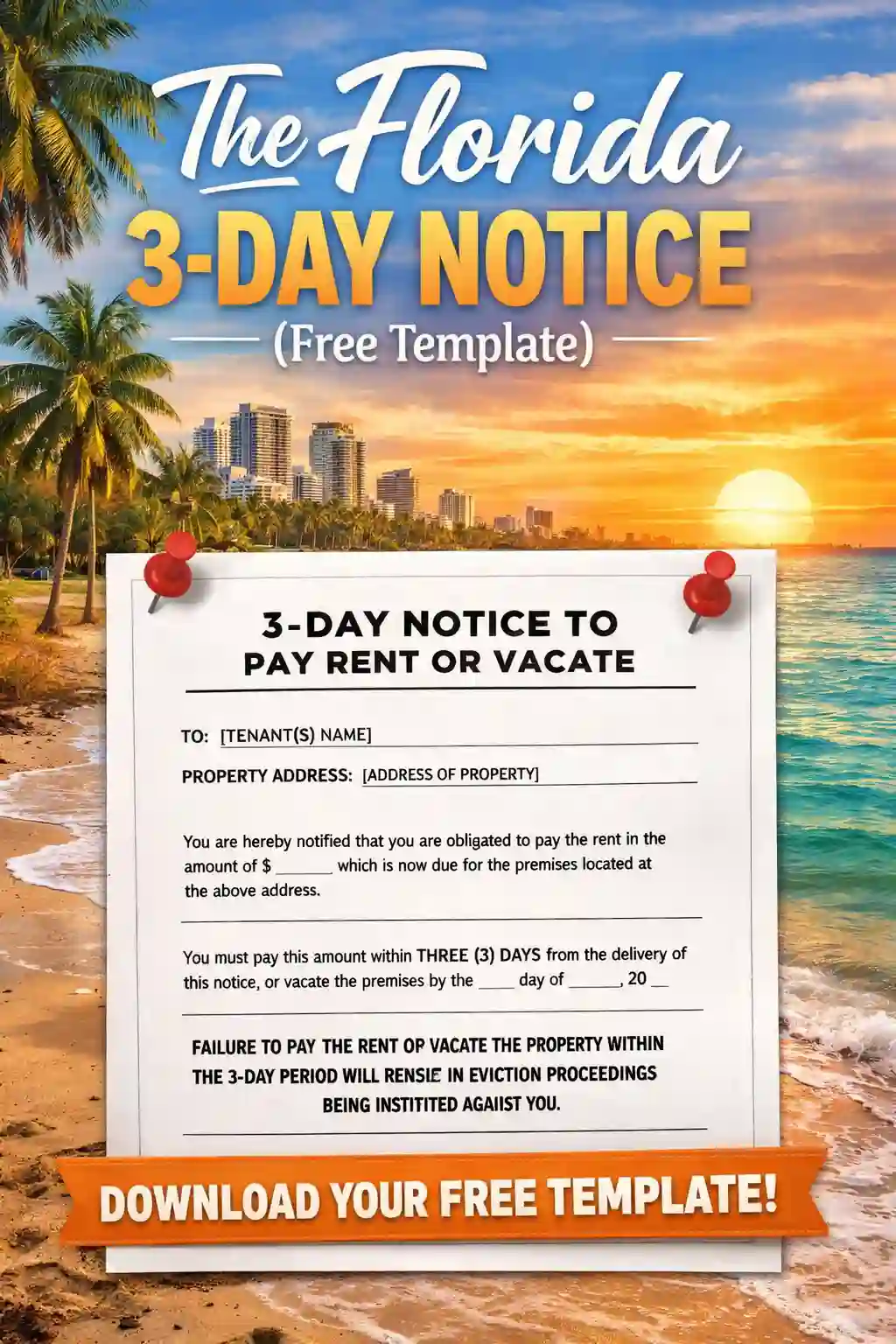
The Florida 3-Day Notice: What It Is, Why It Matters, and How One Small Mistake Can Cost You Months
I’ve been doing this for over 20 years.
I own rentals. I manage properties. I’ve sat in courtrooms more times than I can count. And if there’s one document that causes more unnecessary delays, confusion, and blown evictions than anything else, it’s the Florida 3-Day Notice.
Most landlords think this notice is simple.
It’s not.
It looks easy. It’s one page. It’s “just rent.” And yet, I’ve watched cases get dismissed over commas, dates, holidays, and even the way the notice was delivered.
This article is here to save you time, stress, and money.
Not theory. Real experience.
What Is a Florida 3-Day Notice?
In Florida, a 3-Day Notice to Pay Rent or Vacate is the first legal step in an eviction for nonpayment of rent.
No notice, no eviction.
You cannot skip it. You cannot shortcut it. And if it’s wrong, the judge doesn’t “fix it.” The case gets dismissed, and you start over.
The notice gives the tenant three business days to either:
• Pay the past-due rent in full
• Or vacate the property
That’s it. No negotiating. No explaining. No extra charges.
Just rent.
Why This Notice Is More Important Than Most People Realize
Landlords get into trouble when emotions creep in.
They’re frustrated.
They’re behind on their mortgage.
The tenant keeps promising to pay “next Friday.”
So they rush.
That’s when mistakes happen.
Judges don’t care how long the tenant has been late. They don’t care how many texts you sent. They care about procedure.
If the notice is wrong, the eviction stops cold.
I’ve seen landlords lose 30 to 60 days just because:
• They counted weekends
• They included late fees
• They served it wrong
• They dated it wrong
• They used the wrong wording
One page can cost you months.
Business Days Matter More Than You Think
This is one of the biggest mistakes I see.
The law says three business days.
That means:
• No weekends
• No legal holidays
If you post a notice on a Friday, Saturday and Sunday do not count.
If there’s a holiday in between, that day does not count.
Judges check this.
Tenants know this.
And attorneys absolutely know this.
Get it wrong, and the tenant wins without saying a word.
Rent Only Means Rent Only
This is another common error.
The 3-Day Notice can only demand past-due rent.
Not:
• Late fees
• Utilities
• Repairs
• HOA fines
• NSF fees
I’ve watched cases dismissed because a landlord added a $50 late fee.
That one line erased weeks of waiting.
If you want other charges later, fine. This notice is not the place.
Delivery Is Just as Important as the Notice Itself
You must be able to prove delivery.
Florida allows three common methods:
• Hand delivery
• Posting on the premises
• Mailing
Posting on the door is common, but here’s the catch.
If you post it, you still need to wait properly and document it. Take photos. Note the date. Keep records.
Judges don’t accept “I think I posted it.”
They accept proof.
Why DIY Evictions Usually Go Sideways
I’m not anti-DIY. I’m anti-sloppy.
Most landlords copy a notice from Google, change a name, and hope for the best.
The problem is that many online templates are:
• Outdated
• Missing statutory language
• Not Florida-specific
• Incorrectly worded
Florida is strict.
This is not Texas. This is not Ohio. Florida courts follow Florida statutes.
That’s why I created a clean, simple, Florida-compliant example based on how this actually works in real life.
The Example Template I Use as a Starting Point
Here’s the document I reference when explaining this to owners and new landlords:
https://docs.google.com/document/d/1zWaCGurMjXf9dj9r8wtN3fvW05Wa13j_2ALAY0Ve_Pg/edit?usp=sharing
Important note.
This is an example, not legal advice.
It’s designed to show:
• Proper structure
• Correct tone
• Clear wording
• What belongs and what does not
You still need to confirm it fits your situation.
Why Judges Are So Strict About This Notice
From the court’s perspective, eviction is serious.
Someone is losing their home.
Because of that, judges enforce procedure aggressively. They’re not being difficult. They’re following the law.
That’s why:
• Typos matter
• Dates matter
• Delivery matters
• Wording matters
Evictions are won before you ever step into the courtroom.
What I Tell New Landlords All the Time
If you’re nervous about sending a 3-Day Notice, that’s normal.
But fear usually comes from not understanding the process.
The notice isn’t an eviction. It’s a demand.
Many tenants pay once they receive it. Others don’t. Either way, you need it done right so you’re protected.
This is business.
Not personal.
Common Myths I Hear Constantly
Let’s clear a few up.
“I texted them, so that counts.”
No, it doesn’t.
“They said they’ll pay next week.”
That doesn’t stop the clock.
“I added late fees because the lease allows it.”
Not on the notice.
“They’ve been late before.”
Irrelevant.
Judges only care about this notice, this rent, this timeline.
The Emotional Side No One Talks About
Here’s the truth.
Most small landlords hate doing this.
They don’t want conflict. They don’t want to feel like the bad guy. They delay because they’re uncomfortable.
That delay usually costs more than the eviction itself.
Clear systems protect you from emotional decisions.
That’s why having a clean, repeatable notice process matters.
Why Consistency Beats Aggression
You don’t need to be rude.
You don’t need to threaten.
You don’t need to explain.
A calm, professional notice does more than angry messages ever will.
Tenants respect clarity.
Courts demand it.
The Disclaimer Matters Too
Every document like this should include a disclaimer.
Not because you’re unsure.
Because laws change. Facts change. Situations change.
A simple disclaimer protects you and sets expectations.
Final Thoughts From Experience
If you take nothing else from this article, remember this:
Most eviction problems are paperwork problems.
Not tenant problems.
Not judge problems.
Paperwork.
Slow down.
Follow the process.
Get the notice right the first time.
It will save you money, time, and stress.
And if you’re asking whether you’re doing it right, that already puts you ahead of most landlords.
Disclaimer
This article and the referenced document are provided as examples only and for general informational purposes. They do not constitute legal advice. Laws and procedures may change or vary based on individual circumstances. Always consult a qualified attorney to confirm compliance with current Florida law before using any legal notice.