
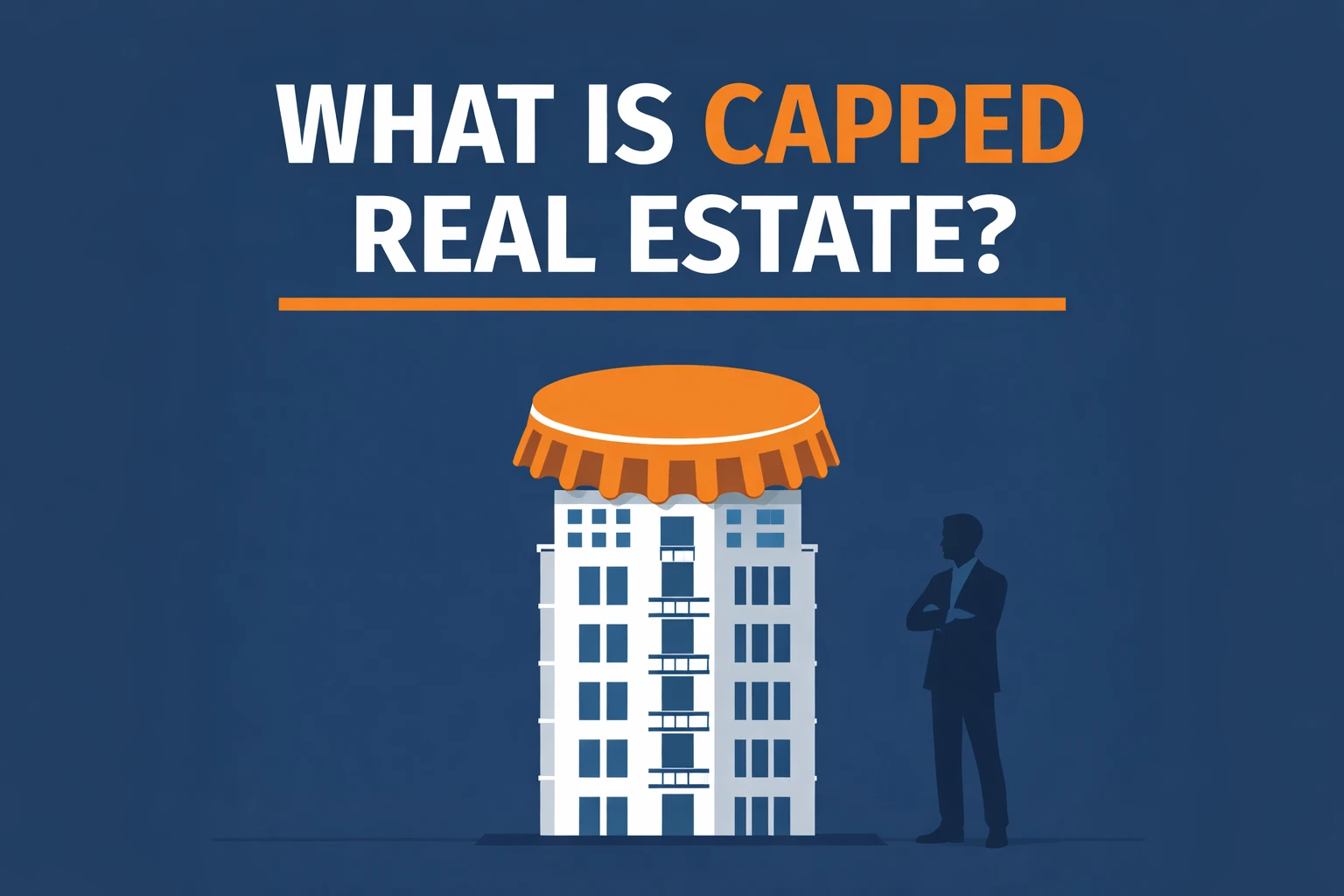
What Is Capped Real Estate?
Capped real estate means your income or return has a ceiling.
No matter how hot the market gets, how high rents go around you, or how much demand increases, your property can only earn up to a set limit.
That limit can come from:
-
Rent control laws
-
Fixed lease agreements
-
HOA rules
-
Government housing programs
-
The deal structure itself
Once you hit the cap, that’s it.
No extra credit. No bonus level.
Why Capped Real Estate Feels Exactly Like a Timeshare
Here’s the easiest way to understand it.
With a timeshare:
-
You don’t fully control usage
-
You don’t control resale value
-
You don’t control rental rules
-
Fees go up every year
-
Upside stays flat
Capped real estate works the same way.
You own something, but someone else controls the rules.
And those rules almost always cap your upside, not your expenses.
That’s the trap.
The Most Common Types of Capped Real Estate
1. Rent-Controlled Properties
This is the most obvious form of capped real estate.
If the city says:
“You can only raise rent 2% per year”
But:
-
Insurance jumps 20%
-
Taxes increase
-
Repairs cost more
-
Labor gets pricier
Your income is capped.
Your expenses are not.
That’s not balance. That’s pressure.
2. Commercial Properties With Fixed Rent Increases
Commercial real estate isn’t immune either.
Many deals include:
-
Long-term leases
-
Fixed rent bumps
-
Limited renegotiation options
So even if market rents double, your income doesn’t move much.
Stable? Yes.
Flexible? No.
Capped? Absolutely.
3. Affordable and Income-Restricted Housing
These properties often come with:
-
Maximum rent limits
-
Tenant income requirements
-
Ongoing compliance rules
They can perform well operationally, but growth is controlled from day one.
Think timeshare with better occupancy.
4. HOA-Restricted Rentals
Some HOAs:
-
Limit rent increases
-
Cap the number of rentals
-
Restrict lease terms
You may own the property, but the HOA owns the rulebook.
That’s capped real estate wearing a polo shirt and clipboard.
How Cap Rates Tie Into Capped Real Estate
This is where investors get confused.
A cap rate shows today’s return based on income.
But capped real estate limits future income growth.
So while the cap rate may look fine now, over time:
-
Income stays flat
-
Expenses rise
-
Real returns shrink
On paper, it looks stable.
In reality, it slowly tightens the screws.
Why Investors Still Buy Capped Real Estate
To be fair, capped real estate isn’t always bad.
Some investors want:
-
Predictable income
-
Fewer surprises
-
Lower volatility
-
Long-term tenants
-
Less management intensity
For them, capped real estate feels comfortable.
Like cruise control instead of racing.
The problem isn’t choosing it.
The problem is not realizing that’s what you chose.
The Biggest Mistake Investors Make
The biggest mistake isn’t buying capped real estate.
It’s thinking the property is uncapped when it’s not.
That happens when investors:
-
Assume rents will rise with the market
-
Ignore local laws
-
Skip HOA rules
-
Miss lease escalation limits
-
Underestimate expense growth
That’s how you end up frustrated, confused, and disappointed.
Just like timeshare owners who thought resale would be easy.
Capped Real Estate vs Uncapped Real Estate
Here’s the simplest comparison.
Capped real estate:
-
Income growth is limited
-
Rules control returns
-
Stability over speed
Uncapped real estate:
-
Rents adjust to market
-
Income can scale
-
Equity grows faster
Neither is right or wrong.
They just serve different goals.
When Capped Real Estate Makes Sense
Capped real estate can work if:
-
You want predictable income
-
You’re near retirement
-
You value stability over growth
-
You’re okay trading upside for consistency
It’s a seatbelt strategy.
When Capped Real Estate Works Against You
It can hurt if:
-
You’re early in your investing journey
-
You want equity growth
-
You plan to scale
-
You need income to outpace inflation
That’s when capped real estate quietly slows everything down.
How to Analyze Capped Real Estate the Smart Way
Before buying, ask:
-
What exactly is capped?
-
Who controls the cap?
-
How long does it last?
-
Can it be removed?
-
Are expenses capped too?
If income is capped and expenses aren’t, pause and rethink.
That one question alone saves investors a lot of regret.
Final Conclusion: My Timeshare Taught Me This Lesson the Hard Way
From my personal experience, my timeshare actually worked for me at first. I used it. I enjoyed it. I got value out of it early on. So this isn’t coming from a place of regret or bitterness.
But over time, the cracks started to show.
Every year, the HOA fees kept going up. Not a little. Every single year. Meanwhile, the value didn’t go up with it. In fact, it started to go the other way. What once felt like an asset slowly began to feel heavier to hold. More rules. More fees. Less flexibility. Less upside.
That’s when it really clicked for me.
Capped real estate works the same way. It can look fine in the beginning. It can even perform well early on. But when income is capped and expenses are not, time stops being your friend. Slowly, quietly, the math shifts against you.
The lesson isn’t that capped real estate is bad. The lesson is that you need to know exactly what’s capped, who controls it, and how it behaves over time. If you go in with eyes open and the strategy fits your goals, great. If not, you may wake up years later wondering why your asset feels more like a bill than an investment.
That timeshare did its job for a season.
But it also taught me a lesson I carry into every real estate deal now.
Know the ceiling before you buy the floor.
Book an Expert
New investor? Start with Jorge.

Jorge Vazquez – CEO & Investment Strategist at Graystone. Let’s make your portfolio stronger, steadier, and more profitable.
Deals? Book with Cody.

Meet Cody Bergstrom, Your Expert in Finding Deals Let’s find an off-market deal that actually works for you.
Need financing? Book with Lisa.

Meet Lisa Kaye Price, the LendingGig Top ML Let’s figure out the smartest way to fund your next deal.
Looking for PM? Book with Jay

Jay Michalec – COO & Property Management Expert at Graystone. Let’s make your rentals easier, calmer, and more profitable.