Why Many Airbnb Investors Are Quietly Switching Back to Long Term Rentals
Today I had an interesting conversation with a reporter from Realtor.com.
The topic was short term rentals. But not the usual story you hear online.
Most articles talk about people making huge money on Airbnb.
This conversation was different.
We talked about what happens when expectations meet reality.
Because right now a lot of investors who bought short term rental properties around 2021 and 2022 are discovering something important.
Short term rentals are not always the easy money people expected.
And many of those owners are now quietly switching their properties back to long term rentals.
Let me explain what is really happening.
Quick Answer
Many short term rental investors who bought properties during the 2021 and 2022 boom are now struggling with high costs, competition, and inconsistent bookings. Because of this, many owners are converting their properties back into long term rentals to create stable monthly income.
Why So Many People Jumped Into Short Term Rentals
Around 2022 there was massive excitement about Airbnb.
Everyone was talking about it.
YouTube videos. TikTok clips. Real estate conferences. Instagram posts.
The message was simple.
Buy a property. List it on Airbnb. Make a fortune.
And to be fair, some people did make great money.
But many investors jumped in during the peak of the market.
That meant they were buying properties when prices were already very high.
Then interest rates started rising.
And suddenly the numbers did not look as good.
Many of those investors discovered that short term rentals have challenges that were never mentioned in the hype videos.
Short Term Rentals Are Not Passive Income
One of the biggest misconceptions about short term rentals is that they are passive income.
They are not.
Running a short term rental is more like running a small hotel.
Here are some of the things owners must handle constantly.
• Cleaning after every guest
• Communicating with guests at all hours
• Adjusting nightly prices
• Managing listings and marketing
• Handling repairs and maintenance
• Restocking supplies
• Responding to reviews
This takes time.
A lot of time.
Many investors underestimated how much work goes into operating a successful short term rental.
Some owners eventually realize they created a second job for themselves.
And it is not always a fun one.
The Oversupply Problem
Another issue that has appeared in many markets is oversupply.
In simple words, there are now too many short term rentals competing for the same guests.
When that happens, prices drop.
Vacancies increase.
Revenue becomes unpredictable.
Investors who expected consistent income suddenly see weeks or even months with few bookings.
That creates stress, especially when mortgages are high.
What Happens When Revenue Falls Short
When short term rental income does not match expectations, owners have to make a decision.
They can keep trying to compete in the short term rental market.
Or they can switch to long term rentals.
This is something we are seeing often in our property management company.
Many clients come to us after trying short term rentals.
They expected strong monthly income.
Instead they experienced:
• inconsistent bookings
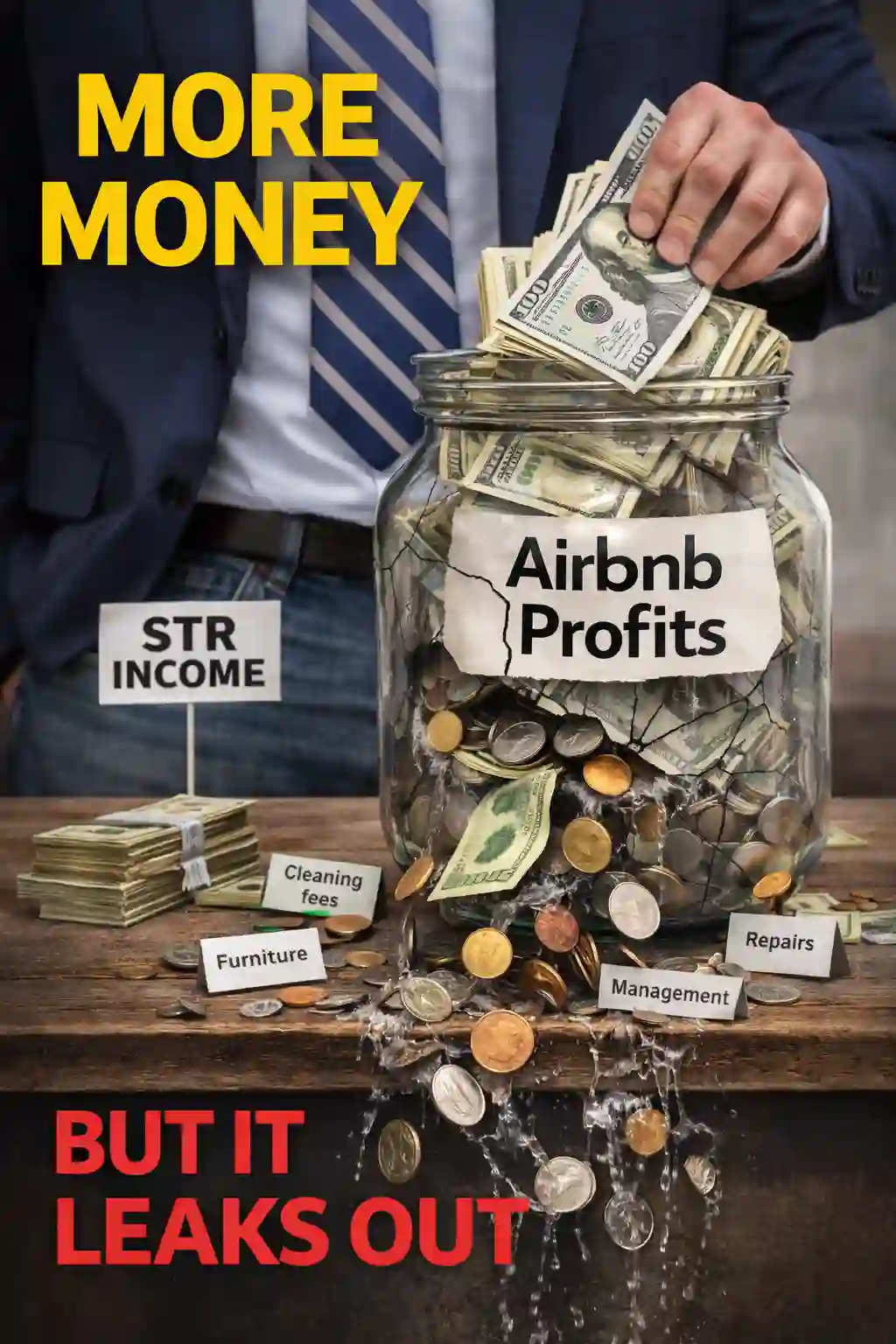
• high operating costs
• management headaches
So they decide to convert the property into a traditional rental.
The goal becomes stability instead of chasing nightly bookings.
My Personal Experience With Short Term Rentals
Even though I own dozens of long term rentals, I only operate a small number of short term rentals.
That decision was intentional.
I have seen how unpredictable that market can be.
One property we operated as a short term rental had an income potential equivalent of around $3,200 per month.
Sounds great, right?
But reality looked different.
Vacancies started appearing.
So we made a decision.
Instead of chasing unpredictable bookings, we rented the property for:
$2,700 per month for six months.
After that lease ended, we rented it again for:
$2,500 per month for another six months.
Was that lower than the Airbnb projections?
Yes.
But it created something more valuable.
Consistency.
Predictable income can sometimes be more important than chasing the highest possible number.
The Strategy That Protects Investors
One of the biggest lessons in real estate investing is simple.
The price you buy at matters more than the strategy you use later.
In the interview I explained a strategy I have used for years.
Buy properties at affordable prices.
For example, I mentioned properties purchased around:
$50,000
and another around:
$150,000.
When acquisition costs are low, the mortgage stays low.
Often around:
$800 to $1,000 per month.
This creates flexibility.
If the short term rental strategy works, great.
If it does not work, the property can easily convert to a long term rental and still produce positive cash flow.
That flexibility protects investors from market changes.
Luxury Properties Are Not Always the Best STR Investments
Another myth many investors believe is that luxury properties perform the best as short term rentals.
That is not always true.
In many cases guests care more about three things.
• Comfort
• Location convenience
• Price
They want a clean space that feels nice.
They want easy access to the places they need to go.
And they want value.
That does not always mean luxury.
Sometimes a well designed, comfortable property at a reasonable price performs better than an expensive luxury listing.
The Rise of Corporate Rentals
Another interesting trend we see is corporate renters.
Many short term rental guests are not actually tourists.
They are professionals staying temporarily.
For example:
• traveling nurses
• corporate contractors
• relocation clients
• temporary work assignments
These renters want something simple.
They want a furnished place that feels comfortable.
They want a kitchen.
They want reliable internet.
And they want reasonable pricing.
Luxury is often less important than comfort and convenience.
The “Low End of the High End of the Low End” Strategy
One investment philosophy I often talk about is what I call:
The low end of the high end of the low end.
It sounds funny, but it works.
The idea is to buy properties in neighborhoods that are improving but still affordable.
Areas where prices are reasonable today but growth is happening.
For example, neighborhoods like parts of Ybor City in Tampa.
In some cases investors can still find properties under $200,000.
When you buy in these areas:
• acquisition costs stay lower
• cash flow becomes easier
• appreciation potential increases
This approach reduces risk and improves long term results.
The Real Lesson From the STR Boom
The big takeaway from my conversation with the Realtor.com reporter is simple.
Short term rentals are not guaranteed income.
Some investors succeed.
Others struggle.
The investors who do best usually follow a few key principles.
They buy properties at the right price.
They keep their debt manageable.
They remain flexible with strategy.
And they adapt when market conditions change.
Real estate is not about chasing trends.
It is about making smart decisions that work in multiple scenarios.
Why This Story Matters for Investors
Stories like this are important because they show the full picture.
Real estate investing is not always easy.
Markets change.
Strategies evolve.
And sometimes investors have to pivot.
That does not mean the investment failed.
It simply means the strategy changed.
Many short term rental owners are discovering that converting to long term rentals can provide stability and predictable income.
And sometimes that is exactly what an investment needs.
Final Thoughts
My conversation with the reporter reminded me of something important.
In real estate, flexibility wins.
The investors who succeed are not the ones chasing hype.
They are the ones who buy smart, manage risk, and adapt when the market changes.
Short term rentals can work.
Long term rentals can work.
But the real secret is buying properties that work under multiple scenarios.
That way no matter what the market does, your investment still makes sense.
Keep it consistent, stay patient, stay true. If I did it, so can you. This is Jorge Vazquez, CEO of Graystone Investment Group and all our amazing companies, and Coach at Property Profit Academy. Thanks for tuning in. Until the next article, take care and keep building.
If you would like to connect directly with me, feel free to book a time here:
https://graystoneig.com/ceo
Book an Expert
New investor? Start with Jorge.

Jorge Vazquez – CEO & Investment Strategist at Graystone. Let’s make your portfolio stronger, steadier, and more profitable.
Deals? Book with Cody.

Meet Cody Bergstrom, Your Expert in Finding Deals Let’s find an off-market deal that actually works for you.
Need financing? Book with Lisa.

Meet Lisa Kaye Price, the LendingGig Top ML Let’s figure out the smartest way to fund your next deal.
Looking for PM? Book with Jay

Jay Michalec – COO & Property Management Expert at Graystone. Let’s make your rentals easier, calmer, and more profitable.