
Why the Right Operating Agreement Matters When Buying Rental Properties
And How One Simple Question From My Team Sparked This Entire Conversation
This article started with a simple Slack message.
One of my employees, Cody, pinged me and said something along the lines of:
“Hey Jorge, can you take a look at this operating agreement for one of our clients? They’re buying rentals and want to make sure it’s solid.”
Nothing unusual there. I’ve reviewed hundreds of operating agreements over the years. It’s part of the job when you’ve been investing for a couple decades and you’re constantly helping clients structure deals the right way.
But this one stopped me.
Not because it was terrible.
Not because it was brilliant.
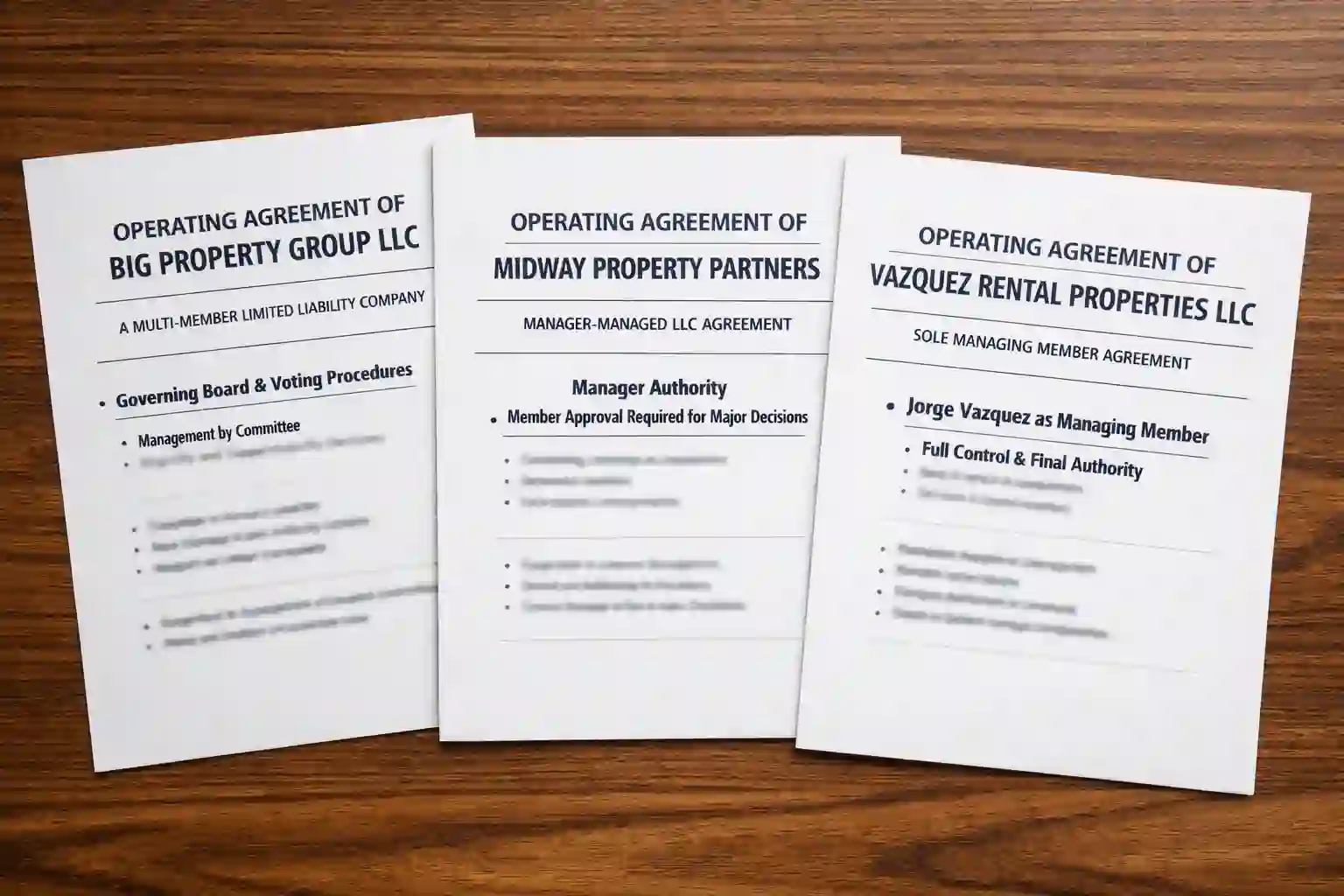
Because there were three different versions sitting in front of me.
The client was torn between:
• An older operating agreement I used years ago
• A middle version I used during a transition phase
• A newer one I use today
And they asked the most dangerous question an investor can ask:
“Which one should I use?”
That’s when it hit me.
Most investors don’t realize they’re not choosing a document.
They’re choosing a power structure.
And if they choose the wrong one for the wrong stage, the deal doesn’t break on day one. It breaks later. Quietly. Expensively.
That’s why this matters.
The Lie Most Investors Believe About Operating Agreements
Most people think an Operating Agreement is just something you need to open a bank account, satisfy your attorney, or check a box for the lender.
That’s not what it is.
An Operating Agreement is the rulebook for what happens when things go wrong.
It decides:
• Who’s really in charge
• Who can sign and bind the company
• Who decides money
• Who decides exits
• Who wins when people disagree
If your OA doesn’t answer those clearly, Florida law will answer them for you.
And Florida’s default rules don’t care about your intentions.
Why This Matters Even More With Rental Properties
Rental properties are not passive investments.
They are living, breathing, problem-generating machines.
Tenants call at 2 a.m.
Insurance claims show up unannounced.
City inspectors don’t wait for votes.
Lenders don’t care about group consensus.
If you can’t make fast, clean decisions, rentals punish you.
That’s why the structure behind the rentals matters just as much as the numbers.
The Three Operating Agreement Styles I’ve Personally Used
When I looked at those three operating agreements Cody sent me, I realized something important.
They weren’t better or worse.
They were right for different stages.
Here’s how I break them down.
Version A: Big Company, Many Moving Parts, Less One-Person Control
This is the kind of operating agreement that works best when a company is large, layered, and professionalized.
Think:
• Multiple departments
• Senior leadership teams
• Less family involvement
• More distance between owners and operations
This version usually spreads authority across multiple members or directors.
On paper, it feels fair.
Everyone has a voice.
Decisions feel balanced.
And in the right environment, that works.
Where this version shines
• Large real estate companies
• Institutional-style operations
• Businesses with strong internal systems
• Less emotion involved
Where it struggles with rentals
Rentals don’t move at board-meeting speed.
Shared authority sounds good until:
• One person wants to refinance
• Another wants to wait
• Someone else wants distributions
• Someone stops responding
Suddenly, no one is really in charge.
This version assumes maturity, alignment, and professionalism. When those exist, it’s great.
When they don’t, it becomes gridlock.
Version B: The Middle-Ground Agreement Everyone Thinks Is “Safe”
This is the most common operating agreement investors use, whether they realize it or not.
It usually says things like:
• Manager-managed
• Certain decisions require approval
• Roles defined later
It feels flexible.
It feels friendly.
It feels fair.
This works well when:
• You have a small group of partners
• Everyone trusts each other
• One person is more active, but not dominant
The problem
Ambiguity.
This version works beautifully until stress shows up.
And stress always shows up.
Money stress.
Time stress.
Life stress.
When that happens, the vague language becomes dangerous.
Questions start popping up:
• Who actually had authority?
• Who approved this?
• Who can fire who?
• Who decides distributions?
If the answer isn’t clear in writing, you’re already behind.
Version C: One Clear Leader, One Final Decision
This is the version I use today.
And it’s the one people are most uncomfortable with at first.
This operating agreement is built around one reality:
Someone has to be in charge.
Not emotionally.
Not ego-wise.
Legally.
This structure works best when:
• One person built the business
• One person signs personally
• One person carries the risk
• Speed matters
• Direction matters
It doesn’t mean others don’t matter.
It doesn’t mean people don’t get paid.
It doesn’t mean ideas don’t matter.
It means decisions don’t stall.
Why this matters for rentals
Tenants don’t wait.
Cities don’t wait.
Insurance doesn’t wait.
Courts don’t wait.
Someone needs authority.
This version makes that unmistakable.
Family and Rental Properties Are a Dangerous Combo Without Structure
This is where I’ve seen the most damage over the years.
Family plus rentals plus a weak operating agreement is a slow-motion problem.
Everyone trusts each other.
Until money gets tight.
Until someone wants out.
Until someone stops pulling weight.
Until someone gets divorced.
The irony is that family deals need more structure, not less.
Clear authority protects relationships.
Ambiguity destroys them.
Investors See This Faster Than New Operators
Sophisticated investors don’t ask about returns first.
They ask:
• Who’s in charge?
• Who signs?
• Who decides exits?
• What happens if you disagree?
If they don’t like the answers, they walk.
A clean operating agreement attracts serious money.
A messy one scares it away.
Picking the Right OA Is About Stage, Not Ego
This isn’t about control for control’s sake.
It’s about matching the agreement to:
• The size of the company
• The number of people involved
• The speed required
• The risk level
Small founder-led rental portfolios usually need Version C.
Growing partnerships often start in Version B but eventually need clarity.
Large companies with systems and distance can handle Version A.
The mistake is using the wrong one too early.
The Real Purpose of an Operating Agreement
An Operating Agreement is not for when things are good.
It’s for when:
• People disagree
• Pressure shows up
• Money gets tight
• Emotions get involved
If your OA only works when everyone agrees, it’s not protecting you.
Final Thought
When Cody asked me to review that operating agreement, the answer wasn’t “this one is better.”
The answer was:
“This one fits where you are right now.”
And that’s the lesson.
Choose the operating agreement that matches:
• Your reality
• Your risk
• Your role
• Your future
Not someone else’s deal.
Not someone else’s stage.
Keep it consistent, stay patient, stay true—if I did it, so can you. This is Jorge Vazquez, CEO of Graystone Investment Group and all our amazing companies, and Coach at Property Profit Academy. Thanks for tuning in—until the next article, take care and keep building!
If you’d like to connect directly with me, feel free to book a time here:
https://graystoneig.com/ceo